AI Recommendations: Reviews and Mentions That Matter
A practical guide to making your business easier to verify across reviews, directories, press and your website.
On this page
- What reviews and mentions do in AI recommendations
- What you need before you start
- Step 1: Check what AI answers say about you now
- Step 2: Make your business identity consistent
- Step 3: Choose the right review platforms
- Step 4: Design a review request customers can complete
- Step 5: Build fresh, authentic review activity
- Step 6: Respond to reviews like a person
- Step 7: Earn useful mentions beyond review sites
- Step 8: Make your website support what others say
- Step 9: Monitor errors and keep information current
- Step 10: Measure whether the work is helping
- Common mistakes to avoid
- A practical 30-day starting plan
- How to prioritise if time is limited
- Wrap-up: build signals customers can trust
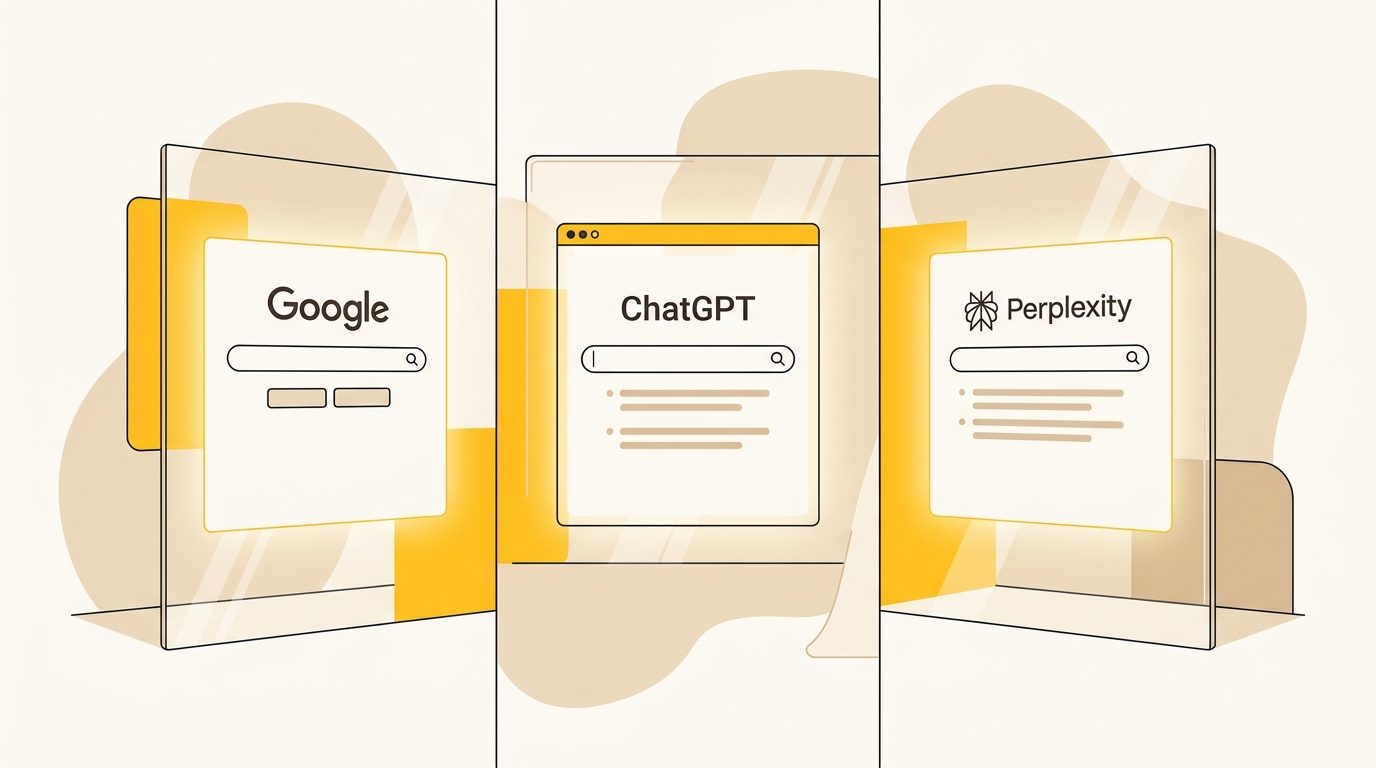
AI recommendations reviews mentions are connected: reviews describe customer experience, mentions establish reputation elsewhere, and consistent business details help answer engines identify who you are. You cannot control whether ChatGPT, Google or Perplexity recommends you, but you can make your business easier to verify and understand. Start by checking your free AI search audit and use this guide to turn its findings into practical work.
For a local or service business, off-site visibility is not just a public relations task. The way you design your service pages, review request, directory profiles and press information affects how clearly customers and search systems can connect your name with a service and location. DesignFIT's industry frameworks show how those decisions change across sectors such as healthcare, hospitality, legal services and trades.
What reviews and mentions do in AI recommendations
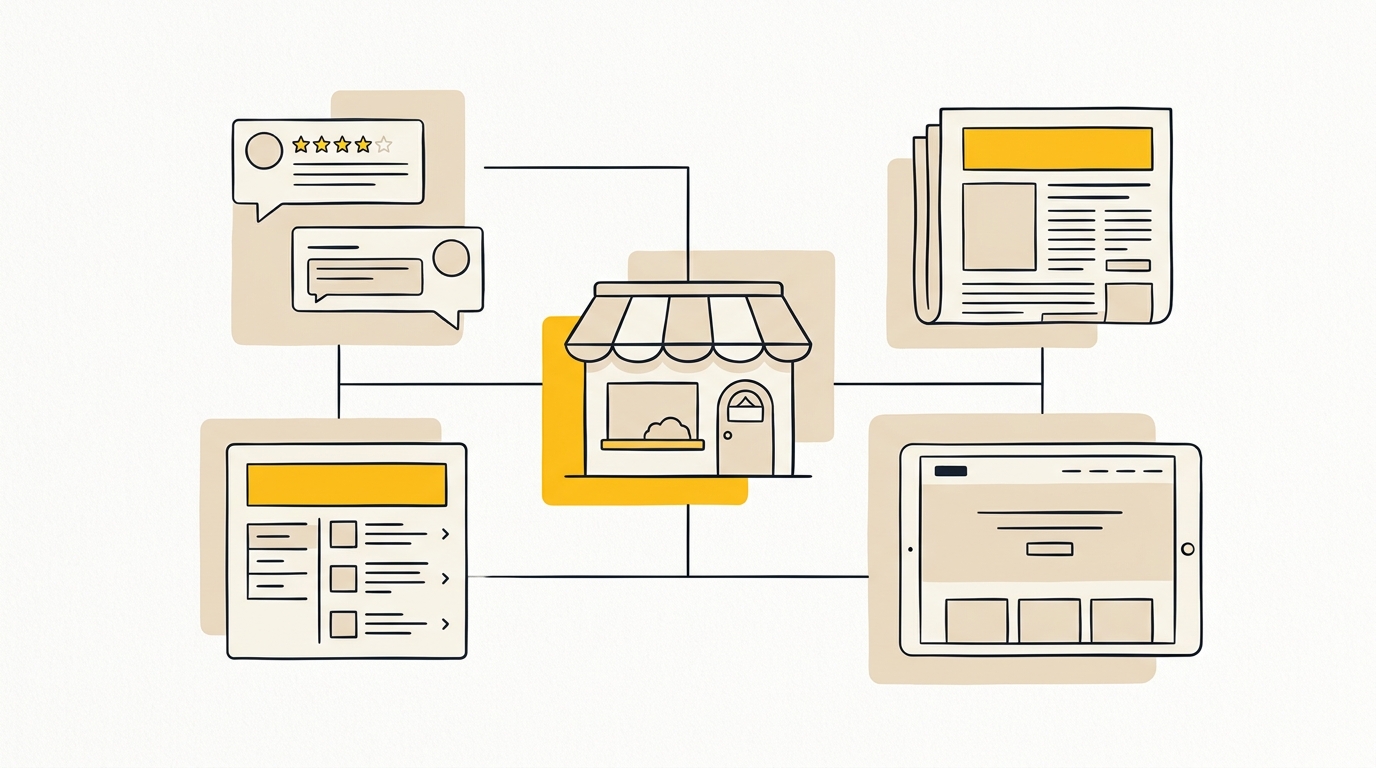
Reviews and mentions are evidence about your business that exists outside your own website. Reviews describe what customers experienced. Mentions include directory listings, association profiles, news coverage, expert roundups and other pages that name your business.
AI answer tools can retrieve information from a mix of search indexes, directories and websites. The exact sources and methods vary by product and query, and they can change. There is no universal public checklist or reliable promise that a particular number of reviews or listings will make a business appear. The practical aim is to make your information accurate, relevant and easy to corroborate.
A useful way to think about the process is as three connected questions:
- Can the system identify the business? Is the name, location, website and phone number consistent enough to distinguish it from similarly named businesses?
- Can it understand what the business does? Do your pages, categories, reviews and third-party descriptions name the actual services and areas served?
- Can it find independent evidence? Are customers and credible organisations describing the business outside your own marketing?
These are not ranking factors with guaranteed weights. They are practical checks that improve clarity for people as well as machines. A well-designed website matters because a person who encounters your name in an AI answer may still check your services, credentials, location and next steps before contacting you. If those details are unclear, an off-site recommendation may not become an enquiry.
BrightLocal's overview of directories cited in AI search is one useful reference for considering which directory sources to investigate. Treat any source list as a snapshot, not a universal recipe: the sources surfaced can differ by location, business type, platform and question.
What you need before you start
Do not begin by signing up for every directory or asking every customer for a review. First make a reliable reference sheet. This prevents a well-intentioned visibility project from spreading old addresses, inconsistent names or inaccurate service claims.
Prepare the following:
- Your official business details: legal or trading name as customers know it, public phone number, website, address or service-area model, opening hours and current locations.
- Your service list: the real services you want to be found for, with plain-language descriptions and any important limits. Avoid calling a service an emergency service if you do not offer emergency response.
- Your location list: towns, suburbs or regions you actually serve. Separate staffed locations from areas you travel to.
- Your profile access: Google Business Profile, relevant review platforms, directory accounts, industry association listings and social profiles. Confirm who owns each login.
- A record of customer feedback: review URLs, dates, platform, response status and recurring themes. Do not copy private customer information into a public document.
- Your website pages: service pages, location pages, contact details, team credentials and any existing structured data. A local business schema checklist can help you review the machine-readable details on your site.
Make one person accountable for the source of truth, even if several staff members help maintain listings. For a business with multiple locations, make a separate row for each branch, including the correct phone, address, opening hours, landing page and services. Do not treat a head office's details as a substitute for each location's information.
Step 1: Check what AI answers say about you now
Before changing anything, establish a baseline. Choose a small set of real buying questions that a potential customer might ask. Include a service, a location and a decision need. For example: “Which family dentist in Parramatta offers evening appointments?” or “Who can repair a leaking roof in Newcastle this week?”
Test those questions in the AI search products your customers are likely to use. Record the date, product, exact wording, whether your business appeared, which businesses did appear, and any sources or profile links shown. Repeat a query later using the same wording if you want a useful comparison. One result is not a reliable verdict: outputs can vary with wording, location, account settings and changes in the underlying search results.
Also search your business name, old names, phone number and address in a standard search engine. Check whether directory results show the right business and whether outdated pages still appear. A simple baseline might include:
| What to check | What to record | Why it matters |
|---|---|---|
| Category questions | Businesses named and sources linked | Shows the current competitive set |
| Brand questions | Services, locations and facts stated | Reveals incorrect or missing details |
| Directory profiles | Name, phone, address, hours and categories | Finds conflicting identity information |
| Website pages | Service, location and contact details | Confirms your own source of truth |
| Reviews | Recent themes, questions and complaints | Helps identify experience and clarity gaps |
Do not assume that appearing in one answer means your visibility is fixed. Nor should you try to reverse-engineer a single answer by stuffing keywords into profiles. Look for recurring patterns: the same competitor is named across several questions, a directory is repeatedly cited, or your business is described with an outdated service or location.
If the AI answer has a factual error, document the exact text and its likely source before correcting it. Your guide to fixing incorrect AI search information covers the broader problem of inconsistent or stale facts.
Step 2: Make your business identity consistent
Create a master business profile and compare it with your website and each important third-party listing. Use the name customers see in the real world. Do not add extra service or location keywords to the business name unless they are genuinely part of the name used on signage and official materials.
Check these fields carefully:
- Business name and any legitimate former name.
- Main phone number and website URL.
- Street address, where customers visit, or the service-area details shown by the platform.
- Primary category and secondary categories that accurately describe the work.
- Opening hours, special hours and appointment requirements.
- Services, booking links, accessibility details and location-specific contact information.
- Whether the profile is open, moved, merged or permanently closed.
Consistency does not mean forcing every platform into an identical layout. A directory may have different fields or category names. It means that the underlying facts agree, and that any real difference has a clear explanation. For example, a business might have a registered office and a separate public clinic location. Make that distinction clear on the website and on the relevant profiles rather than mixing addresses.
Use a tracking sheet with the profile URL, login owner, last checked date, exact public details and next action. Mark duplicate profiles for review instead of creating yet another listing. A duplicate can split customer feedback and make it less clear which profile represents the active business.
Visual identity also helps people recognise a listing as yours. Use a current logo, consistent naming and appropriate location photographs. Keep images legible at small sizes and use real, representative photos. A logo that is cropped differently on every directory is not automatically an AI problem, but it is a customer trust problem and can make cross-platform recognition harder.
Step 3: Choose the right review platforms
You do not need to be everywhere. Start with platforms customers in your sector actually consult and the platforms that appear when you search your most important buying questions. A local restaurant, a medical practice and a commercial law firm will not have the same review landscape.
Use this order:
- Claim the main platform for your market. For many local businesses that will include Google Business Profile, but confirm what customers use in your location and category.
- Check relevant specialist platforms. Examples may include a professional association directory, a healthcare directory, a travel platform or a trade service directory. Choose only those that apply to your business.
- Review general business directories. Keep useful, legitimate profiles accurate. Do not pay for a listing simply because a sales page promises AI visibility.
- Ask customers where they found you. A short, optional question in your enquiry or post-service process can help you prioritise platforms based on actual customer behaviour.
BrightLocal's directory research and the reporting from Search Engine Journal on reviews, reputation and local listings can help you build a shortlist. Validate their relevance against your own market and the sources shown in your baseline checks. A directory being cited somewhere does not prove that it drives recommendations for your service or city.
Before creating a profile, check whether one already exists and whether the platform allows your business type. Read the platform's rules. Some businesses, especially regulated or appointment-based services, need to be careful about what information can be requested or published. Follow your professional obligations and privacy requirements.
Step 4: Design a review request customers can complete
A review request is a small but important service interaction. Its design affects whether customers understand the request, trust it and can complete it without unnecessary effort. Build the process around a genuine completed experience, not around a promise of a reward or a desired rating.
A simple review flow might look like this:
- Choose the right moment. Send a request after the service is complete and any immediate issue has been addressed. For a long project, ask after a meaningful milestone or handover, not while work is still unresolved.
- Use a clear message. Say who is contacting them, what service they received and why you are asking. Keep it short and personal.
- Provide one obvious next step. Link directly to the appropriate review page where possible. Test the link on a phone, including for customers who do not have the platform's app installed.
- Make the request optional. Do not pressure customers, imply that only positive reviews are welcome, or offer an incentive where platform rules prohibit it.
- Keep the page accessible. If you use a landing page, make the button easy to see and tap, use readable text and explain which platform opens. Do not hide the link in a graphic or make a customer pass through multiple screens.
- Offer a private route for service recovery without blocking public feedback. A customer can be invited to contact you if something needs attention, but do not divert unhappy customers away from the public review platform or selectively ask only satisfied customers to post.
Design choices matter here. A high-contrast button, a short instruction and a clear confirmation can reduce confusion. A review journey that requires an account, a long form or several redirects may put people off. These are sensible usability improvements, but do not promise a particular increase in review numbers unless you have measured it for your own process.
The request itself should never tell people what rating to leave or provide a script for their review. You can ask for honest feedback and, where appropriate, invite them to mention what service they used. The words must remain theirs. Do not ask for sensitive personal details, especially in healthcare, legal or other confidential settings.
Step 5: Build fresh, authentic review activity
A large collection of old reviews can still help a customer understand your history, but it does not tell the whole story of the current business. Keep a steady, ethical process for inviting feedback from customers after real interactions. Do not buy reviews, fabricate them, ask staff or friends to pose as customers, or use a review gate that filters people based on how happy they say they are.
Make the process repeatable rather than dependent on one enthusiastic staff member. For example, add an approved review request to the same post-service checklist used for sending an invoice or care instructions. Give staff a short explanation of when to send it and how to answer questions. Review the process periodically to make sure it still complies with the platform's policies and your sector's rules.
Reviews are most useful when they explain the customer's experience in their own words. A brief “great service” may be sincere, but a more specific account can help another person understand the type of work performed. You can ask open questions such as “What would you want someone considering this service to know?” Do not give the customer a list of keywords to insert, suggest a location phrase, or tell them to mention a particular staff member.
The BrightLocal 2026 local consumer review survey information is a useful prompt to investigate how review expectations are changing. Check the study details and methodology before using any survey figure in a business case. Regardless of a benchmark, your own review quality, recency and response patterns are worth tracking over time.
Step 6: Respond to reviews like a person
A thoughtful response can show prospective customers that a real business is paying attention. It also gives you a chance to correct a factual misunderstanding or explain how a concern is handled. It is not a place to reveal private information or argue with a reviewer.
Use a simple response structure:
- Thank the reviewer without repeating a canned phrase word for word.
- Refer to a specific, non-sensitive point they raised.
- If something went wrong, acknowledge the concern and state the appropriate next step.
- Move a private or complex discussion to a suitable channel, without posting confidential details publicly.
For example, a trades business might thank a customer for noting that the team explained the repair options clearly, then invite them to contact the office if they need the service paperwork. A clinic should not confirm that a reviewer is a patient or discuss their care publicly unless it has a proper basis to do so. Legal and financial businesses should also avoid sharing confidential matter details.
Set a response owner and a reasonable review cadence. Keep a record of unresolved issues and route them to the person who can act. Avoid copy-and-paste responses that sound robotic, defensive or as if the same reply has been posted everywhere. A brief, specific and respectful response is better than a long public debate.
Step 7: Earn useful mentions beyond review sites
Mentions are broader than reviews. They can include an association listing, a local news article, a conference speaker profile, a supplier page, a charity partner page, a professional directory or an expert quoted in a story. Strong mentions are genuine and relevant. They are not a volume contest.
Start with places where your business has a real reason to be included:
- Your industry association or licensing body, where appropriate.
- Local business groups, chambers or community organisations you actively support.
- Suppliers, partners or event organisers with whom you have a real relationship.
- Local journalists and trade publications covering a topic you can explain accurately.
- Specialist directories used by your customers.
- Professional profiles for named experts who work at the business.
Make it easy for these organisations to get the basics right. Create a simple press or media page with a factual description of the business, current services, service locations, leadership or expert biographies, a contact for media enquiries and approved logo files. Add only information you can substantiate and keep it current. A clean page with useful text is easier to consult than a collection of old PDFs with conflicting biographies.
Do not invent awards, client lists, expertise or customer numbers to make a media page seem impressive. Do not pay for a supposedly editorial mention without understanding how it is labelled and whether the publication is credible. If you contribute expert commentary, make it specific and useful. A relevant mention that accurately describes your work is more valuable than a vague listing on a site no customer or journalist would trust.
When you receive press coverage, check the published name, link, location and service description. Correct genuine factual mistakes politely. Share the coverage on your website only when you have permission and it adds useful context for readers.
Step 8: Make your website support what others say
Your own website cannot manufacture independent reputation, but it can provide a clear reference point for it. Design service and location pages so a visitor can quickly match a claim they saw elsewhere with the real offering.
For each main service, make sure the relevant page states:
- What the service includes and who it is for.
- The locations or delivery areas served.
- Any important eligibility, booking or response-time limits.
- Who provides the service and what credentials can be verified.
- How to enquire, book or ask a question.
- Relevant proof, such as approved testimonials, case examples or association membership.
Keep proof close to the claim it supports. If a page says you provide emergency repairs, explain what “emergency” means and when the phone is answered. If a clinic describes a practitioner as a specialist, use accurate credentials and a clear biography. An attractive testimonial carousel is not enough if the testimonials are unreadable on mobile, difficult to navigate or hidden from users who have reduced motion enabled.
Use accessible, semantic page structure: clear headings, descriptive link text, selectable text and properly labelled contact details. Do not put essential business facts only inside an image or a PDF. Structured data can help describe an organisation or location in a machine-readable format, but it must reflect visible, accurate information and is not a guarantee of inclusion in AI answers. Avoid adding review or rating markup in ways that misrepresent the reviews or violate search engine guidelines.
Your website design service can help bring the proof, service information and enquiry path together. The goal is not just to make the page look polished. It is to make the next decision clear: is this the right service, in the right place, from a business I can trust?
Step 9: Monitor errors and keep information current
Off-site facts can become stale when a business moves, changes its phone number, adds a branch, changes ownership or stops offering a service. Create a maintenance habit instead of waiting for a customer to flag a problem.
At least once in each chosen review cycle, check:
- Your key directory profiles and review platform links.
- Business name, phone, address, opening hours and holiday hours.
- Current service categories and descriptions.
- Website contact details, location pages and booking links.
- Whether closed, moved or duplicate listings need correction.
- Recent reviews and questions that need a response.
- AI answers to your baseline questions, with the date and cited sources.
Set a reminder at a frequency that matches how often your business changes. A multi-location organisation may need a more formal monthly or quarterly process. A single-location business with stable details can use a lighter routine, plus an immediate update whenever a major fact changes. The important thing is that someone owns the check.
When you find an error, fix the original profile or source where possible. Then check whether the same inaccurate detail has been copied to other directories. Do not create a new website page that repeats the false information just to “correct” an AI answer. Correct the underlying facts consistently and keep a record of what you changed.
Step 10: Measure whether the work is helping
AI visibility is not one number. Track a small set of measures that connect reputation work to business outcomes, and keep them separate so you know what actually changed.
| Measure | How to track it | What it tells you |
|---|---|---|
| Profile accuracy | Share of priority profiles with correct details | Whether the basic identity is maintained |
| Review activity | New reviews, dates, platform and themes | Whether customers are sharing recent experiences |
| Response coverage | Reviews needing a response and those answered | Whether feedback is being handled consistently |
| Mention quality | Relevant third-party pages and factual accuracy | Whether credible sources describe the business correctly |
| AI answer visibility | Fixed sample of questions, products and dates | Whether your name or sources appear in observed answers |
| Qualified enquiries | Enquiry source, service fit and location | Whether visibility connects to potential business |
Do not credit every change in enquiries to AI answers. Seasonal demand, advertising, referrals and service availability also affect leads. Ask new customers how they found you, and make the answer easy to record in your enquiry process. If a person says they saw the business in an AI answer, note which product and question they remember, while recognising that attribution can be imperfect.
The SmartBrief article on whether AI recommended a brand and got the details right is a reminder to monitor accuracy as well as mentions. A recommendation that names the wrong suburb or an outdated service is not a win. Measure whether the facts are correct and whether the visitor can reach the right page.
Common mistakes to avoid
Chasing every directory. A large volume of low-quality profiles creates maintenance work and can introduce more inconsistency. Prioritise platforms with a credible connection to your customers and sector.
Trying to manufacture review language. Asking customers to include exact service keywords or suburbs makes feedback less authentic and may breach platform rules. Invite honest, independent accounts instead.
Making review requests hard to use. A link buried in a long email or a page with several competing buttons adds friction. Keep the request simple, mobile-friendly and optional.
Treating a five-star average as the whole story. Customers can care about the detail, recency and relevance of feedback, not only the average. Learn from recurring concerns and improve the experience behind the reviews.
Using a generic reply on every review. It can make the business appear inattentive. Use a consistent professional tone, but respond to the actual issue and protect customer privacy.
Putting testimonials in inaccessible formats. Text inside an image or an auto-rotating slider may be hard to read, use or interpret. Present proof as real text with a clear author attribution only where you have permission.
Publishing contradictory facts on your own site. Multiple location pages with old hours or different phone numbers can undermine trust. Assign a source of truth and review linked pages when details change.
Expecting schema or a press page to force recommendations. These are clarity tools, not switches. They work best when the underlying business information and independent evidence are accurate.
Ignoring operational reality. Do not advertise appointment availability, service areas or emergency response that your team cannot provide. A visibility win that sends the wrong customer to the wrong place harms trust.
A practical 30-day starting plan
Use this sequence to make progress without turning it into a never-ending directory project. Adjust the pace to your team and the number of locations you operate.
First week: establish the facts. Create your master profile, identify priority services and locations, and record the key profiles you already control. Run a baseline set of customer questions through relevant AI search products and save the results with dates.
Second week: correct the highest-impact details. Fix obvious errors on the main profiles and website. Check duplicates and old locations. Make sure your core service pages explain the real offer, location and next step clearly.
Third week: improve the customer feedback journey. Choose an appropriate moment to ask for honest reviews, test the link on a mobile phone, give staff a short process and make sure no incentives or selective filtering are involved. Decide who will respond to reviews and how sensitive cases will be handled.
Fourth week: strengthen useful mentions and measurement. Update association or specialist directory profiles that genuinely matter. Publish or refresh a factual media page if your business has a real need for one. Review the baseline again and note changes without assuming that a single result proves causation.
After the first month, keep what is useful and simplify what is not. The best system is one your team can maintain while continuing to deliver good service. Strong customer experiences create the material for meaningful reviews. Clear design helps customers share that experience, and accurate website and directory information helps others verify it.
How to prioritise if time is limited
If you can only make a few changes, do them in this order:
- Correct wrong contact, location, hours or business status information.
- Improve the most important service page so it clearly describes what you do and where.
- Claim and maintain the review platform most relevant to your customers.
- Make it easy for genuine customers to leave honest feedback without pressure.
- Respond carefully to reviews and fix recurring service issues.
- Build accurate profiles and mentions with relevant associations, directories and local publications.
- Recheck AI answers and customer enquiries over time.
For a medical practice or legal firm, privacy and professional obligations may change how you request and answer reviews. For a hotel, location and booking details are central. For a trade business, service areas and whether emergency work is available can be essential. Use the relevant industry guidance rather than forcing one template onto every service business.
Wrap-up: build signals customers can trust
Reviews and mentions can help AI systems and prospective customers understand whether a business is relevant, current and credible. There is no guaranteed formula for an AI recommendation. Focus on facts you control: a consistent identity, accurate profiles, a respectful review process, useful third-party mentions and a website that explains the service clearly.
Start with a baseline, fix the most important inconsistencies, then measure again. If you want to see where your business information appears and what to address first, request the free DesignFIT AI search audit.
Key takeaway
Make your business easy to identify, verify and choose by keeping reviews, third-party mentions and website details accurate, relevant and consistent.
Questions people ask
Why does ChatGPT recommend my competitor when I rank higher on Google?
AI answers can draw on sources beyond the pages you see in standard search results, including directories, review platforms and editorial coverage. Compare the sources shown for the same local questions, then check whether your business details, services and independent mentions are clear and current.
Does a five-star rating guarantee an AI recommendation?
No. A high rating alone cannot guarantee that an AI system will mention your business. Accurate business information, relevant services, credible mentions and the usefulness of your website all contribute to whether a customer can verify the recommendation.
Do I need to pay for directory listings to improve AI visibility?
Not necessarily. Start by claiming relevant profiles and maintaining accurate details, and be cautious of anyone promising a paid listing will secure AI recommendations. Check whether a directory is credible and used by your customers before paying for it.
Can AI recommend a business that has closed or moved?
It can happen when information online is outdated or conflicting. Update the original profiles and website promptly, correct duplicates and closed listings where possible, and keep a record of the changes.
What if people see an AI recommendation but never click through?
You cannot assume every person will visit your site, so your business name and public information need to be accurate wherever customers encounter them. Track brand enquiries and ask new customers how they found you, while remembering that attribution may not be exact.