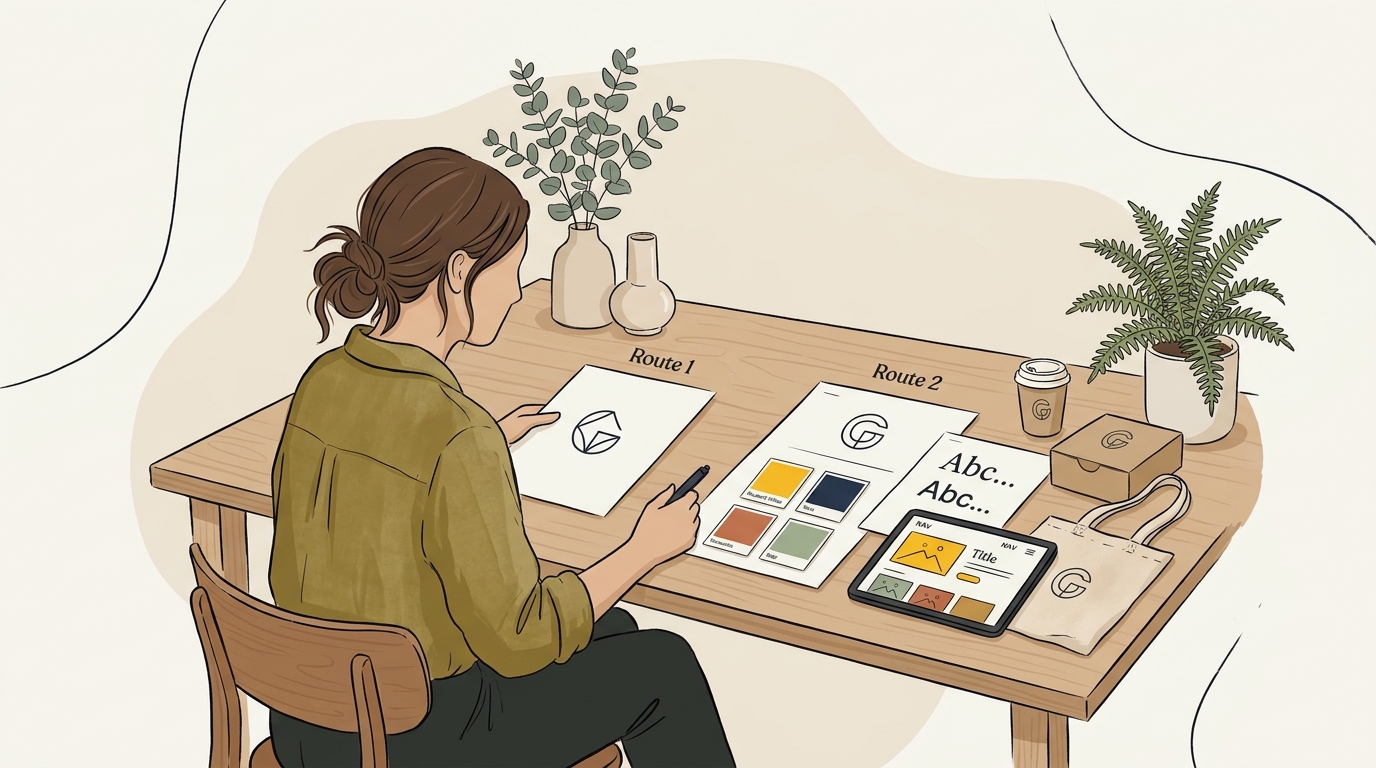
When Should a Business Rebrand? 6 Diagnostic Signs
Six practical tests to help you decide whether your brand is holding back a proven business or whether the offer needs attention first.
On this page
- 1. You have a premium offer, but your brand still looks entry-level
- 2. Your business has changed, but your brand still describes its old category
- 3. Buyers treat you as interchangeable with competitors
- 4. Your team apologises for the brand or works around it
- 5. Your brand has become a patchwork of versions
- 6. Your identity and website fail in the places customers use them
- How to decide between a refresh, a rebrand and an offer fix
- The decision is about the cause, not the calendar
A business should rebrand when its identity no longer reflects a valuable, proven offer, or when the brand creates avoidable friction in sales. If customers do not want the offer, a new logo will not fix that. Diagnose the cause of the slowdown before you spend money on a redesign.
A rebrand can involve much more than a new logo. It may change your positioning, name, visual identity, website and sales materials. The scope depends on what is wrong, so it helps to start with a focused brand review and strategy rather than assuming every business needs a complete reset.
The central question is whether your brand is making a good business harder to understand, trust or choose. Compare what customers actually experience with what your visual identity and messaging promise. Then look at the evidence: customer feedback, repeat purchases, sales conversations, website behaviour and the performance of different offers.
The six signs below are diagnostic prompts, not automatic instructions to rebrand. For each one, check whether the problem sits in perception and presentation, or in the offer itself. A weak offer needs product, service or business-model work. A strong offer with a weak or outdated expression may benefit from a refresh or rebrand.
1. You have a premium offer, but your brand still looks entry-level
A brand may be holding back a proven offer when qualified buyers see your business as less capable, established or valuable than it really is. This can happen when a company has grown, invested in its service and built a track record, but its website and identity still look like an early do-it-yourself version.
Look for the mismatch in real sales situations. Do prospects ask whether you have experience with larger clients, even though you have relevant work? Do they compare you with cheaper providers before understanding the difference in your approach? Do you regularly need a founder-led presentation to explain what the website fails to communicate? Those questions do not prove the design is the cause, but they help identify where confidence is being lost.
Separate a perception issue from a pricing or value issue. Ask customers who bought at your current price what convinced them. Ask qualified prospects who declined what they chose instead and why. If customers value the result and existing clients renew or refer, but new prospects misunderstand your capability, presentation may be part of the problem. If buyers understand the offer and still do not believe the outcome is worth the price, revisit the offer, proof or pricing before commissioning a new identity.
Review the parts of the customer journey that signal quality: the first screen of the website, case studies, service pages, proposal design, photography, typography and the way you explain your process. A polished logo cannot compensate for vague services, thin proof or a confusing sales path. The design needs to make your value easy to recognise, not merely look expensive.
Use evidence rather than a single conversion percentage. Compare similar enquiries by source, service and customer type. Look at the questions sales staff have to answer repeatedly. Review recordings or notes from discovery calls, if you have them, and note when prospects express doubt. A low website conversion rate on its own is not proof of a branding issue: traffic quality, offer clarity, page speed, form friction and targeting can all affect it.
A useful test is to create a clearer version of one sales touchpoint before changing everything. Rewrite a service page around a specific customer problem, add relevant proof and make the next step obvious. If that improves the quality of conversations, you have learned something about messaging and presentation. If buyers still reject the offer after they understand it, the deeper issue may be the value proposition.
More likely a brand problem: The business delivers strong work, customers can explain its value, but unfamiliar prospects underestimate its capability or confuse it with cheaper alternatives.
More likely an offer problem: Prospects understand what you do and who it is for, but do not see enough value to buy, renew or recommend it.
A design project should make the difference visible across the whole journey. That may mean a sharper position, stronger proof, clearer service architecture and a website that supports the sales conversation. It does not have to mean changing your name or discarding recognition you have already earned.
2. Your business has changed, but your brand still describes its old category
A rebrand may be warranted when the company has materially changed what it sells, who it serves or how it makes money, and the existing identity keeps pulling customers back to the old version. This is more than wanting a fresher look. It is a gap between the business you run now and the business your brand tells people to expect.
Listen to how customers describe you. If they consistently introduce you as a provider of a service you no longer offer, or prospects often say, “I did not realise you also did that,” your positioning may be too narrow. The same applies when the name, logo or core message makes a new market feel implausible. A local supplier expanding into a national specialist service, for example, may need to change its story and brand system even if its original customers remain important.
Before changing the identity, establish whether the new direction is real and commercially tested. Which customers have bought the newer offer? Are they satisfied? Do they return, refer others or expand their engagement? Is there a clear reason the company can credibly serve this market? A rebrand can help a tested strategic change make sense. It should not be used to make an untested pivot look established.
Map the current business against the brand in four areas:
- Offer: What do you sell today, and which services are core rather than occasional?
- Audience: Which customer group is most valuable and best served?
- Difference: Why do suitable customers choose you over another option?
- Expectation: What does the name, visual identity and website lead people to expect?
If the mismatch is limited to one service line, you may need a clearer page structure or a sub-brand rather than a company-wide change. If the mismatch affects the name, central promise and every sales touchpoint, a broader repositioning may be justified. Think carefully about what existing customers recognise and value before removing familiar cues.
A brand change also needs operational backing. Update the service experience, sales process and customer support so the new promise is true in practice. If you claim to serve a more demanding market, the onboarding, delivery, proof and team capacity must support that claim. Otherwise, the new identity can raise expectations that the business cannot meet.
The brand strategy discussion in McKinsey’s work on the future of brand strategy is useful context for thinking about how brand connects to a company’s direction. It should not be read as proof that a rebrand by itself produces commercial growth. The business change and the customer value behind it still have to be credible.
More likely a brand problem: The new offer has paying customers and a clear reason to exist, but the old name, message or identity keeps defining the business too narrowly.
More likely an offer problem: The new direction is mostly a hope, the customer is unclear, or there is no evidence that people want the changed offer.
When the business has moved on, align the strategy before drawing the new identity. Otherwise, you risk creating a more attractive expression of an unclear direction. If the company is ready, a considered brand project can translate the new position into a coherent identity and the practical assets your team needs.
3. Buyers treat you as interchangeable with competitors
A brand may need attention when suitable buyers see several providers as equivalent and use price as their main way to choose. Visual sameness can contribute to that problem. So can a genuinely undifferentiated offer, unclear messaging or a sales process that does not explain why your work is different.
Start with the alternatives customers actually consider, not a broad collection of famous brands. Review competitor homepages, service descriptions, photography, colours, headlines, proof and calls to action. If everyone uses the same category language and visual conventions, a new identity could help your business stand out. But distinctiveness is not simply choosing a brighter colour or a more unusual typeface. It needs to make your position easier to recognise and remember.
Ask recent customers what they compared before choosing you. What made them shortlist your business? What nearly stopped them? Which difference mattered after they experienced the service? Their answers help distinguish a presentation problem from an offer problem. If customers name a meaningful advantage but your website barely explains it, the brand and content may be obscuring real value. If customers cannot identify a difference, the business may need to develop one before expressing it visually.
Look at your sales materials as one system. Does the homepage promise one thing while the proposal describes another? Do your ads lead with a different benefit from the service page? Does the first meeting reveal a distinctive approach that is invisible online? These gaps make it harder for buyers to understand what you are offering and why it fits them.
A useful exercise is to write three versions of your positioning in plain language:
- What customers are trying to achieve.
- What your business does to help them achieve it.
- Why your way is a better fit for a particular kind of customer.
If the third sentence could describe every competitor, do not try to solve the problem with a visual identity alone. Investigate service design, specialisation, delivery, expertise, guarantees or the experience you provide. There may be a real difference that has not been named, or there may be a strategic choice to make about which customers to serve.
Then check whether the identity helps the right audience recognise that difference. A legal practice may need to communicate calm expertise without looking indistinguishable from every other firm. A clinic may need warmth and confidence without relying on generic wellness cues. A software company may need to make a complex product feel clear without claiming capabilities it does not have. The visual choices should fit the actual promise and audience.
A discussion in this Reddit thread about rebranding as a fix for struggling businesses reflects a common caution: changing the brand is not a substitute for understanding why the business is struggling. Treat community discussion as perspective, not as a reliable measure of what will work for your company.
More likely a brand problem: Customers value a real difference, but your current messaging and design make you look like the category rather than a distinct choice within it.
More likely an offer problem: There is no meaningful difference in the customer’s experience or outcome, so the brand has little substance to make distinctive.
The best outcome is not being different for its own sake. It is being recognisable to the right people for a reason that matters. A strategic identity can make that reason easier to see, while a clear website design can carry it through to the enquiry or purchase.
4. Your team apologises for the brand or works around it
If staff regularly warn prospects that the website is outdated, send a separate deck because the site does not explain the offer, or create their own versions of sales materials, the brand may be creating friction inside the business as well as outside it. That is a practical signal worth investigating. It does not automatically mean the logo needs replacing.
Ask the team what they avoid using and why. “The website looks old” is one answer, but dig deeper. Is it hard to find the right service? Is the work out of date? Are there no relevant case studies? Does the writing sound unlike the people who deliver the service? Does the site overpromise or attract the wrong enquiries? The underlying issue may be content, positioning, information architecture or proof rather than the visual identity itself.
Collect the workarounds. These might include unapproved slide decks, inconsistent proposal templates, old brochures, personal social graphics or salespeople maintaining their own service descriptions. Workarounds reveal where the official system fails people. They also make the customer experience inconsistent, because different prospects may receive different versions of the company story.
Interview staff who use the brand in different situations: sales, customer service, recruitment, delivery and leadership. Ask which customer questions are hardest to answer and which assets would save time. Then compare those answers with customer feedback. A team’s discomfort can be a useful clue, but it is not proof that customers share the same view. Some businesses are embarrassed by a perfectly serviceable identity because they want a trendier one. The test is whether the brand is making a meaningful business task harder.
A focused audit should review the points where people meet the business, including:
- The website and key landing pages.
- Proposals, presentations and service documents.
- Email signatures and sales follow-up.
- Social profiles and advertising creative.
- Recruitment materials and onboarding.
Prioritise by use and importance. A rarely used old brochure may not deserve the same attention as the homepage that every prospect sees. If the core story is sound but the tools are outdated, a refresh of templates and web content might solve the problem without a full rebrand.
The cost of a rebrand is not only the design fee. It can include strategy, new photography, website work, stationery, signage, packaging, staff time and the process of replacing old materials. The range depends on scope and existing assets. For questions about what might sit in a project budget, use this rebrand cost overview as a starting point, then request a scope that reflects your business rather than assuming a published estimate applies to you.
More likely a brand problem: The team is proud of the work and can explain its value, but the official tools make that explanation difficult or inconsistent.
More likely an offer problem: Staff avoid the brand because they cannot confidently deliver the promise, the service is unclear, or customers routinely receive a different experience from the one being sold.
Your team should be able to use the brand without inventing a parallel version of it. A useful identity system gives people enough direction to stay consistent, while leaving room to communicate naturally. If your existing identity is basically right, invest in the missing templates, content and guidance before replacing everything.
5. Your brand has become a patchwork of versions
A business can outgrow its identity through years of small changes. One designer updates the logo, a staff member chooses a new font for a presentation, an old colour remains on the website, and each new campaign adds another style. The result is a patchwork that can make a capable business look less coherent than it is.
Check the assets customers see most often. Put your website, proposal, social profile, email template, presentation and advertising side by side. Look for inconsistent logos, type, colours, image treatments, tone and descriptions of the offer. Then check whether the inconsistency is visible to customers or mostly bothers the internal team. Not every variation is harmful; different channels have different needs. The goal is a recognisable system, not identical layouts everywhere.
Trace the source of the patchwork. Is there no current master logo? Are files difficult to find? Has the company grown into new services without updating the brand? Do staff lack templates? Is the guidance too vague to use? These are different problems and call for different solutions. A replacement identity will not prevent future inconsistency if the business still lacks clear files, rules and ownership.
Sometimes a brand refresh is enough. A refresh can improve typography, colour use, photography, layout and the way existing brand elements work together while retaining the name and recognisable features. A full rebrand is more appropriate when the positioning, audience or central identity needs to change. The distinction matters because removing familiar elements has consequences, particularly when customers already recognise them.
Preserve the brand assets that have meaning and recognition. These may be a distinctive wordmark, a particular colour, a packaging shape, a phrase customers use or a consistent visual device. Do not assume that an element is valuable just because the founder likes it, but do not discard it simply because it looks old-fashioned either. Customer research, sales feedback and a review of the current market can help you decide what to keep.
Before choosing a scope, answer these questions:
- Which assets are being used today, and who owns the source files?
- What must stay recognisable for current customers?
- Which materials are actively confusing or out of date?
- Can a simple set of templates and rules solve the problem?
- Does the business need a new position, or just better execution of the current one?
A coherent identity also needs practical guidance. Teams need to know which logo version to use, how to choose images, how to write about the offer and how to adapt the system to different formats. DesignFIT’s guide to consistent branding across channels can help you think through that operating system, not just the appearance of individual assets.
More likely a brand problem: The company has a clear offer, but inconsistent assets make it hard for customers to recognise the business and hard for staff to present it consistently.
More likely an offer problem: Different materials describe different products because the company itself has not decided what it sells or which customers it serves.
A good solution may be a brand toolkit, updated templates and a carefully controlled refresh. If a bigger change is justified, build a rollout plan so the new identity reaches the website, sales materials and customer touchpoints in a considered order. Do not leave the old and new versions in circulation indefinitely.
6. Your identity and website fail in the places customers use them
A brand that only works on a large desktop screen or a printed brochure is not doing its full job. Customers may meet your business on a phone, through an advertisement, in search results or in a small social profile image. If your identity becomes unreadable or your website becomes difficult to use in those situations, you may have a design and digital experience problem that needs attention.
Test the actual journey on a phone. Can a new visitor tell what the business does without pinching, zooming or scrolling through a long block of vague copy? Is the main action easy to find? Can people read the text and understand the buttons? Does the logo remain recognisable at a small size? Do forms work without unnecessary effort? These are practical checks. Do not assume that a new brand alone will repair a slow, confusing or poorly structured website.
Review analytics alongside the experience. Compare mobile and desktop traffic, enquiry completion, exit points and the performance of campaigns. Segment where possible by landing page and source. If paid visitors arrive on a page that does not match the advertisement, improve the message and page structure. If the offer is clear but the layout hides the next step, redesign that journey. If people engage but do not buy because the offer is wrong for them, a brand refresh is unlikely to help.
Also review the basics of accessible visual communication. Text needs sufficient contrast against its background. Important information should not rely on colour alone. Buttons and navigation should be clear, and the layout should remain usable at different screen sizes. These are not decorative details: they affect whether people can understand and act on the information you provide.
Make sure the visual identity has useful variants. A wide logo may suit a website header but fail in a square social avatar. Small-size versions may need simpler details. Photography and illustrations should work in more than one crop. Typography should remain legible on small screens. A flexible system helps the business show up consistently without forcing every asset into the same shape.
A responsive redesign should connect the identity to the whole digital experience: page hierarchy, service explanations, proof, calls to action, form design and content. The DesignFIT website service covers that wider problem. If your business already has a sound brand strategy, a focused website improvement may be a better investment than changing the identity too.
More likely a brand or design problem: The offer is relevant and the business has evidence of customer value, but its mobile experience or visual assets make it hard to understand, trust or act.
More likely an offer problem: Visitors can understand the offer and complete the journey, but the product or service does not meet expectations, retain customers or justify its price.
Track the change you make. Choose a specific measure before launching, such as qualified enquiries, form completion, product sales or the share of prospects who understand a particular service. Keep other major changes as stable as possible while you assess the redesign. This will not prove that design alone caused a result, but it gives you better information than relying on opinions about whether the new look feels modern.
How to decide between a refresh, a rebrand and an offer fix
Use the six signs as prompts, then make a decision based on what you know about the business. There is no universal schedule that says every company should rebrand after a set number of years. A stable, well-recognised brand may need only small updates. A young company can need a major change quickly if its offer or audience has changed substantially.
| What you observe | Likely next step | What to avoid |
|---|---|---|
| Customers value the offer, but misunderstand what makes it different | Clarify positioning and improve key brand and website touchpoints | Starting with a logo redesign alone |
| The company has tested a new market or offer, but the old identity limits understanding | Revisit brand strategy and define the right scope of change | Rebranding around an untested business pivot |
| The main issue is inconsistent templates, files or usage | Create a simple identity system, guidelines and working templates | Replacing every recognisable asset by default |
| The site is difficult to use, but the brand remains relevant | Improve the website journey, content and mobile design | Treating a website problem as a name-change problem |
| Customers do not value, renew or recommend the offer | Investigate product, service, pricing and customer fit first | Using design to disguise a weak customer experience |
Before approving a large project, do a short diagnostic:
- Define the business problem. Write down what has flattened or become harder: qualified leads, close rates, repeat purchases, referrals or a particular service line. Avoid using “we need a rebrand” as the problem statement.
- Look at customer evidence. Speak with recent buyers, lost prospects and, where relevant, customers who left. Ask what they expected, what they valued and what nearly stopped them buying.
- Check the offer. Confirm that the product or service solves a real problem for a reachable audience and that delivery matches the promise. A brand cannot create customer satisfaction after the sale.
- Audit the journey. Review the website, search and ad landing pages, sales materials and follow-up. Find the exact point where people misunderstand, lose confidence or fail to act.
- Choose the smallest useful intervention. It could be clearer messaging, better proof, a website redesign, a visual refresh, a full rebrand or an offer change. Match scope to the evidence.
- Set a measure and rollout plan. Decide what should improve and how you will observe it. List the places where new identity assets must appear, and assign responsibility for removing old versions.
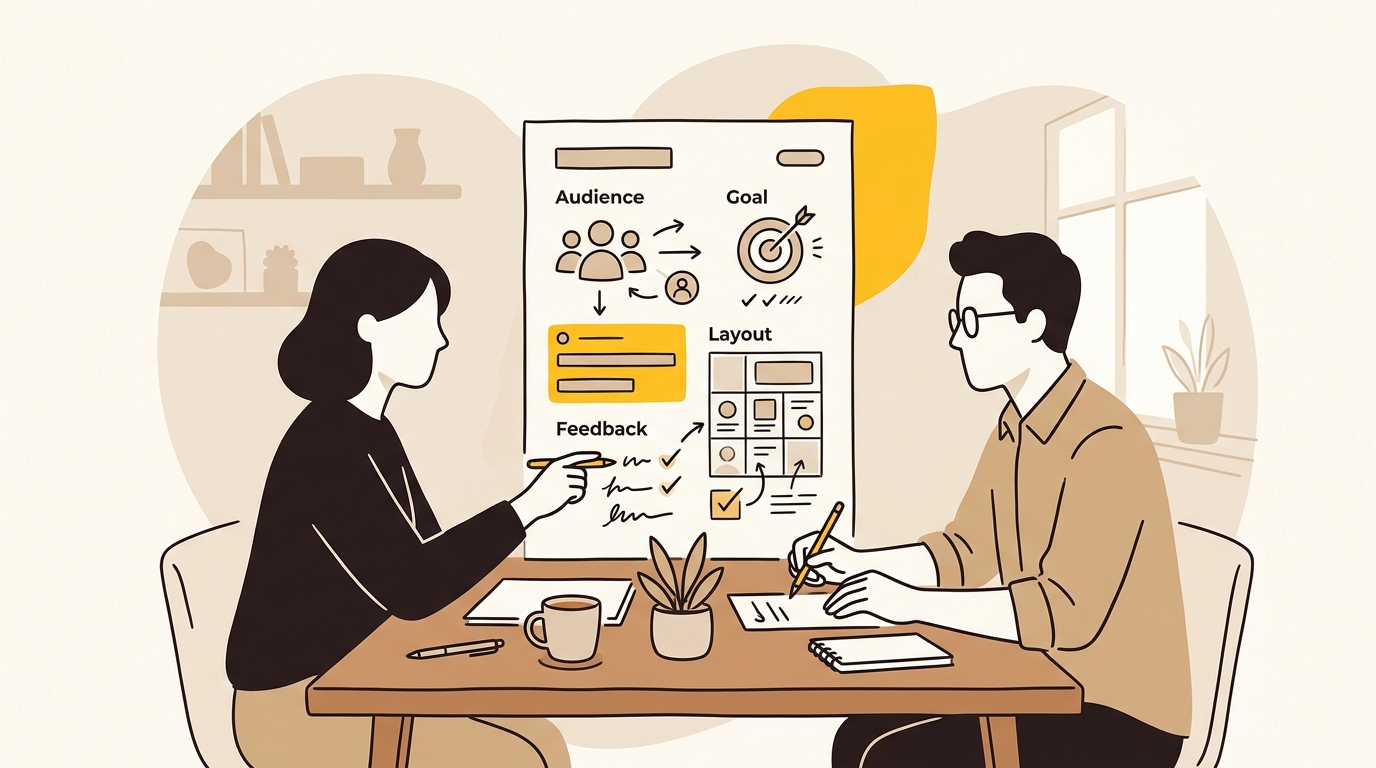
If you are uncertain about scope, ask a designer to help diagnose the problem before requesting a logo. A useful brief should explain the business goal, audience, current customer evidence, existing brand assets, constraints and the action you want customers to take. DesignFIT’s guide to briefing a designer can help you prepare for that conversation.
It is also worth checking the practical costs beyond the creative work. A new identity may require updated website pages, photography, printed materials, packaging, signage, social profiles and internal templates. For a website-led company, changing names or URLs can also affect customer communications and search visibility. The exact requirements vary. Your project plan should identify what needs changing rather than assuming that a new logo is the whole rollout.
A rebrand should have a clear reason, a defined audience and an implementation plan. The goal is not to look newer than competitors. The goal is to make the business easier for the right customers to recognise, understand and trust, while keeping the promise grounded in what the company can deliver.
The decision is about the cause, not the calendar
When should a business rebrand? When a worthwhile, credible business has outgrown the way it presents itself, or when its identity is actively making the offer harder to understand and choose. When customers do not want the offer, cannot get the promised result or do not see enough value, address that first.
Start with the evidence. Talk to customers, review the sales journey and inspect the assets people actually use. Then choose the smallest change that can solve the real problem. A measured refresh may be enough; a strategic rebrand may be justified; or the right move may be to improve the offer instead.
If you want help deciding which parts of your identity or website are creating friction, take a look at DesignFIT’s brand services and start with the business problem you need to solve.
Key takeaway
Rebrand when a proven offer is being held back by its identity, not when design is being asked to hide an offer problem.
Questions people ask
When should a business consider rebranding?
Consider rebranding when the business has changed materially or its identity makes a proven offer harder to understand, trust or choose. First check customer demand, retention and sales feedback so you do not confuse a brand issue with an offer issue.
What is the difference between a brand refresh and a rebrand?
A refresh updates how an existing brand looks and works while retaining its core position and recognition. A rebrand usually involves a deeper change to positioning, identity or name, often because the business or audience has changed.
Can rebranding hurt sales?
Yes, a poorly planned change can confuse existing customers or remove familiar cues they use to recognise the business. Protect what customers value, explain the change clearly and plan how the new identity will appear across important touchpoints.
How do I know if my business needs a new logo or a new offer?
If customers value the result but struggle to understand your capability or distinguish you from alternatives, investigate your brand and messaging. If they understand the offer but do not buy, renew or recommend it, examine the offer and customer experience before changing the logo.