Branding Cost Australia: Small Business Price Guide
A practical guide to Australian branding prices, what each package includes and how to avoid paying twice for a logo that cannot grow with your business.
On this page
- 1. Use the price range that matches the job, not the word “branding”
- 2. Decide whether you need a logo or a brand identity
- 3. Treat a cheap logo package as a limited tool, not a bargain identity
- 4. Choose a freelancer when your scope is narrow and you can direct the work
- 5. Budget for the brand identity sprint if growth is already underway
- 6. Understand what makes a full agency project cost more
- 7. Check the deliverables that turn a logo into a usable system
- 8. Make sure the identity works on a website, not just a moodboard
- 9. Check accessibility and legibility before approving the colours
- 10. Treat fonts, artwork and ownership as part of the price
- 11. Be careful with template logos and trade mark assumptions
- 12. Calculate the cost of rework before deciding that the lowest quote wins
- 13. Stage the work so you pay for what matters now
- 14. Choose the right budget for your business stage
- Wrap-up: budget for the system you need to use
Branding cost in Australia can range from a few hundred dollars for a basic logo to tens of thousands for a full strategy and identity programme. For a growing small business, the right budget depends on what the brand needs to do: identify the business, build trust, work across real-world channels and support a website that converts. If you are weighing up a logo against a fuller identity, start by looking at DesignFIT's brand design service and the system of deliverables you actually need.
The ranges below are planning estimates, not a fixed industry price list. Australian providers scope projects differently, and prices depend on research, deliverables, revisions, usage and rollout. Use them to compare like with like, then ask providers to explain exactly what is included. These estimates are in Australian dollars and generally exclude GST, unless a provider says otherwise.
1. Use the price range that matches the job, not the word “branding”
“Branding” can mean a logo file, a visual identity system, a strategy workshop or an entire business change programme. That is why two quotes can differ by thousands of dollars without either provider necessarily being unreasonable. One quote may cover only a logo, while another includes positioning, identity design, templates and support applying the system to a website.
As a practical budgeting guide, Australian published pricing estimates put small jobs and DIY options at the low end, freelance identity work in the low thousands, and studio identity projects in the several-thousand-dollar range. Larger agency programmes can reach the tens of thousands. Maker Street Studios' Australian branding cost guide and Notions Design's brand identity agency pricing explainer describe different scopes and provider types, so use them as comparison points rather than a definitive market survey.
| Type of work | Planning range in AUD | Often suits | Typical scope |
|---|---|---|---|
| DIY or template logo | $0 to $500 | Testing an early idea | One basic mark or template-based files, usually little or no strategy |
| Freelance designer | $800 to $2,500 | A solo operator with simple needs | Primary logo, a small set of variations and basic colour or type notes |
| Brand identity sprint | $3,000 to $8,500 | A growing business preparing to scale or launch a new site | Positioning work, a flexible identity system, guidelines and core templates |
| Boutique agency identity | $8,500 to $25,000 | An established or multi-channel business | More research, verbal identity, broader applications and rollout planning |
| Enterprise rebrand | $25,000 and up | A large organisation or complex brand portfolio | Stakeholder work, extensive research, governance and organisation-wide change |
These are broad planning bands drawn from Australian provider pricing discussions, not guaranteed quotes. For example, a modest project can cost more if it involves several audiences, packaging regulations or many decision-makers. A well-scoped project can also cost less if the business only needs a focused identity update. The key question is not “Which tier is cheapest?” but “What must the finished system help us do?”
2. Decide whether you need a logo or a brand identity
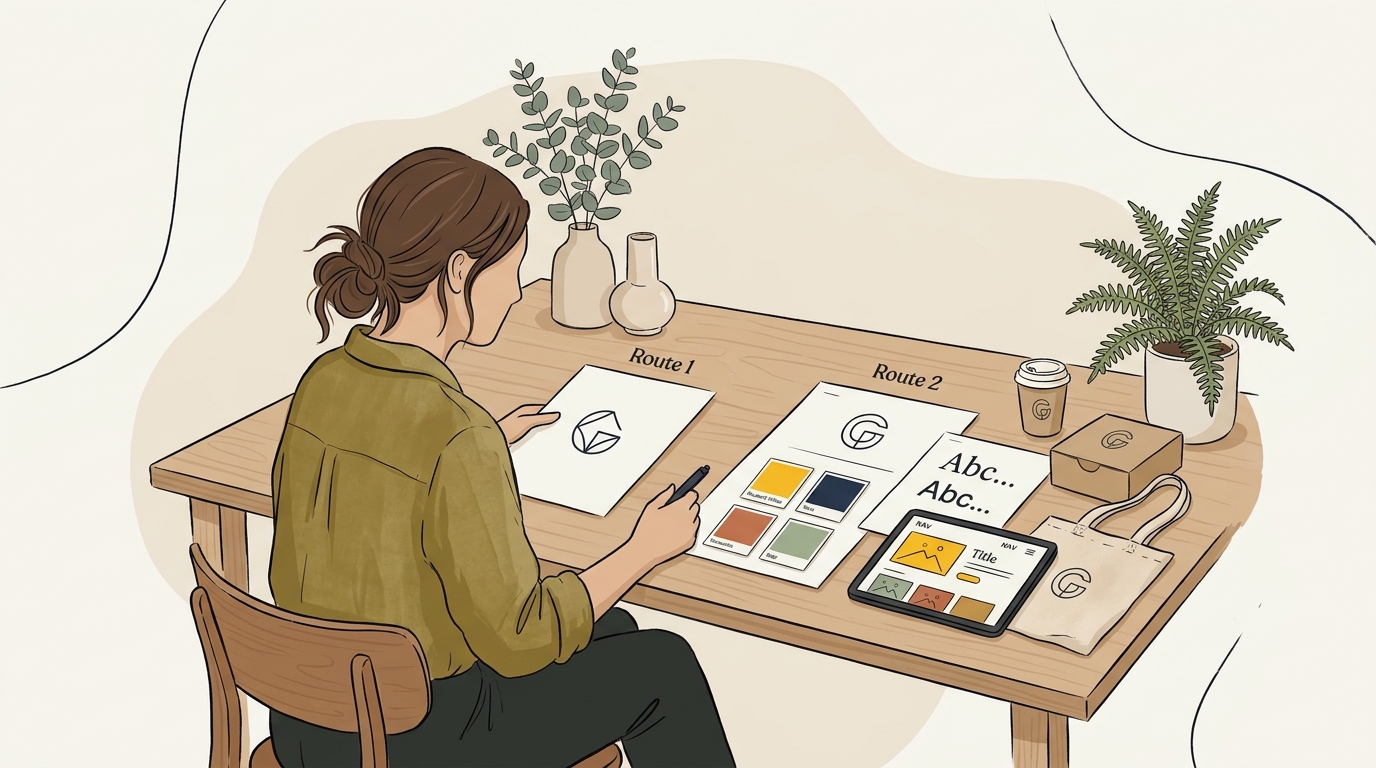
A logo is a recognisable mark. A brand identity is the set of visual and verbal tools that make the business recognisable and consistent wherever a customer meets it. That wider system can include logo variations, colour, typography, image direction, layouts, tone of voice and rules for putting them together.
A logo-only job may be enough if you are testing a business idea, have very few customer touchpoints and understand that the design might be temporary. It is a poor substitute for a brand identity if you are building a sales website, hiring staff, running ads, launching products or appearing across several locations. In those situations, other people need to use the brand without inventing a new version each time.
A useful test is to list every place the identity needs to appear in the next year. Include your website, social profiles, invoices, proposals, uniforms, signage, packaging, email signatures, paid ads and presentations. If one logo file will not fit those jobs, you are not comparing like with like when you compare logo prices with a full identity quote.
For a small business, a sensible brief may sit between “just a logo” and an extensive agency rebrand. It could cover a clear positioning direction, a core logo family, colour and type rules, image guidance and a few high-use templates. See DesignFIT's logo design service for the distinction between a mark and a broader brand system.
3. Treat a cheap logo package as a limited tool, not a bargain identity
A low-cost logo package can be useful when speed and low commitment matter more than long-term flexibility. It may give you a visual starting point for a side project, a market test or an internal concept. The risk is assuming that a logo file, even an attractive one, is ready for every business use.
Before buying, ask what files you receive. A JPG or PNG is made from pixels and can look blurry when enlarged. A vector file such as SVG or EPS can scale cleanly for many digital and print uses, though the recipient still needs to know how to use it. Confirm whether the package includes a transparent background, black and white versions, a compact mark for small spaces and clear rules for sizing and spacing.
Also ask whether the design is made from original artwork, a template or stock elements. A template may be shared or may have restrictions that matter for commercial use. Do not assume that a low price includes exclusive rights, font licensing, source files or a search for similar marks. Those details need to be stated in writing.
A cheap package is not automatically bad. It is bad value when the business needs a broader system but buys a single asset, then pays again to rebuild it for a website, packaging or signage. The useful comparison is the total cost of getting the business ready to use the identity, not the initial checkout price.
4. Choose a freelancer when your scope is narrow and you can direct the work
A freelance designer can be a good fit when you have a clear brief, one main decision-maker and a limited set of deliverables. For instance, a local consultant who needs a logo refresh, a basic colour palette and a proposal template may not need a full research programme. A freelancer may also give you direct contact with the person doing the design.
The outcome depends on the person's experience and the project's boundaries. Some freelancers offer strategic identity work; others focus on production design. Ask to see examples of work at a similar level of complexity, and ask how they arrived at the design direction. A polished portfolio alone does not tell you whether the designer can build a system that will work on your website, social posts and printed materials.
Get the scope in writing. It should define the discovery process, number of concepts, revision rounds, final formats, rights and licensing, delivery date and what counts as extra work. Find out whether you can use the files with another designer or developer later. Ask who is responsible for adapting the identity into your website and whether that is in the fee.
If you are comparing a freelancer with an agency, compare the people, process and outputs rather than assuming one category is always better. DesignFIT's guide to agency versus freelancer website design costs explains a similar decision for digital projects. The same principle applies to branding: buy the capability your brief needs, not the largest team available.
5. Budget for the brand identity sprint if growth is already underway
A brand identity sprint is a focused project that aligns the business direction with a flexible visual system. It usually starts by understanding the offer, audience and competitive context, then moves into identity concepts, refinements and a practical handover. It is not simply a fast logo exercise. The value is in connecting the decisions so the business can use them consistently.
For planning, the Australian studio ranges in the supplied pricing estimates place many focused identity projects around $3,000 to $8,500. The exact price depends on how much strategy, research, collateral and application work is included. A short sprint for one service brand is different from a programme that must cover several product lines, audiences or locations.
This level can make sense when the business is generating revenue, preparing a custom website, hiring or entering a more competitive market. At that point, the brand needs to function in the sales journey. A clear service hierarchy helps visitors understand what you offer. A distinctive but legible identity helps customers recognise the business across a search result, ad and landing page. Brand work should support the choices customers need to make, not exist only as a presentation deck.
When reviewing a sprint proposal, check that the process includes a clear point of view, not just moodboards. Ask how the designer will test the logo at small sizes, apply the palette to real layouts and show the identity in your most important customer touchpoints. A website design project can make the identity real, so clarify whether the same team will carry the visual rules into the site or whether you need a separate web budget.
6. Understand what makes a full agency project cost more
A more comprehensive agency project may include customer or stakeholder interviews, competitor review, positioning, naming or messaging, tone of voice, a wider visual system and rollout support. These tasks take time because they involve more people, more choices and more ways to apply the brand. They can also reduce the risk of making a high-impact decision based only on the owner's personal taste.
Agency pricing estimates in Australia vary substantially. A boutique identity project might sit in the high thousands or tens of thousands, while an organisation-wide rebrand can cost considerably more. Woven Studio's guide to branding costs, The Sponge's Australian rebrand cost guide and Multiverse's guide to rebranding a technology business illustrate how scope and organisational complexity change the investment. These are provider estimates, not a universal tariff.
Paying more is justified when the project genuinely requires more work. For a multi-location clinic, for example, the identity may need to work across signage, booking journeys, staff communications and local marketing. A small online shop may need packaging, product photography direction, collection layouts and a consistent campaign system. A single-location business with one service may not need the same research or governance.
Ask the agency to separate strategy, identity design, production and rollout. That makes it easier to decide what needs to happen now and what can wait. A high-quality identity can be launched in stages; it does not require every possible asset to be produced at once.
7. Check the deliverables that turn a logo into a usable system
A brand quote should describe assets you can actually use, not just broad phrases such as “full branding”. The right list depends on the business, but a practical identity package commonly needs more than one logo lockup and a palette. It should anticipate where the mark will appear and give staff or suppliers enough guidance to use it without guesswork.
Look for a scope that addresses the following:
- Logo variations: A primary version, a compact or stacked version and a small icon where needed. Each should remain recognisable at the sizes and shapes you use.
- Colour rules: Named colours and usable digital values, plus print specifications if you produce physical material. Ask which combinations are intended for text and backgrounds.
- Typography: A heading and body type system, with licensing and usage instructions. Confirm that the fonts work in your website platform and the tools your team uses.
- Image direction: Guidance on photography, illustration or graphics so future content looks related rather than randomly assembled.
- Layouts and templates: Practical examples for your most frequent needs, such as social posts, presentations, proposals or email graphics.
- Guidelines and handover: A guide that explains the system, along with organised final files and clear ownership or licensing terms.
A long PDF is not automatically useful. A shorter guide with clear examples can be easier for a small team to follow. Ask to see a sample page or table of contents, and check whether the designer will show the brand in real applications, not only on a clean mockup. DesignFIT's brand guidelines resource explains why clear rules matter after the design work is complete.
8. Make sure the identity works on a website, not just a moodboard
Your website is often where the identity has to do its hardest commercial work. It must help a visitor understand what the business offers, trust it and take a useful next step. The logo is only one part of that experience. Page hierarchy, readable type, contrast, imagery, buttons and consistency between ads and landing pages all shape how easily a person can act.
Ask to see the brand applied to a real homepage or service page. Can a first-time visitor tell what the business does without decoding a slogan? Does the type remain readable on a phone? Are the colours usable for buttons and body text, or do they only look good in a large presentation? If an identity cannot support an accessible, legible interface, it needs adjustment before the website is built.
This is where design has to perform. A considered visual system can make the offer easier to scan and create continuity between a search result, social content and the site. It cannot guarantee a conversion lift on its own. The page still needs relevant content, a clear proposition and a sensible customer journey. Treat the brand as a foundation for those decisions, not a replacement for them.
If a website launch is part of the reason for the rebrand, scope the two projects together or make sure the brand designer and web designer share the files and rules. Otherwise, you may receive an identity that looks good in isolation but needs to be reworked to fit the website's navigation, mobile header or content templates.
9. Check accessibility and legibility before approving the colours
A colour palette should be judged in its intended use, not only as a set of attractive swatches. A pale brand colour may work as a background but fail when used for small text. A low-contrast button can be hard to spot. Fine lettering in a logo may become unreadable at a small size or on a moving vehicle.
Ask the designer to show colour combinations in context: body text on backgrounds, buttons and links, small labels, and the logo in one-colour use. For a digital product or website, ask how text contrast will be checked against the relevant accessibility guidance. WCAG is the Web Content Accessibility Guidelines, a set of recommendations for making web content more accessible. The correct requirement can depend on the situation and applicable rules, so avoid treating a palette alone as proof of compliance.
Test the identity on the devices and surfaces your customers use. A colour that seems clear on a calibrated desktop may be difficult to distinguish on a bright phone screen outdoors. A logo that reads on a large sign may collapse in a mobile menu or social avatar. These are design problems, not decorative details.
The goal is not to make every brand look the same or restrict colour choices. It is to decide where each colour can be used safely and legibly. A palette with defined roles gives the team room to be expressive while reducing accidental low-contrast combinations across the website, ads and documents.
10. Treat fonts, artwork and ownership as part of the price
The design fee does not automatically include every right or licence needed to use the finished identity. Font licences can differ for desktop, web embedding, app use and the number of users. Stock artwork may have limits. A designer may also retain rights in working files unless the agreement transfers them or grants a suitable licence.
Ask for a plain-English explanation of what you own, what you can use and what third-party licences you need to keep paying. Confirm which source files are included and whether another supplier can edit them later. If your business will use the brand in a product, app, national campaign or franchise system, say so before work begins. Usage expectations can affect both the choice of assets and the commercial terms.
Do not assume that receiving an editable file means you own every element inside it. Likewise, do not assume that buying a logo guarantees that no similar mark exists. Before investing heavily in signs, packaging or a domain change, consider getting appropriate trade mark advice. Clear guides like Elise Steegstra's trade mark basics for business explain the risks of unvetted marks, while IP Australia explains its trade mark application timeframes and fees, but an application fee is not a guarantee of registration or legal clearance.
A clear contract can prevent an awkward handover later. It should identify the final deliverables, rights and licences, payment milestones, revision limits, cancellation terms and any ongoing support. If those points are vague, ask for clarification before approving the quote.
11. Be careful with template logos and trade mark assumptions
Templates and design tools can help a business create useful graphics quickly. They are less reliable as the foundation for a distinctive, protectable logo if the mark uses shared template artwork or stock elements. Similar assets may be available to other users, which makes distinctiveness and exclusivity harder to establish.
Canva's own guidance on trade marks and logos says that its library content has limitations for trade mark use, a challenge explored in Citrus Legal's guide to Canva logos and trade marks. Its Content License Agreement sets out the terms for using Canva content. Read the current terms rather than relying on a social media summary, and get legal advice if trade mark registration matters to your business. The rules can depend on the specific elements and use; do not reduce them to a blanket claim that every logo made in Canva is unusable.
If you use a template for an early proof of concept, keep the design simple and avoid building expensive assets around it before checking your rights. A growing business can commission original artwork later, but replacing a shared icon across packaging, uniforms and a website is more disruptive than changing it before launch.
Trade mark availability is a separate question from whether a logo looks original. Search for similar names and marks, and talk to a trade mark professional before committing to a major launch. A designer can create a distinctive visual identity, but should not promise that a mark is legally clear unless the appropriate clearance process has been undertaken.
12. Calculate the cost of rework before deciding that the lowest quote wins
The initial branding fee is only one part of the total cost. If a logo cannot work in the places you need, you may pay for revisions, replacement files, a new identity and changes to the website or printed material. You may also spend staff time updating documents, accounts, social profiles and supplier files. Those are real costs even when no one sends a separate invoice for them.
Published Australian rebrand guides show why the total can rise when a brand change includes websites, physical materials and rollout. Odin Digital's Australian rebrand cost explainer and The Sponge's guide both discuss scope beyond the design itself. Treat their figures as examples, not a quote for your business. A website rebuild can be a separate project, while signs, uniforms and packaging vary by quantity, material and supplier.
Use a simple rework check:
- List the assets you have already paid for that would need replacing.
- Identify which customer-facing channels must change at launch and which can transition later.
- Ask suppliers for replacement estimates before committing to a rebrand date.
- Include website implementation, redirects and content updates if the business name or domain changes.
- Add internal time for approvals, staff guidance and updating templates.
Not every early logo needs to last forever. If you are testing an idea, a modest temporary solution can be rational. But if revenue, customer acquisition or a major launch depends on the identity, the cheapest initial quote may not be the lowest total-cost option.
13. Stage the work so you pay for what matters now
A strong identity does not mean ordering every possible asset on day one. Start with the decisions and applications that influence customer understanding, trust and revenue. For many small businesses, that means a clear identity system, a usable website, social profile assets and one or two high-frequency sales templates. Packaging variations, event banners or a full photo library can follow when they are needed.
A staged approach also helps protect the budget. Agree the strategic and design foundation first, then use the approved rules to create additional materials in planned batches. Be careful not to split the project so far that every new supplier interprets the brand differently. The guidelines and handover need to be good enough for others to use without repeatedly asking the original designer what they meant.
Set aside a separate implementation budget. A brand identity quote may not include website design, copywriting, photography, printing, signage, packaging production or trade mark advice. Ask providers to name exclusions and, where possible, give you a rough estimate for the next stage. If the identity is going into a new site, DesignFIT's website service can help connect the brand system with the digital experience.
A staged plan is not a way to defer essential work indefinitely. It is a way to make a deliberate sequence: establish the system, apply it to the customer journey, then expand the collateral as the business grows. You retain consistency without paying for assets that may sit unused.
14. Choose the right budget for your business stage
The best fit depends on what is changing and what the brand must support. A new business validating an offer has different needs from a business hiring its first team or opening another location. Use your business stage to narrow the options, then test the final choice against the project scope.
| Your situation | A reasonable starting point | What to prioritise |
|---|---|---|
| Pre-revenue idea or temporary test | DIY or a simple, limited design job | Keep costs low, avoid expensive printed commitments and check usage terms |
| Solo service business with a clear offer | Freelance identity or focused logo package | Usable files, a simple visual system and core customer materials |
| Growing business building a custom site | Brand identity sprint | Positioning, responsive marks, type and colour rules, website-ready applications |
| Established business with several audiences or locations | Comprehensive agency scope | Research, messaging, governance, rollout and staff adoption |
| Large organisation changing its name or portfolio | Enterprise rebrand programme | Stakeholder alignment, legal review, change planning and consistent implementation |
If you are unsure, compare our transparent design project pricing or ask each provider to quote the same written brief and separate must-haves from optional items. Compare the strategy, deliverables, revisions, licences, timeline and handover. A cheaper quote may be right if it fits a narrow job. A more complete identity may be the better investment when the business is about to put the brand on a new website, campaign or product range.
The goal is not to buy the most expensive branding package. It is to buy enough design thinking and practical output to make the business recognisable, clear and consistent at the point where customers decide whether to trust you. For a growing Australian small business, a focused identity sprint is often a useful middle ground: more robust than a one-off logo, without the scope of a large corporate rebrand.
Wrap-up: budget for the system you need to use
Branding cost in Australia depends on what the project includes. A logo-only package may suit an early test, while a growing business often needs a flexible identity, usable guidelines and a plan for applying the design to its website and customer materials. Before accepting a quote, check the scope, file formats, usage rights, licences, revisions and implementation costs.
Pretty is not enough. Design has to perform across the places people meet your business, from a small mobile logo to a service page or shopfront. If you are planning a launch or rebrand, talk with DesignFIT about a brand identity project and start with the outcomes your business needs.
Key takeaway
Choose a branding budget based on the system and real-world applications your business needs, not the cheapest logo file.
Questions people ask
How much does branding cost in Australia?
A basic DIY or template logo may cost up to a few hundred dollars, while a focused brand identity project can be several thousand dollars and a comprehensive rebrand can reach tens of thousands. The final price depends on research, deliverables, business complexity and rollout.
What is the difference between a logo and a brand identity?
A logo is a visual mark used to identify a business. A brand identity is the wider system around it, including logo variations, colours, typography, imagery and guidance for using them consistently.
Can I trademark a Canva logo in Australia?
It depends on the elements used and the applicable Canva licence terms. Canva says its library content has limitations for trade mark use, so review its current guidance and get trade mark advice before relying on a template-based logo.
How much does it cost to rebrand a small business?
There is no single standard price. The identity design is only part of the budget: a rebrand may also involve a website, signage, packaging, printed materials, content updates and staff time. Ask providers to price the design and rollout separately.
Why does agency branding cost more than a cheap logo package?
A broader agency project may include research, positioning, a flexible identity system, guidelines and applications across several channels. A cheap package may provide only a logo file, so compare the work and rights included rather than the headline price.