ChatGPT Ads for Small Business: What to Expect
A practical guide to ChatGPT ad formats, costs, targeting and the design choices that help turn a chat into a useful next step.
On this page
- What are ChatGPT ads?
- Who can see ChatGPT ads in Australia?
- What ad formats are available?
- How does conversational ad targeting work?
- How much do ChatGPT ads cost?
- What does the early performance evidence say?
- How should a small business set up a first test?
- Why does ad design matter in a chat interface?
- How should the landing page continue the conversation?
- What does a Sponsored Agent need to get right?
- What tracking should you set up?
- How do ChatGPT ads compare with Google and Perplexity ads?
- Does paying for an ad make ChatGPT recommend your business?
- Which small businesses should test ChatGPT ads?
- A practical decision checklist
- What to expect next
ChatGPT ads for small business are paid placements shown separately from ChatGPT’s answer, with targeting based on the conversation’s context rather than a simple keyword alone. As of November 2026, Australian advertisers can use self-serve campaigns, but ads reach only some ChatGPT users, and early performance evidence suggests they should be tested alongside established channels, not treated as a replacement. Before spending, make sure the page and offer behind your ad are designed to continue the conversation. Our advertising and creative service can help connect the message, placement and landing page.
What are ChatGPT ads?
A ChatGPT ad is a paid placement displayed within or alongside a ChatGPT experience. It is labelled as sponsored and is visually separate from the answer generated by ChatGPT. In the standard format, the answer comes first and the ad appears below it.
That difference matters. A search ad usually responds to a short typed query, such as “accountant Sydney”. A ChatGPT ad may be matched to a longer exchange in which someone explains their situation, constraints and preferences. The placement is therefore an opportunity to meet a person while they are exploring a problem, not proof that they are ready to buy.
OpenAI describes its advertising approach as separate from the answers ChatGPT generates. In practical terms, payment buys an ad placement, not a favourable organic recommendation. A sponsored card and ChatGPT’s independent answer can therefore name different businesses. OpenAI’s advertising explanation and ads help information are the places to check the current rules and format details before setting up a campaign.
Who can see ChatGPT ads in Australia?
According to the current product information in this research, ads appear to eligible users on ChatGPT’s Free and Go plans. They do not appear to users on Plus, Pro, Business, Enterprise or Edu plans. That creates an important audience limitation: a campaign cannot reach every ChatGPT user, even if its targeting is otherwise relevant.
For some small businesses, this may be fine. A local service or consumer product may be relevant to people using a free account. For a business selling to senior corporate decision-makers, the plan restriction could make the available audience less suitable. Do not assume that a person’s ChatGPT use means they will see your ad.
Plan names, eligibility and placements can change. Confirm the current audience rules in OpenAI’s official ads help centre and in Ads Manager when creating a campaign. If your likely buyers mainly use paid or managed business accounts, treat this as a reach risk to validate rather than something an ad setting can fix.
What ad formats are available?
The research brief describes three formats. Availability can vary by market, campaign access and rollout stage, so check the live account before planning around a particular placement.
| Format | What the person sees | Where it may fit |
|---|---|---|
| Sponsored response card | A labelled card below an answer, with a brand, short copy and a destination action | A clear product, service or next step that matches the discussion |
| Sponsored Agent | An option to start a conversation with a business-sponsored AI agent | A service or purchase where people need to ask questions before deciding |
| Visual placement | A contextual image or gallery placement during an image-generation experience | Visually led products such as furniture, homewares or interior products |
A sponsored response card is the simplest format to understand. Think of it as a compact ad attached to a relevant conversational moment. A person might ask for options for renovating a small bathroom, receive an answer with general advice and see a sponsored bathroom supplier below it. The ad does not become part of the answer merely because it appears nearby.
A Sponsored Agent is a different kind of experience. Instead of taking a person straight to a website, the placement can offer a branded conversation where they ask follow-up questions. The brief describes the feature as announced on 16 September 2026. If it is available to your account, treat the agent as a customer-facing interface that needs service design, content and safety rules, not as a copywriting add-on.
Visual placements are intended for situations where images are part of the task. For example, a person using an image tool to explore a living-room design may be shown a relevant furniture gallery. The brief says this format expanded into open beta on 26 October 2026. Since rollouts can change quickly, confirm current eligibility and creative requirements in the official product interface before preparing assets.
How does conversational ad targeting work?
Traditional search advertising often uses keywords: words a person types into a search box. ChatGPT advertising is described as using context hints, meaning themes, needs or problems that help identify conversations where an ad may be relevant. A context hint might describe “planning a kitchen renovation in Sydney” rather than target only the phrase “kitchen renovation”.
This is a useful distinction, but it does not mean an advertiser can target every detail a person shares in a private conversation. OpenAI’s product rules determine how context is used, what settings are available and what data can be used. Read the current privacy information before uploading data or configuring audiences. Do not put sensitive personal information in ad copy or try to infer a person’s health, finances or other private circumstances from a conversation.
The brief reports geographic options for Australia including states, major cities and postal codes. A local business should begin with the areas it can genuinely serve. A Sydney clinic, for example, should not pay for interest from someone who cannot reasonably travel to its location. Keep the geography narrow enough to reflect the service area, but broad enough to gather useful results.
The brief also reports customer-list matching with a minimum audience pool of 25,000 records. That threshold should be checked in the live product, and a small business should not assume it will be able to retarget a modest customer list. If audience matching is offered, use customer data only when you have the right permissions and understand the platform’s terms.
How much do ChatGPT ads cost?
The research brief reports a minimum daily budget of $25 AUD per campaign, suggested starting cost-per-click bids of $3 to $5 USD, and reach bids around $45 to $60 CPM. These are reported figures, not guaranteed prices. An auction price changes with competition, relevance, location, placement and campaign settings. Check the current currency, minimums and bid options in Ads Manager before committing a budget.
A CPC, or cost per click, means you pay when someone clicks the ad. CPM means cost per thousand impressions, where an impression is one eligible display of the ad. A conversion-optimised bid, sometimes called oCPC or oCPM, uses conversion signals to help the system seek clicks or impressions more likely to lead to a chosen action. It needs reliable conversion tracking to be useful.
A daily minimum is not a recommended budget. It is simply a threshold for setting up a campaign. At a reported starting click cost of several US dollars, a small daily budget may buy only a few clicks on some days. That is not enough evidence to declare a campaign successful or unsuccessful. Decide how much you can afford to learn, how long you will run the test and what result would justify a second test.
For example, a local architecture practice could set a limited test around conversations about extending a home in its service area. It should count qualified enquiry submissions, not just clicks. If the campaign spends its test budget on visitors who leave immediately, the next action is to inspect the targeting and landing page before increasing spend.
Do not compare an ad platform’s minimum with your total campaign cost. You may also need to budget for writing and design, a dedicated landing page, analytics setup, conversion testing and staff time to respond to leads. Our pricing information can help when you are scoping design work separately from media spend.
What does the early performance evidence say?
An early study reported by Search Engine Land compared advertising performance across ChatGPT and Google Search. The figures in the research brief are $0.89 revenue per visit and a 0.37% conversion rate for ChatGPT ads, compared with $2.45 per visit and a 1.17% conversion rate for Google Search ads. These are study findings, not a forecast for every business or a promise about what an Australian campaign will achieve.
The distinction between a study benchmark and your likely result is important. Results depend on what was advertised, who saw it, what counted as a conversion, the measurement period and the quality of the destination page. A small local campaign may behave differently from a larger cross-industry dataset. Use the reported figures as a reason to test carefully, not as a substitute for measuring your own enquiries and sales.
The Search Engine Land report on the study is a secondary report, not the academic study itself. Because the brief does not include a direct link to the paper, do not treat the report as a complete account of its methods. Its practical takeaway is still useful: early ChatGPT ad performance should be compared with your existing channels using the same business outcome, not judged by novelty or impressions alone.
How should a small business set up a first test?
Start with one business problem and one audience. A campaign that tries to promote every service to every person will make it difficult to understand what is working. Use this sequence before launching.
- Choose one commercial action. Decide whether you want a booked appointment, a qualified enquiry, a product sale or another measurable action. “More awareness” is not a sufficiently specific test outcome unless you define how you will measure it.
- Write down the buyer’s situation. Describe the problem in ordinary language. For a specialist accountant, that might be a business owner preparing to hire their first employees and looking for help with payroll and compliance. Do not start with a list of services; start with the situation that makes a service relevant.
- Choose a tightly matched offer. Give the visitor a sensible next step, such as booking an introductory call, comparing a product range or checking whether a service fits. Avoid a broad “contact us” message if you can make the action more specific.
- Set serviceable locations and context hints. Target only the places you can serve and use hints that describe genuine commercial intent. Exclude areas or use cases that are a poor fit if the campaign controls allow it.
- Prepare the destination before paying for traffic. The page should continue the promise in the ad. A visitor who clicked because they need advice for a particular situation should land on a page that addresses that situation, not be forced to find the right service from a generic homepage.
- Set a test budget and stop conditions. Decide the amount you are willing to spend, the length of the test and what would cause you to pause it. A pause is a normal learning step, not a failure.
- Check tracking and lead handling. Submit a test form, confirm that the event appears in analytics and make sure a staff member knows how to respond. A good ad cannot repair a broken form or a slow follow-up process.
Why does ad design matter in a chat interface?
ChatGPT renders the placement inside its own interface, so an advertiser has less control over the surrounding typography and layout than on a website. The design work is therefore concentrated in the parts you can control: the brand name, image where supported, short message, offer, call to action and destination page.
A call to action, or CTA, is the words that tell someone what to do next. “Compare options”, “Check availability” or “Book a consultation” sets a clearer expectation than “Learn more”. Choose a CTA that accurately describes what happens after the click. If the page is a booking form, do not imply that the person can instantly compare prices.
The brief reports tight copy limits, including a headline of around 16 characters and description of around 32 characters for some formats. Treat those figures as provisional and verify them in Ads Manager because limits may vary by format or change. The design principle holds either way: write one specific benefit, remove filler and make the next step easy to understand.
A verified mark or brand label may help a person recognise the advertiser, but it does not replace a clear offer or trustworthy destination. Use a consistent business name, logo and visual style across the ad and website. If your brand looks different in every place, the transition can feel suspicious, especially when someone has not met your business before. A considered brand identity gives your ads and site a coherent visual foundation.
How should the landing page continue the conversation?
A landing page is a page built for one specific campaign or audience action. It should answer the questions raised by the ad and make the promised action straightforward. A generic homepage often underperforms as a destination because it asks a visitor to work out where to go next.
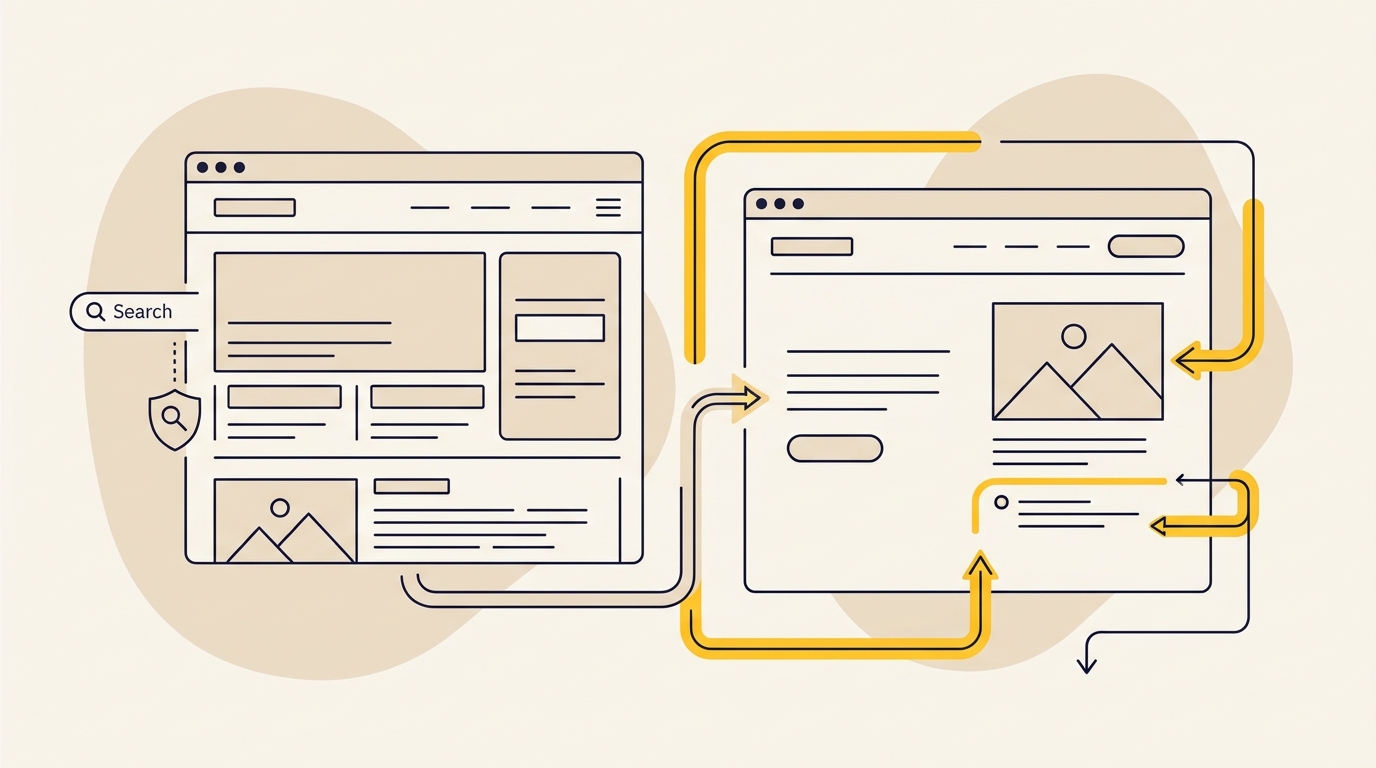
Imagine someone has described a narrow terrace house and asked ChatGPT for storage ideas. A sponsored joinery business should not send that person to a page with a broad company introduction and a menu of unrelated services. A better page would lead with compact-home storage, show relevant examples, explain the design and installation process, clarify the areas served and offer a specific consultation step.
Use this page checklist:
- Message match: Repeat the problem or benefit promised in the ad so the visitor knows they are in the right place.
- Clear hierarchy: Put the main headline, useful proof and next action where a visitor can find them quickly. A visual hierarchy is the arrangement of elements that shows what matters first, second and third.
- Relevant proof: Use genuine reviews, credentials, product details or examples that support the claim. Do not imply a result or qualification you cannot substantiate.
- Transparent next steps: Explain what happens after a form is sent, a call is booked or an item is purchased.
- Low-friction forms: Ask only for information needed to respond. Explain any sensitive or optional fields in plain language.
- Mobile usability: Check that text, buttons and forms work on a phone, where many visitors may arrive.
- Fast loading: Remove unnecessary images, scripts and effects that delay the page. Measure the actual page rather than promising a speed figure based on the design alone.
For a dedicated page that ties ad traffic to a clear enquiry flow, explore our website design service. If your campaign promotes a store, product imagery, variants, delivery information and checkout need the same message match as a service page.
What does a Sponsored Agent need to get right?
A Sponsored Agent is an AI-driven, business-sponsored chat that can answer questions about a company’s products or services. It is not just a chatbot with a logo. It is a designed interaction: it needs a purpose, approved information, limits and a clear route to a human or transaction when it cannot complete the task.
For a clinic, an agent might help explain appointment types, opening hours and how to prepare for a visit. It should not diagnose a condition, guarantee an outcome or invent clinical advice. For a boutique accounting firm, it might explain which services the firm provides and what information is needed for an initial discussion. It should not produce a binding quote if the firm has not authorised that behaviour.
Before launching one, document:
- Scope: What questions is the agent allowed to answer, and which are outside its role?
- Source of truth: Which approved pages, policies or product details may it use? Assign someone to keep them current.
- Guardrails: What must it never claim, such as unapproved prices, guaranteed results or eligibility decisions?
- Fallback: What should it say when it does not know? A safe response might offer a staff contact rather than guess.
- Handoff: How can the person book, buy, send an enquiry or reach a human?
- Brand voice: Does the wording sound like your business while remaining clear and calm?
- Testing: Have staff tried common questions, edge cases, ambiguous requests and attempts to make the agent go beyond its role?
The brief says Sponsored Agent conversations run separately from a user’s primary ChatGPT thread and do not have access to its private chat history. Confirm that point and any privacy details in current OpenAI documentation before launch. Do not design a customer experience that depends on the agent knowing something the person has not shared within the sponsored interaction.
For a business-sponsored conversation that needs thoughtful flows and a clear handoff, see our chat experience design service. Good interaction design helps make the agent useful; it does not remove the need for people to monitor the content and service process.
What tracking should you set up?
An impression is an ad display. A click is an interaction that takes someone to the destination. A conversion is the valuable action you have chosen to measure, such as a purchase or completed enquiry. These are different stages, and counting clicks alone does not tell you whether the campaign is commercially useful.
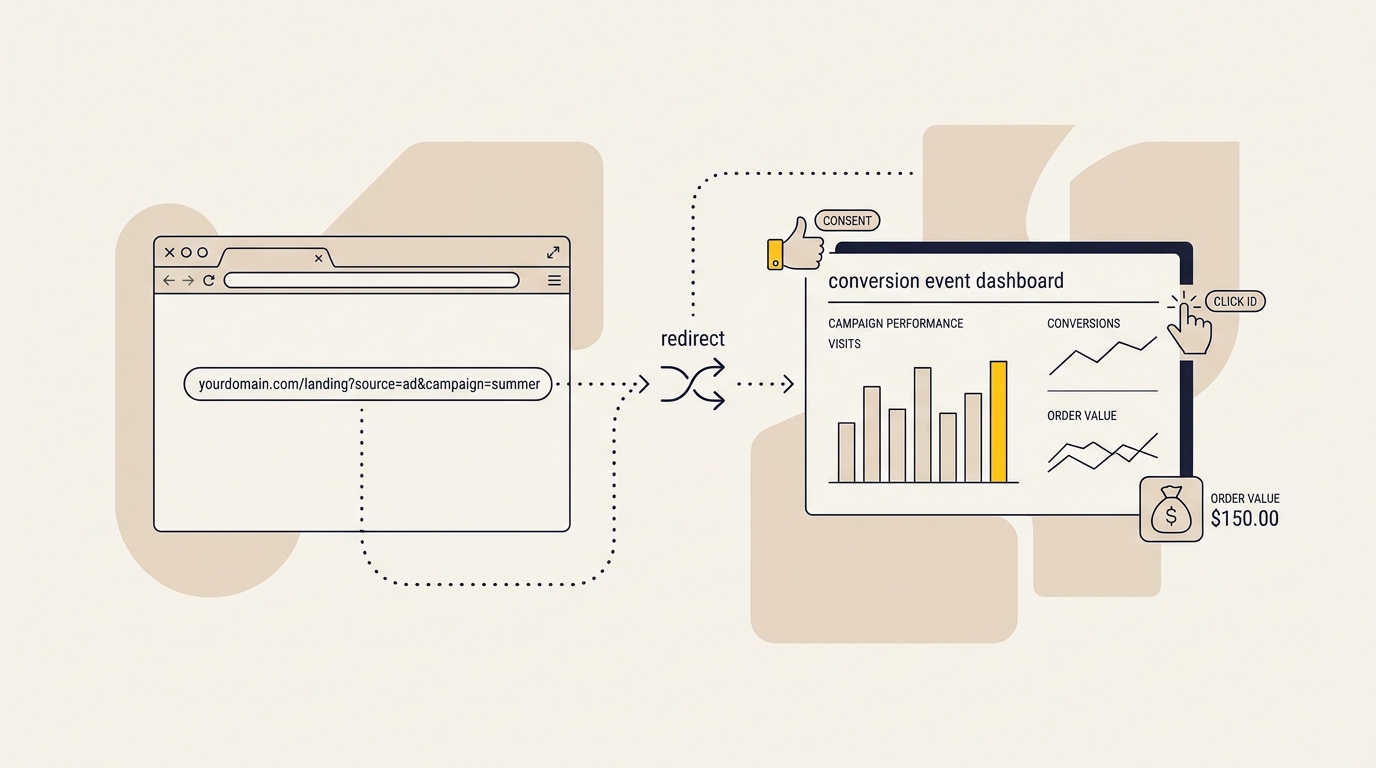
The brief reports support for an OpenAI Pixel and Conversions API, plus a native Google Analytics 4 connection and integrations for Shopify and HubSpot. A pixel is a tracking tool that records website actions. An API, or application programming interface, is a way for systems to send information to one another. Check the current set-up instructions and consent requirements before installing tracking tools, and do not assume an integration is active just because it appears in an account menu.
Before spending, decide which events matter. A Shopify store might track a completed purchase and the value of that order. A professional service could track a submitted enquiry, a phone click or a booked consultation. Where possible, separate a form start from a successfully submitted form so you do not mistake interest for a lead.
Use a simple measurement chain:
| Stage | What to check | What it can tell you |
|---|---|---|
| Delivery | Eligible impressions and spend | Whether the campaign is reaching people at all |
| Engagement | Clicks and click-through rate | Whether the ad message attracts attention |
| Visit quality | Relevant page views and enquiry actions | Whether the destination matches the promise |
| Business outcome | Qualified leads, sales and revenue | Whether the campaign supports a commercial goal |
Attribution means assigning credit for a sale or lead to one or more marketing interactions. A person may see an ad, return later through search and then contact you. Platform reports and website analytics may assign that outcome differently. Compare reporting windows and definitions, record actual enquiries in your CRM or sales process, and avoid adding platform-reported conversions together as though they were separate customers.
How do ChatGPT ads compare with Google and Perplexity ads?
The channels serve different moments. Google Search ads respond to a typed query and can capture explicit search demand. ChatGPT ads are described as responding to conversational context. Perplexity has also experimented with sponsored placements, but its format, access and commercial model may differ and should be checked directly before a comparison or budget decision.
| Question | ChatGPT ads | Google Search ads | Perplexity advertising |
|---|---|---|---|
| What can trigger a placement? | Context and conversation signals, subject to platform rules | A search query, keywords and campaign settings | Related search or answer context, depending on current product |
| Where does the ad appear? | Commonly below an answer or in other supported placements | On a search results page | Product placements can change as the platform experiments |
| What is the key test? | Does a conversational moment produce qualified action? | Does explicit search intent produce profitable action? | Is the available format and audience suitable for your offer? |
| What should you verify? | Current user eligibility, formats and bid options | Keyword coverage, match types and auction settings | Whether advertising is currently available to your business |
Do not transfer a Google campaign unchanged into ChatGPT. A keyword list is not the same as a description of a buyer’s situation, and a search results landing page may not answer the context that made the chat placement relevant. Start with a separate message and destination, then compare outcomes against your existing channels using qualified leads, sales and cost per acquisition where your data is reliable.
OpenAI’s information about new ways to buy ChatGPT ads is a useful source for current buying options. Perplexity’s own explanation of its advertising experiments is available in its advertising announcement. Treat platform announcements as descriptions of their own products, not independent evidence that one channel will perform better for your business.
Does paying for an ad make ChatGPT recommend your business?
No. The distinction described by OpenAI is that the paid ad is separate from the model’s independent answer. You should not expect a sponsored placement to make your company rank higher in organic answers, and you should not promise customers that advertising will buy a recommendation.
This separation creates a design and credibility challenge. A person may read an answer that recommends other options and then see your sponsored card underneath. The answer and placement can coexist, but the person will judge your business on its relevance, evidence and landing page. A paid ad cannot make an unsupported claim trustworthy.
That is why paid advertising and organic visibility need different plans. For organic visibility, publish clear information about your services, areas served, expertise, policies and proof. Use structured data where it accurately describes the business, and keep public business profiles and reviews current. These steps support people and search systems, but they do not guarantee a citation or recommendation.
DesignFIT’s free AI search audit can help identify issues with how your business is represented in AI search. For ongoing automated AI search optimisation across ChatGPT, Perplexity, Gemini, Grok, Claude and Google, SearchFIT is a related option. Neither should be confused with buying ad placement.
Which small businesses should test ChatGPT ads?
The best initial candidates have a clear offer, a well-defined audience and a next step that can be measured. The product’s conversational setting may suit a considered decision, but suitability depends on whether the right prospective customers can see the ads and whether you can serve them.
| Business situation | Potential reason to test | Main risk to check |
|---|---|---|
| Local trades or renovation | People may describe a specific project, location and constraint | Low-quality enquiries outside the service area |
| Specialist professional service | Prospects may need to understand fit before contacting a provider | The ad may reach users who are not the business’s decision-makers |
| Clinic or allied health service | People may compare appointment types and practical details | Avoid unsafe health claims and protect sensitive information |
| Niche e-commerce | A product can answer a specific need or visual brief | A click may not translate to a purchase if price or shipping is unclear |
| Generic low-cost product | A simple offer may be easy to understand | The economics may not support a relatively expensive click |
A business should be cautious if it has no clear conversion action, cannot respond to new enquiries, has a weak or confusing website, or depends on a very small audience that may be excluded by plan eligibility. A small test can still be useful, but do not launch just because a new platform is getting attention.
A practical decision checklist
Before you activate a campaign, confirm each of these points:
- I have checked current Australian access, user eligibility, placements and campaign terms in official OpenAI information.
- I know which one business result I am trying to improve.
- My offer matches a specific buyer situation and service area.
- The ad copy is accurate, concise and clear about the next step.
- The landing page continues the same conversation and works well on mobile.
- My tracking records the action that matters, not only an impression or click.
- A staff member can handle the enquiries or orders that come in.
- I have set a test budget and written down when I will pause, adjust or expand.
- I will compare qualified outcomes with other channels and include the cost of creative, landing-page work and follow-up.
What to expect next
ChatGPT advertising gives small businesses another place to test a relevant message, particularly when a person is actively exploring a problem. It does not remove the basics: the right audience must see the ad, the offer must make sense, the website must earn trust, and tracking must connect activity to real business outcomes.
Start small, check the current platform rules and use your own results to decide what to do next. If you are preparing a campaign, make the landing page and creative work together rather than treating design as a final coat of paint. Take the next step by exploring DesignFIT’s advertising service or, if your bigger concern is how AI systems describe your business, request the free AI search audit.
Key takeaway
Treat ChatGPT ads as a carefully measured new channel, and make sure the ad, conversation and landing page all lead to one useful next step.
Questions people ask
Can a small business advertise on ChatGPT without an agency?
The research brief reports that eligible Australian businesses can create self-serve campaigns through OpenAI Ads Manager, with a reported minimum daily budget of $25 AUD. Access, minimums and account requirements can change, so confirm them in the official Ads Manager before planning your spend.
Do ChatGPT ads change the AI’s organic recommendations?
OpenAI describes ads as separate from ChatGPT’s organic answers, so paying for an ad should not be treated as buying a recommendation. An ad may appear below an answer that names other businesses.
How much do ChatGPT ads cost per click?
The research brief reports suggested starting bids of $3 to $5 USD per click, but actual prices depend on the auction and campaign. Check current bid options and currency in Ads Manager, and set a test budget based on your own customer economics.
Are ChatGPT ads suitable for B2B businesses?
They may suit B2B offers that answer a specific problem and have a measurable next step, but the available audience matters. The brief says ads are shown to Free and Go users, so businesses targeting corporate decision-makers should validate audience fit before investing.
What should a ChatGPT ad link to?
Link to a page that continues the same problem or offer described in the ad, rather than defaulting to a generic homepage. Make the next step clear, provide relevant proof and check that forms or checkout work on mobile.