Brand Consistency in AI Search: Why Design Matters
Consistent brand signals help AI systems identify your business and describe it accurately. Here is how design makes those signals clearer.
On this page
- What does brand consistency mean in AI search?
- Why does design matter if AI reads information?
- How can AI search find and describe a business?
- Which brand signals should stay consistent?
- How should the website express the brand clearly?
- What is structured data, and should a small business use it?
- What should you do when rebranding?
- How do you measure whether consistency is improving?
- Common mistakes that make a brand harder to understand
- A practical brand consistency checklist
- What should a small business do first?
Brand consistency in AI search means presenting the same recognisable business, offer and facts across your website and other trusted places online. It will not guarantee that ChatGPT, Google or another assistant recommends you, but clear, consistent information makes it easier for people and search systems to understand who you are and what you do. Start by aligning your name, services and key messages, then make them easy to find through considered brand and website design. If you are reviewing your brand, DesignFIT’s brand design service can help connect those decisions to a consistent digital experience.
What does brand consistency mean in AI search?
Brand consistency is the practice of using the same core identity and facts wherever your business appears. That includes your trading name, logo, description, services, location, contact details and the way you speak to customers. It does not mean every post or page must look identical. It means a customer should be able to recognise the same business and understand the same basic offer across different channels.
AI search is a broad term for tools that use artificial intelligence to answer questions or summarise information. Examples include Google AI Overviews, ChatGPT, Perplexity, Gemini and Microsoft Copilot. Depending on the product and the query, an answer may draw on a model’s learned information, search results, live web pages or a combination of these. The systems differ, and their methods are not fully public.
A brand may be described in one way on its website, another way on a directory and a third way on social media. A person can often work out that these profiles belong to the same business. A search system may also connect them, but that is not something a business can assume. Consistent names, descriptions and links reduce ambiguity and give people clearer information to check. As Rise at Seven highlights in their analysis of brand consistency as an opportunity in AI search, keeping your commercial identity clear across platforms avoids confusing automated discovery systems.
That is the practical point: consistency supports clarity. It is not a magic ranking setting, nor is it a promise of inclusion in an AI answer. Think of it as good information design across the places where your customers and search systems may encounter you.
Why does design matter if AI reads information?
The design determines how information is organised, prioritised and presented. It affects whether a person can quickly see what a business offers, and whether the page structure makes the same facts clear to software that processes web content. A beautiful logo cannot fix a muddled service description. Equally, accurate text can be hard to use if it is buried in a confusing page or embedded in an image.
The important design decisions are often practical ones:
- Hierarchy: Make the business name, main offer and next step easy to find. A visitor should not have to hunt through several sections to understand what you do.
- Typography: Use readable type and clear heading styles so that page sections are easy to scan.
- Layout: Keep related information together. Put a service name, description and relevant evidence in the same section rather than scattering them across the page.
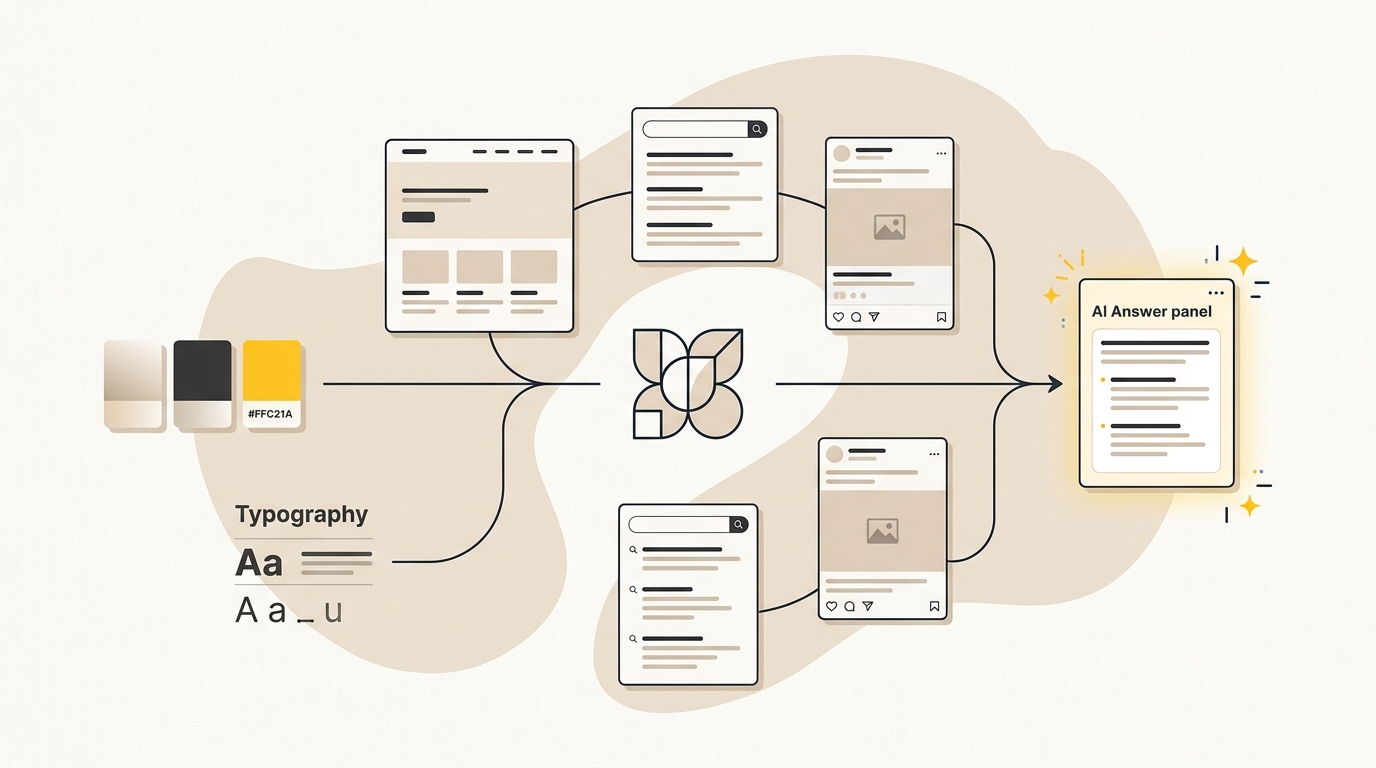
- Brand assets: Use the correct logo, colours and imagery consistently, while ensuring the text that explains the business is available as text on the page.
- Templates: Use shared layouts and styles for repeated content so different pages do not quietly develop different names, claims or visual rules.
These are not design details for decoration alone. They shape how quickly someone understands the offer, how much they trust the information and whether they know what to do next. DesignFIT’s approach is that design should perform, not just look polished. For a website, that means connecting website design and structure to the business facts and customer decisions the site needs to support.
How can AI search find and describe a business?
There is no single AI search process. Some systems search the web when a person asks a question. Others may use a search index, a model’s existing knowledge or other sources. A system that retrieves web pages may select relevant material, interpret it and produce a response. The result depends on the system, its sources, the wording of the query and the information available at that moment.
A few terms help explain the process:
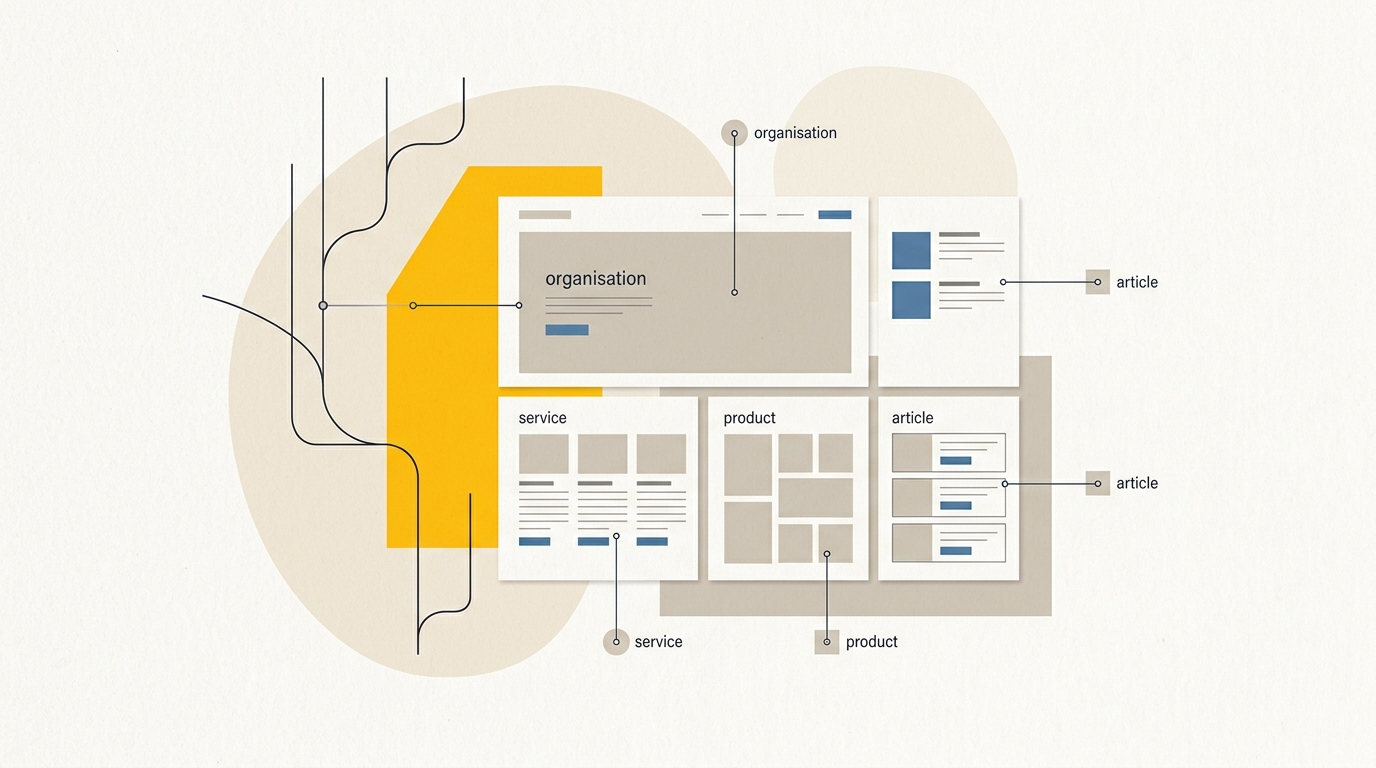
- Entity: A distinct person, place, organisation, product or other thing that information refers to. As explored in guides to entity SEO and brands in AI search, your business is an entity when sources describe it as a specific organisation rather than simply using general words such as design studio.
- Search index: A stored, organised collection of web information that a search service can use to find relevant pages.
- Retrieval: Finding and bringing relevant information into an answer process. Some AI search systems retrieve web pages in response to a question.
- Structured data: Information labelled in a standard format so software can interpret facts such as a business name or address more easily.
- Schema markup: A vocabulary used to describe things on a page in structured data. It can help search engines interpret information, but it does not guarantee a particular result or recommendation.
For example, a person might ask, ‘Which Sydney studio designs brand identities and websites for small businesses?’ An assistant may look for pages that clearly describe those services, the location and the intended customer. If one page says the studio serves small businesses in Sydney and another says it specialises only in enterprise software, the difference may make the business harder to describe accurately.
That does not mean a small wording difference automatically creates separate records inside a model. Claims that every variation of a business name splits it into separate vectors or lowers a specific confidence score are too definite. Businesses cannot see or control those internal calculations. The sensible action is to keep public facts coherent and make authoritative information easy to verify.
The Google documentation for organisation structured data explains how Google may use this markup to understand organisation details. It is useful guidance for Google Search, not proof that adding markup forces ChatGPT or another assistant to recommend a brand.
Which brand signals should stay consistent?
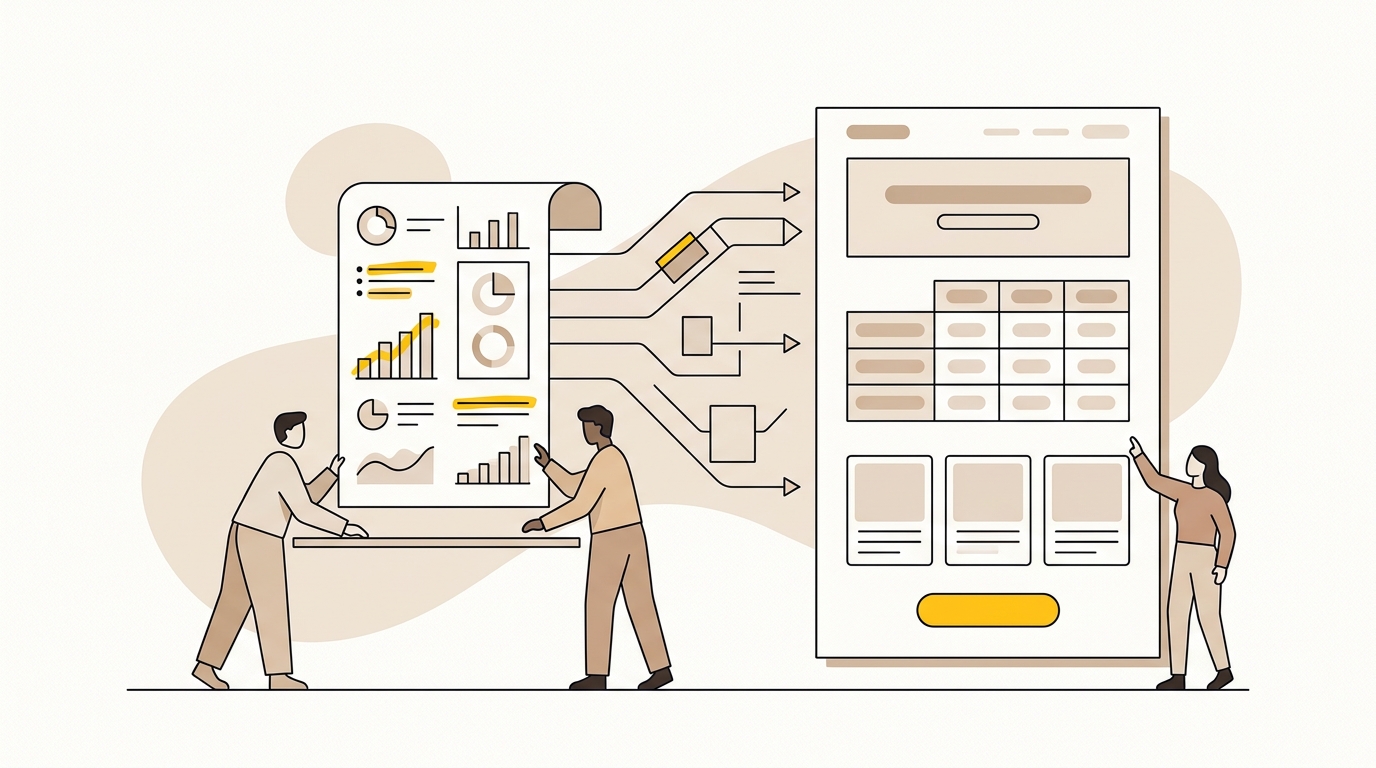
Begin with the facts customers use to recognise and choose you. Create a short reference document, then compare it against your website and profiles. It can be a simple table, not a lengthy brand manual.
| Brand signal | What to standardise | Where to check |
|---|---|---|
| Business name | The public-facing name, spacing and capitalisation | Website, Google Business Profile, social accounts and directories |
| Description | A plain-language explanation of what you do and who you help | Homepage, About page, profile bios and directory listings |
| Services or products | The names of your main offers and what each includes | Service pages, product pages, proposals and social profiles |
| Location and contact details | Current address or service area, phone and contact route | Website footer, contact page, profiles and directories |
| Brand assets | Current logo files, colours, fonts and image style | Website, downloadable material, social templates and partner pages |
| Proof | Accurate credentials, reviews, affiliations and case studies | Relevant service pages, profiles and published references |
Consistency does not require copy-and-pasting an identical paragraph everywhere. A short social profile has different needs from a detailed service page. The core facts should still agree. If your website says you provide custom Shopify development but your directory profile says you only build brochure sites, decide which statement is current and update the outdated one.
Keep distinctions clear too. Your legal company name may differ from your trading name. A parent company may own several brands. A clinic may have a registered business name and a separate patient-facing name. Explain these relationships rather than forcing every use into one name. The goal is not to remove legitimate differences; it is to make them understandable.
How should the website express the brand clearly?
Your website is a useful place to set out the current, authoritative version of your business story. It is not the only source that matters, and it cannot control what other sites say. But a clear site gives customers and systems a consistent reference point.
Make the first screen answer basic questions
The first screen is the part of a page a visitor sees before scrolling. It should identify the business or offer, make the audience and value clear, and show a useful next step. A visitor should not need to interpret a poetic slogan before learning whether you serve their area or solve their problem.
A useful homepage opening might explain, in plain language, that a business designs custom storage for apartments in Melbourne. A slogan can add personality, but it should not replace the description. If your business has several services, state the primary offer and guide visitors to clear service pages rather than squeezing every claim into one headline.
Use headings to organise real page content
A heading is a label for a section. On a web page, headings also provide structure for assistive technology and software. Use a clear main heading for the page, followed by section headings that accurately describe the content beneath them. Do not choose a heading only because it looks large; style and structure are related but not interchangeable.
This is where semantic HTML helps. HTML is the code used to structure web pages. Semantic HTML uses elements according to their meaning, such as a main content area, a navigation area or a heading, rather than using generic containers for everything. It supports a more understandable page structure, but it does not automatically make a page useful or authoritative.
Keep key service descriptions, locations and proof as selectable text on the page. Text baked into a banner image may be harder for some systems and users to access. Images can still support the message, but they should not be the only place a critical fact appears.
Make the visual system repeatable
A visual system is a set of reusable design choices, such as colours, type styles, spacing, buttons and image treatments. A design token is a named value for a reusable style, such as the colour used for primary buttons. A component is a reusable interface part, such as a service card or contact button.
Using shared tokens and components makes it easier to keep a site coherent as it grows. If five pages use five unrelated button styles, visitors may be unsure which action matters. If every service page has a different heading pattern, the site can feel like a collection of unrelated pages. A consistent template helps people recognise familiar elements and helps teams update information without rebuilding each page from scratch.
This is particularly useful when several people create content. Set rules for the logo, colours, typography, image crops, heading levels and calls to action. Then make the templates easy to use. A brand guide that describes rules but offers no usable templates can leave a team to improvise every time.
Make images and logos useful, not just decorative
Use a current, legible logo in suitable file formats and avoid stretching, cropping or recolouring it without a clear reason. Provide a useful text alternative for informative images. Alt text is a short written description attached to an image for people who cannot see it and for software that uses it as context. A decorative image may need different treatment from a diagram that contains important information.
Do not rely on a logo to explain what the business does. A logo identifies a brand; it is not a full description of its offer. Pair brand marks with clear text, and make sure social preview images and downloadable materials use current assets. This is especially important during a rebrand, when old versions may remain visible long after the new site launches.
Check social sharing previews
An Open Graph tag is metadata that can tell a social platform which title, description and image to show when someone shares a page. Correct preview information makes shared links more recognisable and avoids stale or irrelevant default images. This is primarily a presentation and sharing consideration. Do not treat it as a direct guarantee of AI visibility.
What is structured data, and should a small business use it?
Structured data is a standardised way to label facts about a page or organisation. For an organisation, the details might include its name, website, logo and official social profiles. JSON-LD is one format for providing this information in a script on a page, separate from the visible text. A developer or suitable website tool can add it, but the values still need to match what people can see and verify.
Structured data can clarify meaning for systems that support and use it. It cannot repair a misleading About page, outdated directory listings or conflicting service descriptions. Nor should a business add facts simply because a field is available. Only include accurate details, and ensure markup does not claim something the visible page does not support.
A practical starting point is to check whether your organisation details are accurate and consistent on the homepage and relevant profile pages. For local businesses, consider the right local business markup where it applies. Use Google’s current documentation and test the implementation rather than copying a code sample blindly. DesignFIT’s local business schema markup checklist can help you plan that review.
The research paper on Generative Engine Optimization, published as a research study and available through the paper on arXiv, tested changes to content presentation and measured their effects in the paper’s experimental setting. Its findings are interesting, but they are not a universal promise that a particular layout or tactic will increase every small business’s AI recommendations. Apply the useful lesson carefully: make information clear, specific and supported, then measure what happens for your own site.
What should you do when rebranding?
A rebrand changes more than a logo. It may involve a new name, positioning, visual identity, services, audience or business structure. A launch can look polished while leaving customers with inconsistent information elsewhere. Plan the transition as an information update as well as a design project.
1. Decide what is changing and what is not
Write down the old and new names, the effective date, the relationship between them and any changes to services or locations. Confirm whether the old name will remain as a product, trading name or legal entity. If the offer is unchanged, say so. If it has changed, describe the new offer accurately instead of leaving old service copy in place.
2. Choose one source of truth
Create a simple document containing the approved name, short description, longer description, contact details, locations, service names, current logo files and links to official profiles. Name a person responsible for maintaining it. This is a practical source of truth: a central reference your team can use when updating pages and profiles.
3. Map every place the old identity appears
List the website, Google Business Profile, social accounts, online directories, business listings, partner pages, email signatures, proposal templates and downloadable files. Include pages that are no longer part of the main navigation. An old landing page may still appear in search or be shared from a saved link.
4. Update the most authoritative and visible places first
Start with your website and profiles that customers commonly use to check your business. Update the name, description, logo, links, address and services as appropriate. Link old and new pages where that helps people understand the transition. Redirect an old web address to a relevant current page when you control it and the destination makes sense.
5. Ask third parties to correct their records
You may not control a directory, publication or partner website. Contact its owner with the correct facts and a suitable source. Keep a record of what you asked for and when. Do not assume an old mention will be updated automatically just because your homepage changed.
6. Check the customer journey
Test the new identity on a mobile phone and desktop. Check that a customer can recognise the brand from a search result, understand whether an old and new name refer to the same organisation, find the correct location and make contact. A clean rebrand is not only about visual consistency; it is also about making the change easy to follow.
7. Monitor what assistants actually say
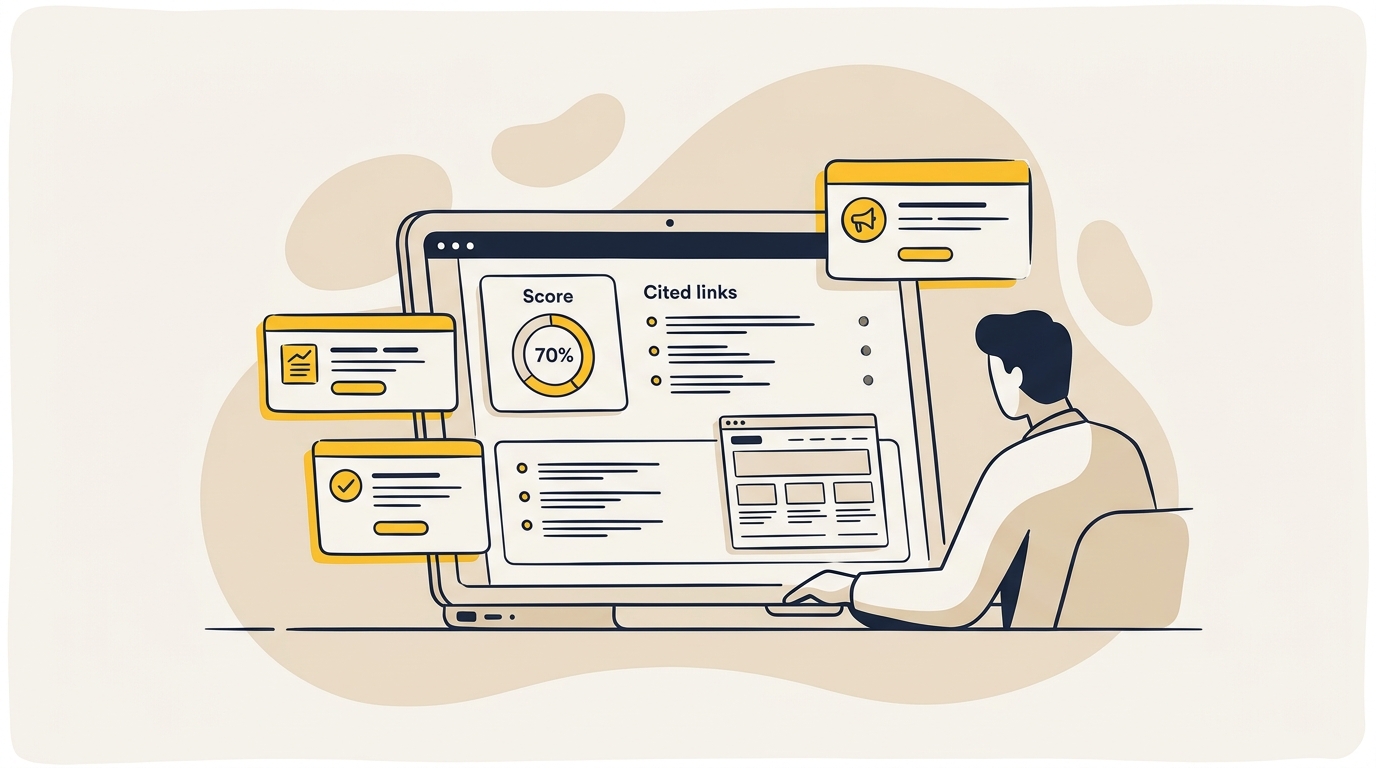
Try a small set of questions customers might ask, such as what your business does, where it operates and which services it offers. Regular testing, as detailed in industry resources on how to track brand visibility across top LLMs, involves recording the date and the answer, and noting any inaccurate details or missing context. AI answers can vary by query, location, account and time, so a single response is not a stable ranking report.
If an assistant repeats an old fact, fix the source you control first. Then identify the external pages that may still contain the outdated information. You can follow our founder guide to fix incorrect AI search info to handle these corrections systematically. For a broader check of how your business appears in AI answers, you can use DesignFIT’s free AI search audit. It is a starting point for diagnosis, not a promise that any change will secure a recommendation.
How do you measure whether consistency is improving?
Measure both the experience you control and the external signals you can observe. Do not focus only on whether a brand appears in an AI answer. That result can change, and a mention may not lead to a useful visit or enquiry.
Use a simple baseline before making major changes:
- Record the current facts. Note the business name, service descriptions, location and contact details shown on your website and key profiles.
- Save example AI queries and responses. Include questions that reflect real customer needs, not just your brand name. Record the date and tool used because answers can change.
- Review website behaviour. Use your analytics to see whether visitors reach the relevant service pages, engage with the content and contact you. A page view alone does not tell you whether the design is working.
- Track useful outcomes. Monitor enquiries, calls, bookings or sales that matter to the business. Where possible, ask new customers how they found you.
- Repeat the review after updates. Check for factual accuracy, broken links and old brand assets as well as changes in visibility.
A conversion is the action you want a visitor to take, such as making an enquiry or booking an appointment. A conversion rate is the proportion of a defined group of visitors who take that action. Define the action and the measurement period before comparing results. Otherwise, a change in traffic or season may be mistaken for a design effect.
For more involved reporting, separate brand discovery from business results. AI mentions can be an early signal that your information is being surfaced, while qualified enquiries and sales show whether that visibility is useful. If you use analytics, check that your tracking is configured sensibly and that you can distinguish meaningful sources where the platform allows it.
The Lucidpress State of Brand Consistency report discusses the business case for consistent brand presentation. Treat any broad revenue claims in brand-consistency research as a reason to take the topic seriously, not as a forecast for your company. Results depend on the offer, audience, execution and how outcomes are measured.
Common mistakes that make a brand harder to understand
Changing the description every few months
A business can refine its positioning, but repeated, unexplained changes leave customers unsure what it offers. Choose a stable plain-language description for core profiles. Test creative campaign language in supporting content without replacing the basic explanation everywhere.
Making the slogan do all the work
A slogan can communicate personality or a point of difference. It may not explain the service, customer or location. Keep the slogan if it fits, but pair it with a direct description that answers those practical questions.
Putting important facts only in images
A promotional graphic can look clear to a viewer, but key information should also be available in page text. This supports accessibility, copying and searching, and gives systems another way to interpret the content. Use images to enrich information, not to hide it.
Treating a schema plugin as a visibility shortcut
A plugin can make it easier to add structured data, but its presence is not proof that the data is correct or that a system will use it. Check the actual output, remove duplicated or contradictory markup and keep the visible information aligned.
Assuming every profile needs identical copy
Different platforms have different character limits and audiences. The wording can change to suit the format. Keep the meaning, named services, location and contact information aligned, and link profiles to the correct official site where possible.
Launching a new identity without a transition plan
A new logo on a new homepage does not update every old profile, search result, document or partner mention. Build time into the project for asset replacement, profile changes, redirects and follow-up. Treat these tasks as part of the rebrand rather than optional clean-up.
Chasing an AI trick instead of fixing the basics
New acronyms and tools can make AI search sound like a separate discipline with a hidden formula. Start with accurate, helpful pages, a clear identity, solid site structure and consistent public facts. The overview of generative engine optimisation from Seer Interactive is one perspective on the topic, but no single article can guarantee how every system will behave.
A practical brand consistency checklist
Use this checklist before a website launch, rebrand or major service update:
- Is the public business name written consistently, with any legal or trading-name difference explained?
- Does the homepage state what the business does, who it helps and where it operates, when location is relevant?
- Do service and product names match across the website and important profiles?
- Are key claims specific and supported by information a customer can check?
- Do headings and page sections make the content easy to scan?
- Is important information available as text, rather than only inside images?
- Are current logos and social preview images used across the channels you control?
- Do your website contact details match active business profiles?
- Is organisation or local business structured data accurate and consistent with visible content?
- Have you checked old pages, profiles and directory listings after a change?
- Have you recorded what AI tools say and checked whether the answer is accurate?
- Are you measuring useful actions, not just mentions or impressions?
The aim is not to make every touchpoint identical. It is to make the same business easy to recognise and understand, while giving each channel the format its audience needs.
What should a small business do first?
If your brand is already established, do not begin with a costly redesign just to influence AI. First audit the information you have: name, description, offers, location, logo and profile links. Correct contradictions and outdated facts. Then improve the pages where customers need to make a decision.
If the website is visually inconsistent or difficult to use, build a small, practical design system. Standardise a few core choices, create reusable page patterns and make the main service information clear. If you are launching or rebranding, set up a shared source of truth and profile-update plan before the new identity goes live. Those steps help the team deliver a coherent brand and give visitors a more reliable experience.
AI systems will continue to change. There is no public checklist that guarantees inclusion in every assistant’s recommendations. Clear design and consistent facts are still valuable because they help real customers understand the offer and reduce avoidable confusion across the web. For DesignFIT’s perspective on how that can support visibility, conversion and growth, review our brand guidelines service, then request a free AI search audit as your next step.
Key takeaway
Consistent names, clear service information and repeatable design make your business easier for people and AI systems to recognise, but no design change guarantees an AI recommendation.
Questions people ask
Does brand consistency affect AI search recommendations?
It can help make your business and offer clearer across the sources an AI system may consult. It does not guarantee a mention or recommendation, because systems use different sources and selection methods.
Will changing my brand name make ChatGPT forget my business?
A name change does not automatically erase your business from an AI system, but old and new information may coexist across websites and profiles. Explain the transition on your site and update the profiles and listings you control.
Does JSON-LD schema make AI assistants recommend my business?
No. JSON-LD can label facts in a format that some systems can interpret, but it cannot guarantee that an assistant will use those facts or recommend you. Keep the markup accurate and aligned with the visible page.
Can AI read text inside a website banner image?
Some systems can analyse images, but you should not rely on that for important information. Include key claims and service details as readable page text, and use images to support the message.
How often should I check my brand information in AI search?
Check after a rebrand, service change or major website update, then review it periodically. Record the tool, question and date because AI answers can vary and a single response is not a dependable visibility trend.