How to Rank in ChatGPT: A Small Business Guide
A practical, step-by-step guide to helping ChatGPT find, understand and cite your Australian business.
On this page
- How to rank in ChatGPT: what matters first
- Before you start: what you need
- Step 1: Choose the questions that could bring a client
- Step 2: Make sure your site can be crawled
- Step 3: Check Bing discovery, not just Google
- Step 4: Write a service page that answers the question early
- Step 5: Make your business details specific and verifiable
- Step 6: Use structured information as support, not a shortcut
- Step 7: Build useful evidence around your expertise
- Step 8: Design the citation landing page to convert
- Step 9: Test, track and improve without chasing folklore
- Mistakes to avoid when trying to rank in ChatGPT
- A practical checklist for your first month
- The short version
To understand how to rank in ChatGPT, focus on being discoverable in search, easy for crawlers to read, and clear enough to cite. There is no reliable shortcut or guaranteed position: improve the evidence ChatGPT can find about your business, then make the page useful when a potential client follows a citation. Start with a free AI search audit to see where your business currently appears and what needs attention.
ChatGPT Search can use web search and cite pages in its answers. OpenAI documents a dedicated search crawler, while industry research suggests Bing visibility can matter. But OpenAI does not publish a complete ranking formula, so treat Bing and crawler access as important foundations, not a promise of a citation.
This guide is for Australian service businesses, including clinics, law firms, consultancies and trades. It walks through the checks and design changes that can make your business easier to find, verify and contact, without AI ranking gimmicks.
How to rank in ChatGPT: what matters first
ChatGPT does not offer a simple ranking position that you can buy or reliably control. When it searches the web, it can retrieve and interpret pages, then cite some of the sources used to build its answer. Your practical goal is to make your business a strong, credible match for the kinds of questions your clients ask.
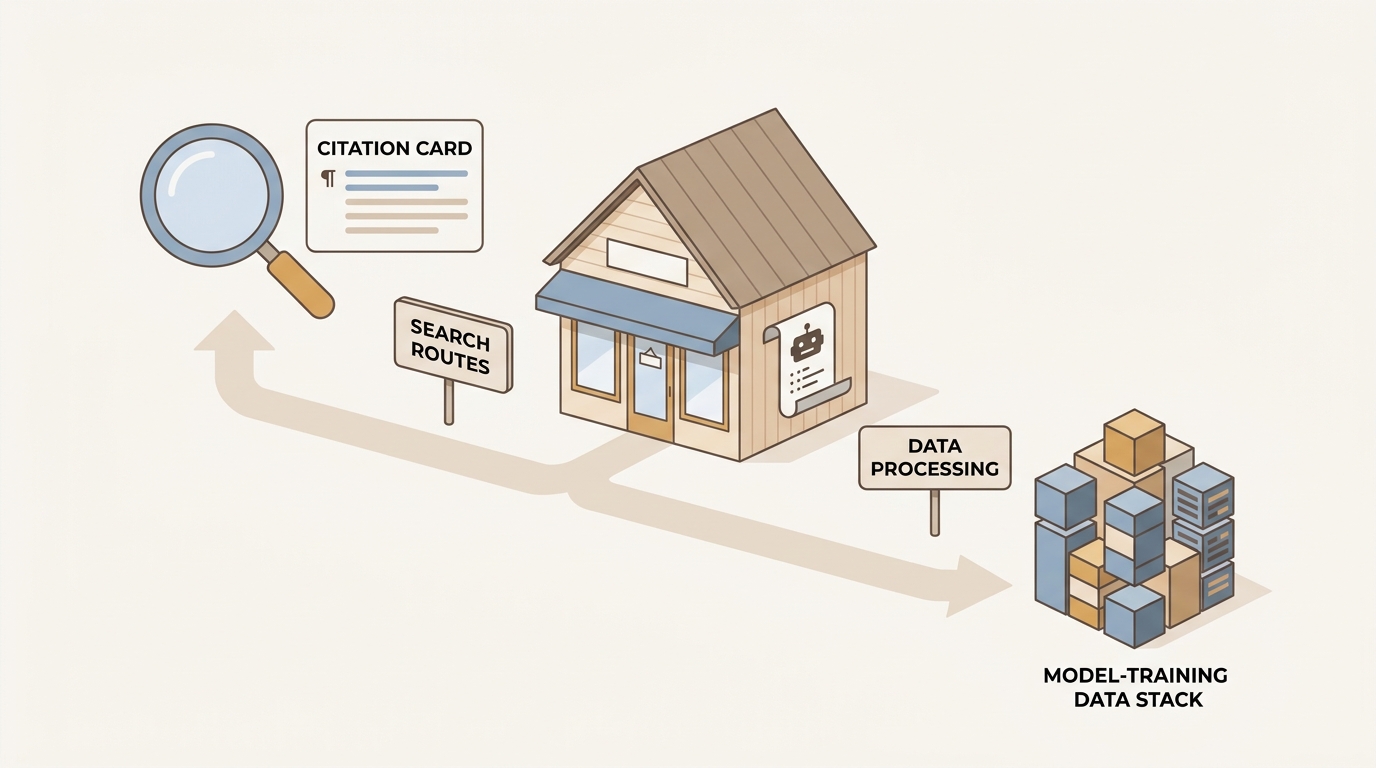
ChatGPT Search is a ChatGPT feature that can use live web information to answer a question and provide source links. OpenAI’s documentation for its web crawlers distinguishes OAI-SearchBot, which is used for search, from GPTBot, which is used to gather content that may help train models. These are separate purposes, and you can make a different access decision for each.
The work breaks into four connected areas:
- Access: Search engines and relevant crawlers can reach your pages.
- Understanding: Your website states what you do, where you do it and who you help in plain, specific language.
- Verification: Your business details and credentials are supported by consistent information across relevant sources.
- Conversion: A person who clicks a citation lands on a well-designed page that answers their next question and makes contact straightforward.
That last point is easy to miss. Getting cited is not the same as getting an enquiry. A useful service page needs clear hierarchy, readable content, visible proof and a next step. Our guide to service page design that turns visitors into enquiries covers the same conversion fundamentals from the visitor’s point of view.
Before you start: what you need
You do not need a specialist AI platform to begin. You need access to your website, a list of your priority services and locations, and a few ways to check whether search engines can find your business.
Gather these first:
- Website access: Know who manages your site and how to edit its text, page titles, navigation and footer. If a developer or agency manages it, ask who can check robots.txt, crawler access and redirects.
- A priority service list: Choose the services you want to sell, rather than trying to optimise every page at once. Note the names clients actually use, not just your internal service labels.
- Your service area: List the suburbs, towns, regions or states you genuinely serve. Do not add locations just because you hope to attract searches there.
- Verified business facts: Confirm your trading name, address or service area, phone, opening hours, ABN or ACN, relevant registrations, qualifications and current pricing information.
- Search tools: Set up Google Search Console and Bing Webmaster Tools if they are not already in place. They help you see whether pages are indexed and whether there are technical problems.
- A simple baseline: Record the questions you want to be found for, whether your business appears in ChatGPT, and which pages receive enquiries. Repeat the same checks later.
Do not begin by buying a service that promises a fixed ChatGPT ranking. No vendor can guarantee which businesses ChatGPT will cite for every prompt. If you are considering a larger site or a site rebuild, our website design service can help connect the technical, content and conversion work rather than treating them as separate jobs.
Step 1: Choose the questions that could bring a client
Start with buyer questions, not a list of AI keywords. A clinic might be relevant for “Do I need a referral to see a physiotherapist in Newtown?” A commercial law firm might want to answer “What does a commercial lease review include in Sydney?” A trade business might focus on “Who repairs a leaking roof in the Inner West?”
Write down questions from real customer conversations, enquiry emails, sales calls, reviews and your team’s frequently asked questions. Then group them by intent:
| Question type | What the person needs | A useful page or answer |
|---|---|---|
| Service fit | Is this the right provider or service for my situation? | A focused service page with scope, suitability and limitations |
| Location | Does this business work in my area? | A location page or a clear service-area section |
| Cost | What might this cost, and what changes the price? | A transparent pricing guide or an honest range with context |
| Process | What happens after I enquire? | A clear process section with steps and expected timing |
| Trust | Is the provider qualified and credible? | Verifiable credentials, team details and relevant examples |
| Comparison | What is the difference between these options? | A balanced comparison that explains who each option suits |
Prioritise questions that connect to a real service and have a clear next step. A general question such as “What is marketing?” could attract broad attention, but it may not help a local consultancy win suitable work. A specific question about choosing a marketing consultant in Brisbane is closer to a buying decision.
Keep a prompt list that reflects how people naturally ask, including the location and situation. For example, “Which family lawyer can help with a parenting matter in Newcastle?” is more useful for testing a local legal practice than a generic prompt such as “best lawyers”. Do not assume one test represents every user. Answers can vary with wording, location, timing and the information ChatGPT retrieves.
Step 2: Make sure your site can be crawled
A crawler is an automated program that visits web pages to read or index their content. If your important pages cannot be reached, the content may not be available to the systems that could surface it.
Start with your robots.txt file, usually available at yourdomain.com/robots.txt. It contains instructions for crawlers. OpenAI’s bot documentation explains the roles of OAI-SearchBot and GPTBot. If you want your pages to be considered for ChatGPT Search, check that you have not unintentionally blocked OAI-SearchBot. If you choose to block GPTBot for training-related reasons, do not assume that this alone blocks search access. Check OpenAI’s current documentation before changing crawler rules.
A simple robots.txt rule allowing a crawler can look like this:
User-agent: OAI-SearchBot
Allow: /
Do not paste rules into your site without checking the existing file. A broad disallow rule, conflicting instructions or a configuration added by a security tool can have wider effects than intended. Ask your developer or hosting provider to confirm the final rules and test that the important pages return normally.
Then check these common access problems:
- Blocked pages: A robots.txt rule or security plugin may prevent crawlers from reaching a service page.
- Access denied responses: A firewall, bot filter or caching setup may return an error to automated visitors even when the page works for you.
- Pages that rely on scripts: If key service details only appear after a complex script runs, make sure essential text is still available in the rendered page.
- Unhelpful redirects: Old service URLs should redirect to the right current page, not to the home page or an unrelated service.
- Missing or inaccurate sitemap: A sitemap can help discovery, but it does not guarantee indexing. Keep it limited to useful, live pages.
- No index instructions: Check that pages you want found have not accidentally been marked “noindex”.
The point is not to make every page accessible to every bot. Decide which access you want, document it and avoid blocking the search crawler by accident. For a broader technical and content review, use the free AI search audit as a starting point.
Step 3: Check Bing discovery, not just Google
Google Search Console is useful, but it is not the only search tool worth checking. Bing Webmaster Tools gives you another view of whether your site is discoverable in Bing. Industry analysis has found overlap between Bing results and ChatGPT citations, including the Search Engine Land study of ChatGPT citations. That overlap is a reason to check Bing, not proof that a particular Bing position will produce a ChatGPT citation.
Set up Bing Webmaster Tools, verify your domain and inspect your priority URLs. Look for indexing issues, crawl errors and pages that are not being discovered. If you use a sitemap, submit it there and confirm it contains your current canonical pages, not old URLs, drafts or duplicate versions.
You may also see IndexNow offered through your content management system, plugin or hosting provider. It is a way to notify participating search engines that a URL has changed. It can support faster discovery of updates, but it does not guarantee that a page will be indexed, rank or be cited. Use it as a notification mechanism, not a substitute for a useful page or sound site structure.
Check your core service pages first. A common issue is that the home page is indexed while the pages that explain individual services are not. Another is that a page is indexed under an old URL after a redesign. Keep the preferred version clear, link to it from your navigation or relevant pages, and redirect outdated versions properly.
Step 4: Write a service page that answers the question early
A good service page should answer the visitor’s first important question before it starts telling the business’s history. The opening should quickly state who you help, what you do and where you work. This is good for busy readers and helps a retrieval system match the page to a specific question.
For example, a Sydney commercial lawyer could open with a direct description of the work, the kinds of clients served and the area covered. A clinic could state the treatments it provides, who may be suitable and whether a referral is required. Only include details that are accurate and current.
Use this simple page structure:
- Direct summary: Name the service, intended client and location.
- Scope: Explain what is and is not included.
- Fit: Describe who the service is for and any situations where it may not be suitable.
- Process: Show what happens from first contact to delivery or appointment.
- Price or pricing factors: State a fee, a realistic range or the specific factors that affect a quote, where you can do so accurately.
- Proof: Identify relevant credentials, registrations, experience or examples that can be verified.
- Next step: Make it obvious how to ask a question, book or request a quote.
Use headings that describe the information beneath them. “How much does a commercial lease review cost?” tells the reader and the search system what the section covers. “A smarter path forward” does not. Put a short, direct answer immediately beneath each question heading, then explain qualifications or context.
Do not force the same template onto every page. A service page for a regulated healthcare provider needs clear, responsible information about suitability and credentials. A trade service page may need to explain call-out areas, job types and how quotes work. The useful structure is the one that makes the decision easier for that customer.
A website designed for AI search should still be designed for people. Use a clear reading order, informative subheadings and visible calls to action. The design should not make key facts hard to scan on a phone, hide them behind an unnecessary interaction or place the contact option far below the answer.
Step 5: Make your business details specific and verifiable
AI systems need to distinguish one business from another. Consistent, specific information helps people and search systems connect your website with the correct organisation, services and locations.
Check these details across your website and the profiles you actively maintain:
- Your business name and any commonly used trading name.
- Phone number, address or stated service area.
- Opening hours and appointment or service availability.
- Service names and the locations where each one is offered.
- ABN or ACN where appropriate, plus relevant registrations and professional credentials.
- Current team information, including qualifications where relevant.
- A clear description of what your business does, written consistently across key profiles.
For a professional or regulated service, use the relevant official register to check credential details. A healthcare provider should ensure practitioner information matches the appropriate registration records. A law firm should make its professional details easy to verify through the appropriate legal bodies. A builder or trades business should use the relevant state or territory licensing information where applicable. Avoid displaying credentials that are expired, unclear or not relevant to the service being offered.
Review third-party business profiles that matter to your customers, such as Google Business Profile, Bing Places and legitimate industry directories. Correct errors, remove duplicate listings where possible, and avoid creating profiles on low-quality directories solely to increase mentions. A consistent profile is more useful than a large number of questionable citations.
Reviews can help a potential client assess a business, but do not buy or fabricate them. Invite genuine customers to leave honest feedback through the platforms you use, and respond professionally when a review raises an issue. Never expose a client’s private details in a reply, particularly in healthcare, legal or other sensitive services.
Step 6: Use structured information as support, not a shortcut
Structured data is machine-readable information added to a page to describe things such as an organisation, a local business or a service. It can help search systems interpret details, but it cannot make an inaccurate claim true or force ChatGPT to cite you.
Where it fits your business, ask your developer to check whether appropriate Schema.org types are implemented correctly. This might include an organisation or local business description, a service, and contact information. Keep the structured details aligned with what a person can actually see on the page. Do not add ratings, services, locations or credentials that are not supported by visible content.
A useful technical handover should include:
- Which pages have structured data and what types they use.
- Whether the business name, URL, phone and location match the page.
- Whether the data is valid and free of errors.
- Who will update it when services, prices or locations change.
The same principle applies to llms.txt. It is a community proposal for offering information to language models in a particular format. It is not a verified way to earn a ChatGPT citation. Our separate guide explains whether your business needs an llms.txt file. Resolve crawl access, indexing, page clarity and trust information first.
Step 7: Build useful evidence around your expertise
A single service page cannot answer every question a buyer has. Add supporting pages where they genuinely help someone make a decision: a pricing guide, a process explanation, a location page or an informed comparison of options.
For example, a physiotherapy clinic might have a service page for sports injuries, a clear explanation of referral requirements and a page describing how an initial appointment works. A consultancy might explain which projects it takes on, what a typical engagement includes and how the discovery process works. These should be distinct, useful pages, not thin copies with only the suburb name changed.
Show evidence in a way that can be checked. This may include named team members and qualifications, current professional registrations, original examples of work, a transparent process, or a clear explanation of the business’s experience. Do not publish confidential client details or imply that an example guarantees the same result for every client.
Where you state a fact, make the source or context clear. If you publish a price, say what it includes and when it was last reviewed. If you discuss a regulation, link to the relevant authority and check that the page is current. If a service is only available in certain areas, state that plainly.
Industry research on how ChatGPT search retrieves and cites pages, such as this explanation of ChatGPT search and retrieval, can help explain why clear source material matters. Treat practical recommendations in third-party articles as hypotheses to test, rather than official ranking rules.
Step 8: Design the citation landing page to convert
A citation only becomes commercially useful if a person can understand the offer and take the next step after they arrive. Design the page around the likely reason for the visit, not around a generic company introduction.
Check the page on a phone as well as a desktop. The main service and location should be easy to identify without hunting through navigation. Make contact details visible, label buttons clearly, and keep forms limited to information you need for the next conversation. If a page answers a specific question, connect the answer to a relevant service or enquiry option.
Use visual hierarchy with purpose:
- A clear page title tells visitors where they have landed.
- Short sections and descriptive headings make details easy to scan.
- Lists and tables can clarify inclusions, steps or differences between service options.
- Real team, location or work imagery can support trust when it is relevant and properly represented.
- Strong contrast and readable type make the content accessible to more people.
- A specific call to action tells the reader what will happen next.
Avoid a hero banner that fills the screen with a vague slogan and pushes the actual service details below the fold. Avoid putting important information only in an image, downloadable PDF or complex interactive widget. Keep the first screen focused: the visitor should quickly see what you offer, who it is for and how to proceed.
If ChatGPT sends someone to a general home page when a specific service page would answer their question better, the visitor has to do extra work. Make internal links between related services, location pages and decision guides so both readers and crawlers can follow the site’s structure.
Step 9: Test, track and improve without chasing folklore
You cannot reliably judge ChatGPT visibility from one prompt. Create a small, repeatable test set based on your real services and locations. Use the same prompts periodically, record whether your business appears, note which pages are cited and capture the competitors or directories that appear instead.
For a local legal practice, that might include questions about a named service and a real service area. For a clinic, test the practical questions clients ask before booking. Keep the wording natural and vary it enough to reflect different ways people describe the same need. Do not repeatedly prompt ChatGPT to recommend your business and treat the result as an independent audit.
Track business outcomes as well as mentions:
- Organic visits to key service and location pages.
- Enquiries that mention ChatGPT or another AI tool, if you ask this in a respectful way.
- Calls, bookings or quote requests from pages that receive search traffic.
- Search Console and Bing Webmaster Tools data for indexing and search performance.
- Whether your key business facts stay accurate across your site and profiles.
If your business is not mentioned, diagnose the gap before publishing more. Is the page blocked? Is the business absent from Bing? Does the page clearly answer the question? Is the location or credential information unclear? Does a trusted, relevant source support your claims? Fix the most likely issue, then test again.
Search answers change. A new page may take time to be discovered, and a citation can appear for one prompt but not another. Keep a simple record of the prompt, date, answer and cited URL so you can compare like with like. Avoid expensive tools unless you know what decision they will help you make.
Mistakes to avoid when trying to rank in ChatGPT
Buying guaranteed rankings
No legitimate provider can promise a permanent top position in ChatGPT’s generated answers. Ask what work will be done, what evidence will be reported and whether the proposal improves your underlying site, content and business information.
Blocking the search crawler by accident
A security tool or robots.txt change can prevent crawling. Check OAI-SearchBot access deliberately, and separate your search visibility choice from your decision about GPTBot. Use OpenAI’s documentation rather than assumptions copied from old guides.
Writing for a supposed AI formula
Repeating the same phrase, adding awkward question-and-answer blocks everywhere or stuffing pages with locations does not make a business more credible. Write answers that are genuinely useful, specific and accurate.
Hiding key facts in design elements
If prices, service areas or qualifications are only visible in an image, downloadable document or interaction that fails to load, readers may miss them. Put important facts in accessible page text and make the layout easy to scan.
Publishing thin location pages
Pages that swap one suburb name for another without explaining a real local service, team or coverage area are not helpful. Create location content only when you can offer relevant information for people in that place.
Treating structured data as proof
Schema markup describes information. It does not independently verify it. Keep claims consistent with visible page content and authoritative records.
Ignoring the visitor after the citation
A page can be readable to a crawler yet confusing to a potential client. Make the next step clear, explain what happens after contact and ensure the page works well on mobile.
A practical checklist for your first month
Use this checklist to move from guesswork to a manageable first pass. The order matters: first make the site accessible, then improve the pages that matter most, then check whether the work is helping.
- List your three to five most commercially important services and the real areas you serve.
- Write down the common questions clients ask before they contact you.
- Check that your priority pages load, are not marked noindex and are not blocked unintentionally.
- Review robots.txt and confirm your choice for OAI-SearchBot and GPTBot.
- Verify your website in Google Search Console and Bing Webmaster Tools.
- Review each priority service page’s opening, headings, price or quote explanation, proof and contact path.
- Check business details and credentials against your authoritative records and profiles.
- Test your pages on a phone and remove design friction that hides key information.
- Record a small set of ChatGPT prompts and note the answers and cited pages.
- Recheck the pages and results after making a change, then prioritise the next biggest gap.
You do not need to complete every item in one sitting. Start with the pages that support your main services. A focused improvement to a core service page is usually more useful than a large batch of rushed, generic articles.
The short version
To improve your chances of being cited in ChatGPT, make your important pages crawlable, check Bing discovery, explain your services and locations clearly, and support your claims with consistent, verifiable information. Design each page for the person who arrives from a citation, not just for a crawler. There is no guaranteed ranking trick, but there is a practical process you can review and improve.
If you want help identifying the highest-impact gaps, take the next step with DesignFIT’s free AI search audit.
Key takeaway
Make your business easy to find, verify and understand, then design the cited page to help a real person take the next step.
Questions people ask
Can I pay OpenAI to rank first in ChatGPT?
There is no public paid placement that guarantees a first position in ChatGPT’s organic answers. Be cautious of any service that promises a fixed ranking.
Does ChatGPT use Google or Bing to find information?
OpenAI documents its own search crawler, and industry studies have found overlap between Bing results and ChatGPT citations. OpenAI does not publish a complete description of its ranking pipeline, so treat Bing visibility as an important check, not a guaranteed route to citations.
Do I need an llms.txt file to rank in ChatGPT?
No. An llms.txt file is not a confirmed way to earn citations. First make sure your pages can be crawled, are discoverable in search and clearly answer useful questions.
If I block GPTBot, will ChatGPT Search stop showing my website?
OpenAI distinguishes GPTBot, used for potential model training, from OAI-SearchBot, used for search. Check the current [OpenAI crawler documentation](https://developers.openai.com/api/docs/bots) and configure the access you want for each bot.