Hiring a Shopify Plus Designer: Cost and Questions
A practical guide to choosing a Shopify Plus designer who can shape a store around your customers, team and growth plans.
On this page
- What does a Shopify Plus designer do?
- How is a Shopify Plus designer different from a standard Shopify designer?
- What should a Shopify Plus designer work on beyond the theme?
- How much does it cost to hire a Shopify Plus designer?
- When should you hire a designer, developer or agency?
- Questions to ask before hiring a Shopify Plus designer
- Red flags when choosing a Shopify Plus designer
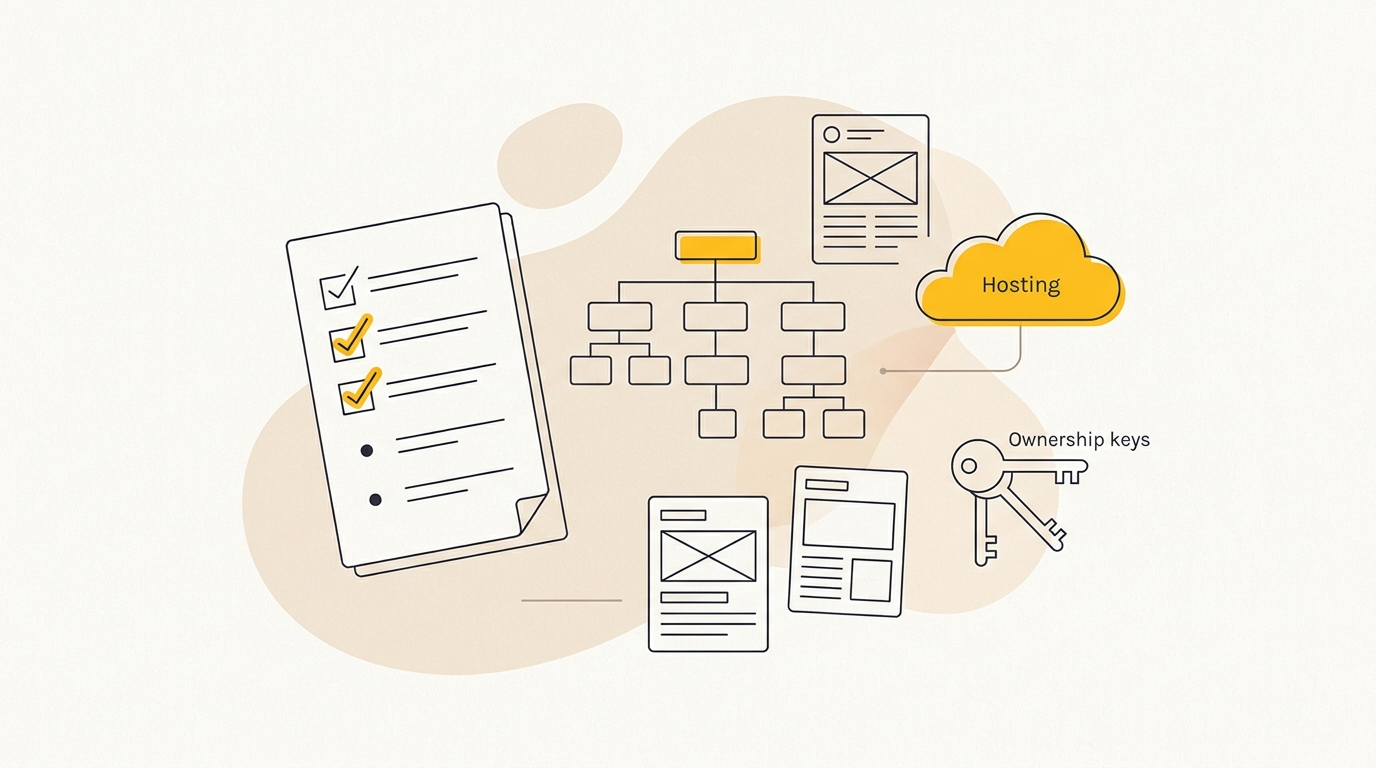
- A practical hiring checklist
- What should you prepare before the first call?
- The bottom line
A Shopify Plus designer plans how a high-volume online store looks and works, from product discovery to checkout. The role goes beyond choosing a theme: it should connect brand, customer experience, store operations and performance, while staying within Shopify’s platform limits. If you are comparing scopes or budgets, start with our Shopify Plus redesign cost guide and use this article to assess who can deliver the work.
Shopify Plus does not automatically mean you need a completely custom site or a large agency. The right hire depends on what is hard about your store today: conversion, wholesale ordering, international storefronts, a complex migration, or keeping a growing team consistent as it publishes new pages.
What does a Shopify Plus designer do?
A Shopify Plus designer turns business goals and customer needs into the structure, visual system and interactions of a Shopify store. They decide what users see, what they can do, and how those choices are translated into a build that Shopify and your team can support.
A designer is not necessarily a developer. A designer researches, maps journeys, creates page layouts and interaction specifications, and tests design decisions. A developer implements the designs in the Shopify theme, checkout extensions or connected systems. Exploring the distinction between a Shopify developer vs designer helps clarify who owns which deliverable. Some specialists can do both, but you should ask which parts they personally design and which parts they build.
A Plus project may involve a number of connected responsibilities:
- Customer experience design: planning how shoppers find products, compare options, understand delivery and returns, and complete a purchase.
- Visual design: choosing and applying layout, typography, colour, imagery and interaction patterns so the store feels recognisable and easy to use.
- Conversion design: organising information and calls to action to help the right customer make a confident purchase. Conversion means the desired action, such as placing an order or submitting a wholesale enquiry. Dedicated Shopify Plus design practices focus directly on refining these conversion paths.
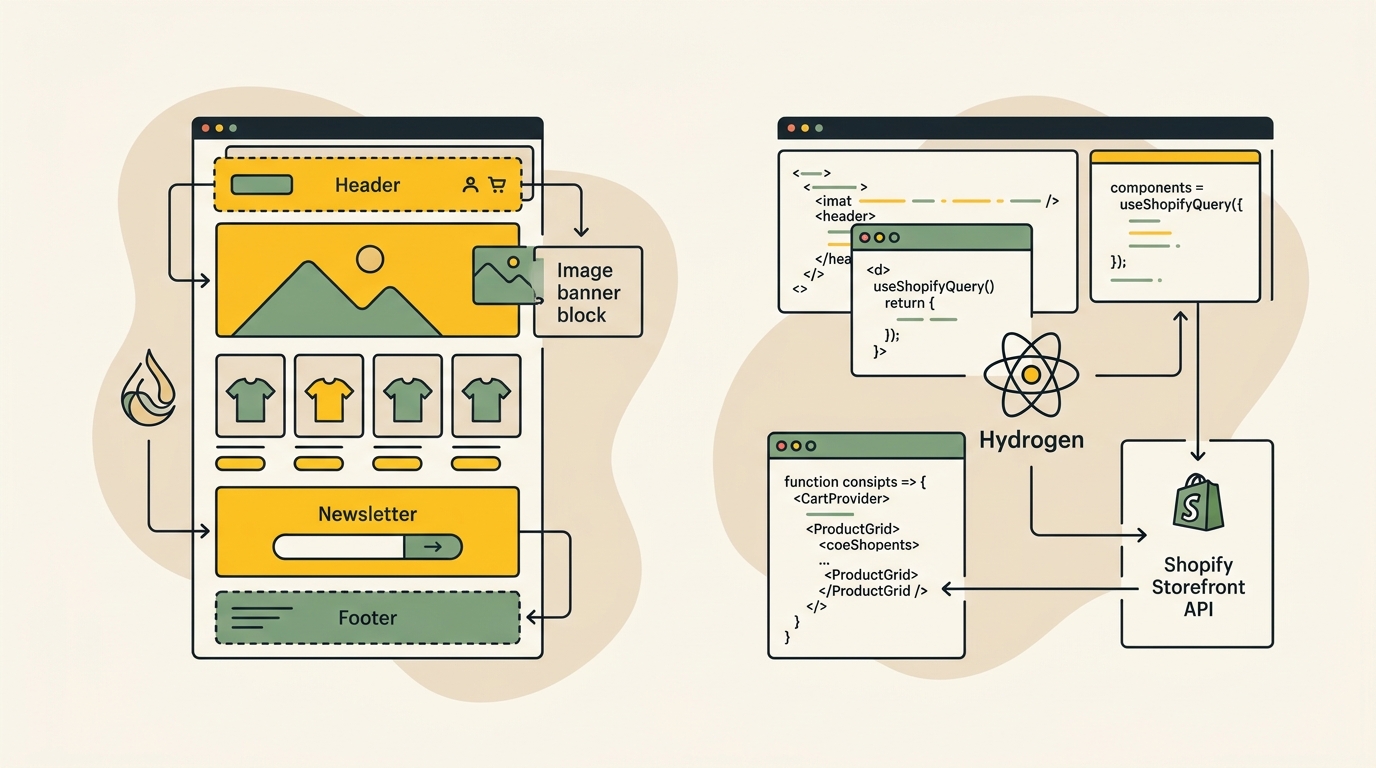
- Design systems: creating reusable rules and components so new pages remain consistent and quicker to produce.
- Platform-aware design: shaping the experience around Shopify’s theme structure, checkout capabilities, apps and integrations rather than drawing features the platform cannot support.
- Collaboration and quality checks: giving developers clear responsive layouts, states and content guidance, then reviewing the built store against the intended experience.
The Shopify Plus platform overview describes capabilities aimed at businesses with more complex commerce needs, as outlined in Shopify's guidance on when to upgrade to Shopify Plus. The important hiring question is not whether a designer can repeat the feature names. It is whether they can explain which of those capabilities solve a real problem for your customers or operations.
What does “conversion design” mean?
Conversion design is the practice of making it easier for a visitor to take a useful next step. In a store, that can mean improving product comparison, showing delivery information earlier, making size selection clearer or reducing unnecessary steps before purchase.
It is not the same as adding more buttons or promotional banners. A page can look polished and still leave shoppers unsure about what is included, whether a product suits them, or what happens after they order. A good designer uses customer questions, store data and usability feedback to decide what information belongs where.
How is a Shopify Plus designer different from a standard Shopify designer?
The fundamentals are similar: both should understand customers, brand, mobile layouts and Shopify themes. The difference is usually the complexity of the business and the decisions the design must accommodate, not a completely separate set of design principles.
A standard Shopify project may centre on a single storefront, a theme, product pages and a few integrations. A Plus project can involve more connected requirements, such as wholesale and retail experiences, multiple markets, complex promotions or a checkout that must fit a larger operating model. Shopify Plus is not a shortcut around good design. It gives some businesses additional capabilities, but those capabilities still need a clear purpose and a well-planned customer experience. For more on platform tiers, see our comparison of Shopify vs Shopify Plus.
| Project situation | What the designer should consider |
|---|---|
| One main store and a focused product range | Theme structure, product discovery, mobile usability and a consistent brand experience |
| Wholesale and direct-to-consumer sales | Different customer journeys, account access, pricing visibility and bulk ordering needs |
| Selling in several countries | Local currency, language, shipping expectations, product availability and market-specific content |
| A complex checkout or promotion | What Shopify supports natively, what needs an extension, and how the change affects the purchase journey |
| A large team publishing pages | Reusable components, permissions and guidance that help staff create pages without breaking consistency |
| Moving from another commerce platform | Content and data migration, redirects, integrations, customer expectations and launch risk |
Ask a potential hire to walk you through the difference between the design decision and the technical implementation. For instance, a designer may define where a delivery selector should appear and how it should behave; an engineer may then confirm whether that behaviour can be built with an available Shopify extension or needs another approach.
What should a Shopify Plus designer work on beyond the theme?
A theme is the base structure and presentation layer of a Shopify storefront. It can include reusable sections and templates, but the theme alone does not decide the right customer journeys, content hierarchy or operational rules. The designer’s job is to make those decisions before the build turns them into code.
1. Customer journeys and page structure
A customer journey is the path a person takes from arriving at the store to completing a task. A designer maps the important paths rather than treating each page as an isolated picture. For a new visitor, that might be landing on a collection, narrowing choices, checking a product detail page and purchasing. For a returning wholesale customer, it may be logging in, finding a saved catalogue and ordering several items quickly.
The designer should identify where people hesitate or abandon the journey. Useful inputs include search terms, analytics, customer support questions, merchandising priorities and interviews with staff. If product returns often involve a misunderstanding about fit or compatibility, the remedy may be a clearer product page, not another app or a checkout redesign.
2. Product and collection experiences
A collection page helps shoppers scan and compare a group of products. Its design needs to balance filters, sorting, product cards, merchandising messages and mobile screen space. A product page should answer the questions that matter for that product, such as dimensions, materials, sizing, ingredients, use instructions, delivery or care.
A designer may propose a product page hierarchy like this:
- Product name and clear description of the main benefit.
- Useful product imagery, with an appropriate way to inspect details.
- Price, options and stock or delivery information where available.
- A clear purchase action, with selection errors explained accessibly.
- Supporting details such as specifications, reviews, returns and FAQs, ordered by customer need.
The order will vary by product and audience. A technical product may need specifications near the top. A considered purchase may need evidence, materials or warranty details before a shopper is ready to add it to their basket. The point is to make the decision easier, not to force every store into the same template.
3. Checkout and Shopify’s current extension model
Checkout is the part of the store where a customer reviews their order and completes payment. It needs to feel trustworthy, work well on mobile and avoid surprises about costs, delivery or payment.
Shopify has changed how merchants can customise checkout. Its checkout.liquid deprecation notice documents the transition away from the legacy checkout theme file for affected checkout pages. Shopify’s supported checkout extension options and eligibility depend on the precise page and feature, following modern Shopify checkout extensibility standards. A designer should confirm the current requirements with your developer and Shopify documentation rather than promise unrestricted checkout code changes.
A designer’s contribution is to define the experience: what information is important, which optional content is useful, and how the checkout should reflect the brand without getting in the way. The developer then checks how to implement it using the current supported tools. This matters because a beautiful concept that relies on a retired or unavailable method can create rework, delays and extra cost.
Be wary of anyone who presents checkout customisation as a free-form design canvas. Ask them to distinguish between what can be changed through Shopify’s standard checkout settings, what might require an extension, and what is not supported for your setup. The official Shopify Plus pricing page is also a useful place to check current plan details and eligibility rather than relying on an old proposal or forum answer.
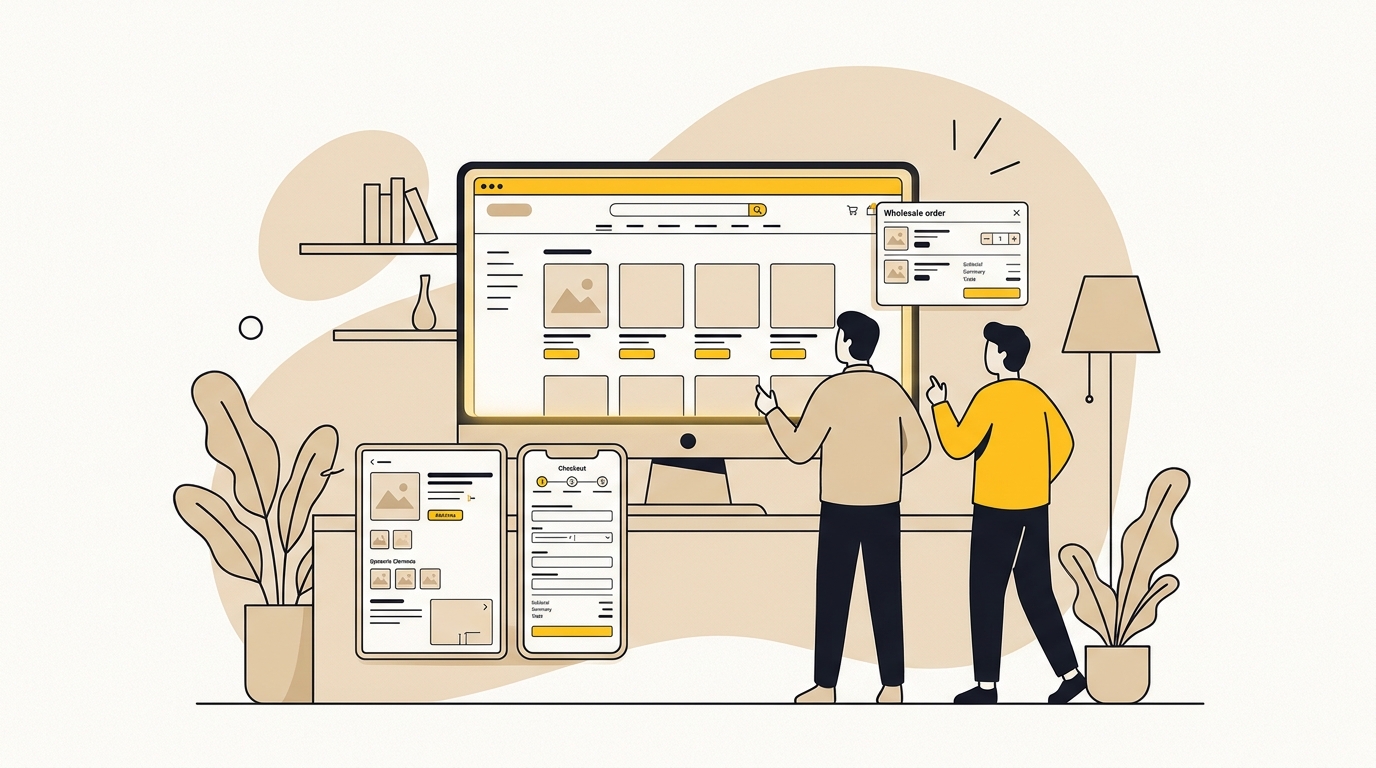
4. Wholesale and business-to-business experiences
Business-to-business commerce, often shortened to B2B, means selling to other businesses rather than only to individual consumers. Wholesale buyers may need customer-specific pricing, large order quantities, payment terms, repeat ordering or access to a private catalogue.
A wholesale user and a retail shopper may be buying the same products but trying to do different things. A retail shopper may need brand storytelling and help choosing one item. A wholesale buyer may want to reorder a known range quickly, understand their agreed prices and see whether an item is available. Treating both audiences as if they have the same needs can make the store harder to use.
The designer should first clarify how your business handles accounts, price lists, approvals and fulfilment. Then they can shape the right experience: perhaps different navigation after login, a bulk order interface, a clear order history or a simpler way to find repeat purchases. The technical team should confirm which features are available on your plan and how your systems will support them.
5. International storefronts and localisation
Localisation means adapting the store for a particular market, not merely translating words. It can include language, currency, shipping information, product selection, imagery, measurements and local expectations around returns or payment.
A designer should ask which markets matter now, which are planned, and whether each market needs a distinct storefront or a localised version of shared content. The answer affects navigation, page templates, product details and the amount of content your team must maintain. A design that works in one language may break when a translated heading is longer or when a currency changes the price layout.
Before you commission a multi-market design, ask the team to show how they plan to handle longer labels, different currencies, local product availability and market-specific campaign pages. The Shopify Plus overview provides the platform context; your team still needs to decide how each market should feel and what staff can manage day to day.
6. Design systems and page-building rules
A design system is a shared set of design decisions, reusable components and guidance. It may define heading sizes, button styles, spacing, form fields, product cards and page sections. A component is a reusable interface element, such as a product card or announcement banner.
For a growing store, a design system helps different people create campaign pages without inventing a new visual language every time. It can also make developer handover clearer. A useful system is not just a file of attractive screens. It should explain where each component is used, what content it supports, how it changes on mobile and what happens in different states, such as an unavailable product or an error message.
The designer should connect the system to your real publishing workflow. If your marketing team needs to create a sale page in a few hours, overly rigid components may slow them down. If every staff member can change every element freely, brand consistency may disappear. A good system gives the team useful flexibility within clear boundaries.
How much does it cost to hire a Shopify Plus designer?
The cost depends on whether you need design advice, a redesign, a full migration or ongoing improvement. The price of the designer’s work is separate from your Shopify subscription, apps, development, integrations, content production and any other implementation costs, which are outlined in analyses of Shopify Plus pricing.
Use the figures below as broad project-planning ranges, not fixed market rates or a quote. Scope, location, experience, team size and technical complexity all affect the final budget. Our Shopify Plus redesign cost guide goes into project scope and cost categories in more detail.
| Engagement | Typical scope | Indicative budget to investigate |
|---|---|---|
| Senior freelance design support | UX review, selected page designs, checkout planning or design direction | US$100 to US$200 per hour, where that rate is quoted |
| Boutique studio redesign | Research, core page templates, responsive design system and developer handover | US$25,000 to US$60,000 for a substantial redesign |
| Complex enterprise or migration project | Multiple storefront needs, B2B journeys, custom integrations or more involved platform migration | US$60,000 to US$150,000+ for a broad end-to-end programme |
| Ongoing design and conversion work | Iterative testing, campaign design and improvements after launch | US$4,000 to US$12,000 per month for a substantial retainer |
These are estimates drawn from the supplied industry benchmarks and should be treated as directional only. They are not Shopify fees, a guarantee of what a particular provider charges, or a substitute for a written scope. Since the examples are quoted in US dollars, Australian businesses should also account for exchange rates, GST treatment and what the proposal includes.
A small design-only engagement may cost less than a full build, but it can leave you with implementation work to arrange. Conversely, a large agency proposal may include research, development, project management, migration and support, not just visual design. Compare deliverables and responsibilities, not just the final number.
Ask each provider to separate their estimate into phases, such as:
- Discovery and research.
- User journeys, content structure and wireframes. A wireframe is a simple layout that shows what goes where before visual styling.
- Visual design and reusable components.
- Development and integrations, if included.
- Content migration, quality assurance and launch support.
- Post-launch testing and optimisation.
Also ask what is not included. Product photography, copywriting, app fees, data cleanup, ERP or customer relationship management integrations, localisation, accessibility testing and post-launch support can sit outside the design fee. ERP means enterprise resource planning software, often used to manage stock, orders and finance. A customer relationship management system stores information about leads and customers.
What drives the cost up or down?
The following details tend to change the amount of design and coordination involved:
- Number of unique templates: ten pages that use the same template are not the same scope as ten pages with different structures and behaviour.
- Number of audiences: retail shoppers, wholesale buyers, distributors and internal staff may need different journeys.
- Markets and languages: each one can create extra content, review and layout requirements.
- Migration complexity: moving product, customer, order and content data needs planning, testing and clear ownership.
- Integrations: a design may rely on inventory, fulfilment, search, loyalty or customer service tools. Each system can add constraints.
- Evidence and testing: research, prototypes and post-launch testing take time but can reduce guesswork.
- Team readiness: unclear product data, changing decisions or missing content can increase project time.
A useful proposal describes what will be delivered, how many review rounds are included, who makes decisions, what your team must supply and how changes are priced. If a proposal simply says “custom Shopify Plus store” without listing templates and features, ask for a clearer scope before comparing it with another quote.
When should you hire a designer, developer or agency?
Hire a designer when you need to decide what the store should do and how it should work for customers. Hire a developer when you have a defined experience that needs to be built, connected or technically maintained. Hire a team that includes both when the project has significant design and implementation work, especially if your existing staff cannot coordinate the two disciplines.
| You need to… | Start with… | Check that they can… |
|---|---|---|
| Improve confusing product pages | Designer or UX specialist | Use customer questions and store evidence to prioritise changes |
| Build a clear visual identity across the store | Brand and digital designer | Apply the brand consistently without harming readability or usability |
| Change theme code or connect an inventory system | Shopify developer | Explain the technical approach, testing and maintenance needs |
| Launch a new store with complex requirements | Design and development team | Show a joined-up process from discovery to launch |
| Improve performance after launch | Developer and designer working together | Find the cause before recommending visual or technical changes |
A Plus Partner badge or an impressive portfolio can be helpful context, but neither proves the provider is right for your project. Ask for examples that match your actual complexity. A team experienced in polished direct-to-consumer stores may not be the best fit for a wholesale portal, and a technically strong migration team may not have the brand or product design skills you need.
Questions to ask before hiring a Shopify Plus designer
Use these questions in a discovery call or proposal review. Ask for specific examples and listen for clear explanations, not a rehearsed list of platform features.
“How would you approach our project before designing screens?”
A strong answer starts with your goals, customers, current store evidence and constraints. The designer should ask what is not working, what you are changing, what must remain, and how you will judge success. They should not assume that the answer is a full custom theme.
Ask what they need from your team before work begins. Useful inputs may include analytics access, customer service questions, a product catalogue, existing brand guidelines and a list of required integrations. The designer should also explain what they will do if information is missing or the evidence points in different directions.
“How do you design checkout with Shopify’s current capabilities?”
A good answer distinguishes the customer experience from the technical implementation. The designer should explain how they work with your developer to confirm which elements can be changed using current Shopify checkout settings or extensions, and how they avoid relying on unsupported legacy methods. You can then ask who will verify eligibility and test the actual checkout before launch.
A red flag is a confident promise of unlimited checkout changes without checking your plan, current platform rules or required extensions. Another is a proposal that treats a sketch of checkout as proof that the feature is technically buildable.
“How do you make design decisions using evidence?”
Look for a practical explanation of how the provider combines business goals with evidence such as search behaviour, analytics, customer questions, usability testing or sales patterns. Evidence does not need to mean a large research programme. It means that design choices have a reason beyond personal taste.
Ask what success measures they would agree with you. Depending on the project, that might include a purchase completion rate, average order value, search usage, wholesale order completion or fewer support questions. A designer should not promise a particular lift without a sound basis, and you should be wary of impressive performance claims they cannot substantiate.
“How do you balance visual impact with mobile speed and usability?”
Ask the designer to talk through a real trade-off, such as whether to use a large video, carousel or animation. A thoughtful answer considers what the element communicates, whether the customer can use it easily on a phone, how it affects loading and interaction, and whether a simpler option would achieve the same goal.
A red flag is treating every request for motion, pop-ups or app features as a design requirement. The person should be willing to explain the costs and alternatives. You want a strong brand experience, not decoration that distracts from choosing and buying.
“What will the developer receive from your design handover?”
Ask to see an example of a design handover, with sensitive client information removed. Look for responsive layouts, reusable components, spacing and type guidance, interaction states and notes about content. States are the different appearances or behaviours of an element, such as default, selected, disabled or error.
A static desktop mock-up is not enough for a complex store. The handover should show how key patterns adapt to smaller screens and what happens when a product is unavailable, an option is missing or a form fails. Ask how the designer will work with the developer during implementation and whether checking the built pages is included.
“Can you show a relevant project and explain the decisions?”
Ask the provider to show the problem, their role, the design decisions and what happened afterwards. If they share performance results, ask what changed, how the result was measured and whether other changes happened at the same time. Do not accept a number without context as proof that a design alone caused it.
If they cannot share a client project, they may be able to explain a similar process or show a non-confidential concept. What matters is whether they can reason through your type of problem, not whether every image in their portfolio looks like your store.
“Who is accountable for the full project?”
Find out who owns design, development, content, integrations, migration and launch checks. If multiple suppliers are involved, someone must coordinate decisions and dependencies. Otherwise, a design may be approved before the developer confirms its feasibility, or the site may be built while important content is still missing.
Ask how feedback works, who signs off, how scope changes are handled and how the team communicates risks. A clear process protects your budget and gives you a chance to resolve disagreements before they become launch delays.
Red flags when choosing a Shopify Plus designer
- They recommend outdated methods without checking the current rules. Ask them to explain the supported approach and show how they will verify it against Shopify’s documentation.
- They lead with visuals but cannot explain the customer problem. A portfolio should show design quality, but the provider also needs to explain hierarchy, navigation and customer decisions.
- Every request becomes another app. Apps can be useful, but each needs a purpose, a cost and an owner. Ask whether a native theme feature or a simpler design could meet the need.
- They show desktop first and treat mobile as a shrink-to-fit version. Mobile needs its own considered hierarchy, touch targets, content order and interaction design.
- They promise a conversion lift before reviewing your store. No one can responsibly guarantee a specific result without understanding the baseline, traffic, audience and other changes.
- They ignore your publishing team. A store that only the original agency can update may create delays and ongoing dependency.
- They skip discovery and offer a fixed scope immediately. A fast estimate can be useful as a starting point, but a firm price needs enough information about templates, integrations and responsibilities.
- They cannot describe what is excluded. A low quote may omit content, migration, testing or launch support. Get inclusions and exclusions in writing.
A practical hiring checklist
Before you sign, use this checklist to compare candidates, alongside an established Shopify Plus development agency checklist:
- They understand your customers, products and business goals.
- Their relevant work includes similar complexity, not only similar visual style.
- They explain the split between design, development and technical validation.
- Their proposal lists templates, deliverables, review rounds and exclusions.
- They have a plan for mobile, accessibility and content behaviour.
- They will collaborate with your Shopify developer or provide development as part of the team.
- They know how to check current Shopify checkout and platform constraints.
- They explain how your team will manage the store after launch.
- They define how success will be measured without promising unsupported results.
- You know who owns decisions, project coordination and launch approval.
If you are early in the process, our Shopify design service overview can help you understand the design and build work involved. You can also review DesignFIT’s project work and website service to see how we approach broader digital design projects.
What should you prepare before the first call?
You do not need a perfect brief, but a few clear inputs make it easier to get useful advice and comparable proposals. Prepare a short description of your business, the products you sell, the customers you serve and the main reason you are considering a redesign or migration.
If you can, gather:
- A list of the pages or journeys that matter most.
- The markets, languages and customer types you serve.
- Your current store URL and platform, if you already have one.
- Any customer or staff feedback about problems with the store.
- The systems that must connect to Shopify, such as inventory or fulfilment.
- Your launch timing and any fixed dates, such as a seasonal campaign.
- A realistic budget range and what that budget must include.
Be upfront about uncertainty. If you do not know whether wholesale needs a separate portal, say so. A useful designer can help you frame the decision and identify what needs technical validation before the final scope is set.
The bottom line
A Shopify Plus designer should do more than make a store look premium. They should help you make the right decisions about customer journeys, product information, checkout, wholesale or international needs, reusable design and the practical realities of building in Shopify.
Choose the provider whose process matches your actual problem, and compare written scopes rather than titles or portfolio polish alone. Ask how they use evidence, what they will hand over, how they collaborate with developers and how they will test the work after it is built.
For your next step, talk with DesignFIT about your Shopify project and share what needs to work better, who the store serves and where you are in the planning process.
Key takeaway
Hire a Shopify Plus designer for sound customer and platform decisions, not simply a more expensive theme makeover.
Questions people ask
Do I need a Shopify designer, a developer or both?
A designer defines the customer journeys, page hierarchy, brand system and interaction details. A developer builds and connects those decisions in Shopify. For a complex Plus project, you will usually need both skills, either in one team or through close collaboration between separate specialists.
How much does a custom Shopify Plus store cost?
A substantial redesign can run from tens of thousands of US dollars, while a complex migration or enterprise build can cost considerably more. The scope, integrations, number of audiences and markets, and what is included in development all affect the final quote.
Can any web designer design for Shopify Plus?
A capable web designer can bring useful brand and usability skills, but they should also understand Shopify’s theme structure and work with a developer to validate platform-specific features. For checkout, B2B or multi-market requirements, ask for relevant experience rather than assuming general web design knowledge is enough.
Can a Shopify Plus designer customise checkout?
They can design the intended checkout experience, but the available implementation depends on Shopify’s current checkout tools, your setup and feature eligibility. Ask the designer and developer to confirm which parts can be configured or extended before approving the design.
Is a Shopify Plus agency worth more than hiring a freelancer?
It depends on the work, not just your sales volume. A freelancer may suit a focused design task, while a team can be valuable when research, design, development, migration and integrations need coordinated delivery. Compare the experience, responsibilities and deliverables in each proposal.