Is WordPress Still Good? A Small Business Guide
WordPress can still be a strong business platform, but its flexibility comes with maintenance your team needs to plan for.
On this page
- Table of contents
- The short answer
- What WordPress is, and what it asks of you
- The real cost of running WordPress
- Is WordPress secure enough for a small business?
- How fast can a WordPress website be?
- Design control and visual debt
- WordPress versus modern no-code alternatives
- When should you keep WordPress?
- When should you move away from WordPress?
- A practical platform decision checklist
- If you decide to stay, make WordPress easier to manage
- If you decide to migrate, plan for more than the design
- What we would recommend for common small business situations
- The bottom line
WordPress is still good for many small businesses, but it is no longer the automatic best choice for every website. It works well when you need flexibility, content control or custom functionality and have a plan for updates, security and performance. If you want a low-maintenance marketing site, a managed platform may be a better fit.
The right decision is not simply which platform has the most features. It is which one lets your business maintain a trustworthy, fast and useful website without pulling time away from customers. If you are weighing a rebuild, start by looking at the outcomes you need from your website design and development, then compare the ongoing work as well as the initial build.
Table of contents
- The short answer
- What WordPress is, and what it asks of you
- The real cost of running WordPress
- Is WordPress secure enough for a small business?
- How fast can a WordPress website be?
- Design control and visual debt
- WordPress versus modern no-code alternatives
- When should you keep WordPress?
- When should you move away from WordPress?
- A practical platform decision checklist
- If you decide to stay, make WordPress easier to manage
- If you decide to migrate, plan for more than the design
- What we would recommend for common small business situations
- The bottom line
The short answer
WordPress is still good when your business needs its flexibility and someone is responsible for keeping it updated, secure and fast. It is a less attractive choice when the site is fairly simple, updates are regularly ignored, or staff spend more time working around the platform than improving the customer experience.
A platform comparison should account for the whole job: design, content editing, forms, integrations, online sales, maintenance and support. A cheap build can become an expensive site if nobody owns updates or every small change needs a developer. A higher monthly platform fee can be worthwhile if it buys back staff time and makes essential tasks easier.
WordPress remains one of the largest content management systems. W3Techs tracks its use across websites and publishes changing market-share data, but popularity alone does not tell you whether it suits your business. It tells you there is a large ecosystem of themes, plugins, developers and support options. It also means you need to choose and maintain that ecosystem carefully. See W3Techs' current WordPress usage data for its methodology and latest figures.
What WordPress is, and what it asks of you
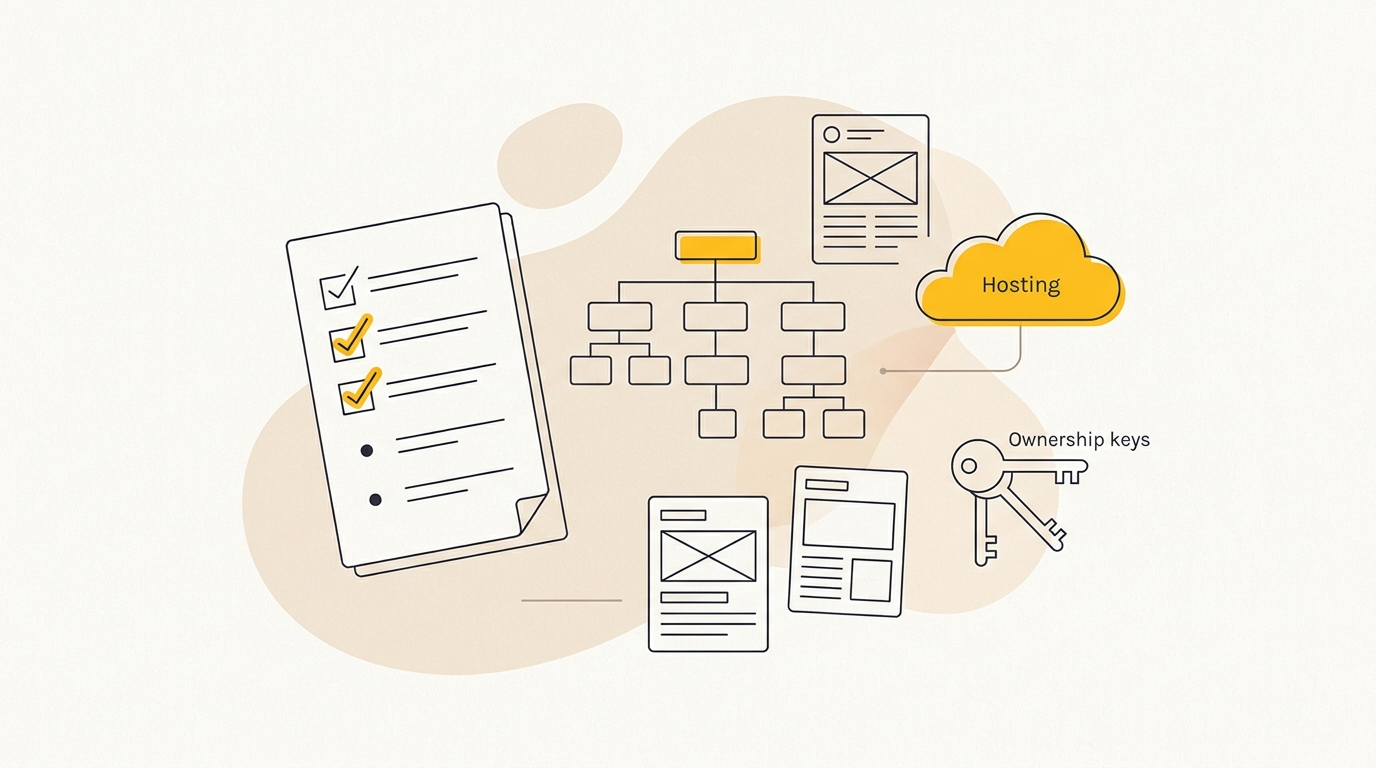
WordPress is an open-source content management system. The software can be used without paying a licence fee, but a self-hosted WordPress site still needs a domain, hosting, a theme, and sometimes paid plugins or professional help. In practical terms, you assemble and operate more of the website yourself than you do with an all-in-one website builder.
That flexibility can be a real advantage. You can choose a host, change themes, add functionality, work with different developers and access your content and database. If your requirements change, you are not confined to one visual editor or a fixed set of platform features.
The trade-off is ownership of the moving parts. Someone needs to know which software is installed, when it should be updated, whether backups work and whether the site still functions after a change. If your business does not have an employee or agency responsible for those tasks, WordPress can become a website that is technically yours but practically nobody is looking after.
What does WordPress maintenance involve?
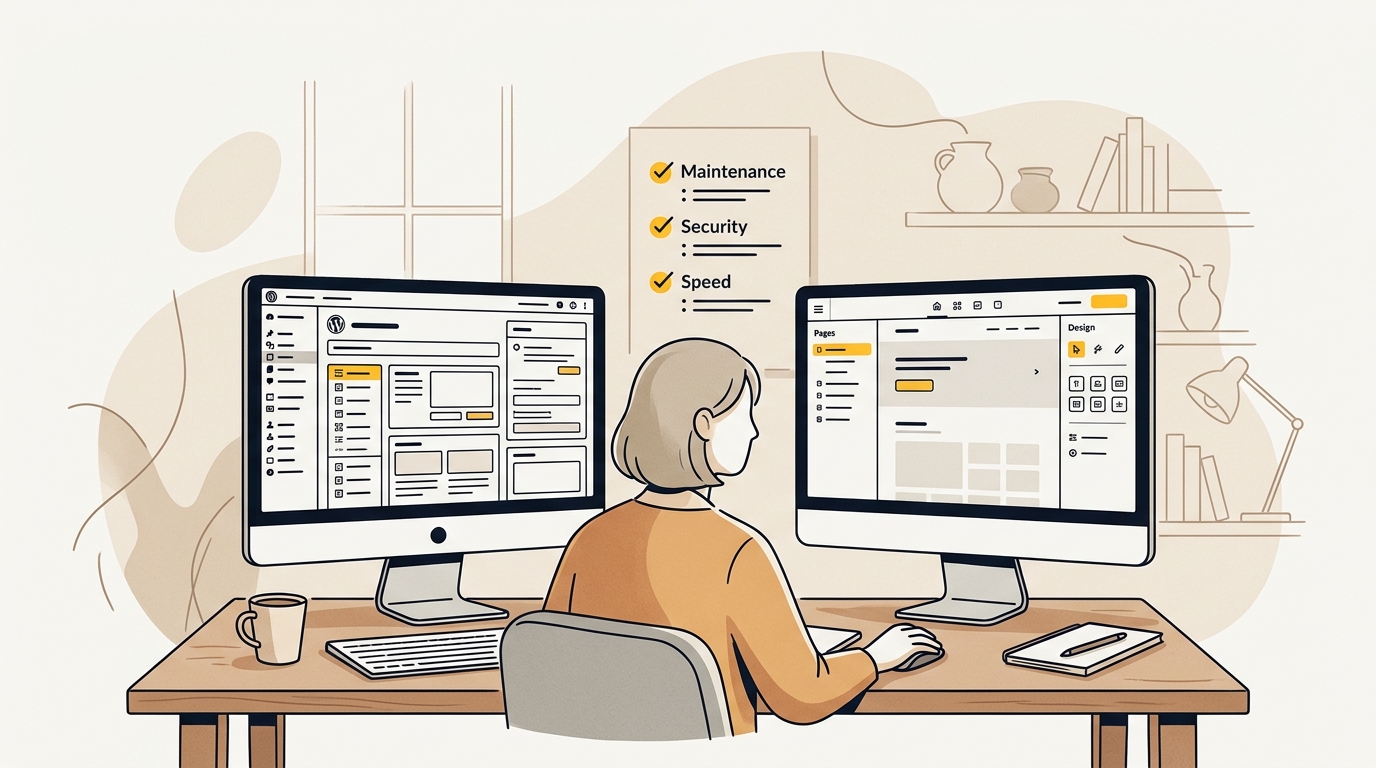
Maintenance is more than pressing an update button. A responsible routine usually covers:
- Updating WordPress core, the active theme and plugins.
- Checking that the site still works after updates, especially forms, booking flows and online checkout.
- Keeping reliable backups and knowing how to restore them.
- Removing plugins and accounts that are no longer needed.
- Checking for broken links, visual regressions and errors on important pages.
- Reviewing website speed and mobile usability as new content and features are added.
- Making sure hosting, domain and administrator access are controlled by the business.
How often these tasks need attention depends on the site, its hosting and the software in use. A small brochure site with a small, well-chosen plugin set is different from a heavily customised online store. The important thing is that maintenance has an owner and a process. Leaving updates untouched for a long period and then applying them all at once is not a maintenance plan.
Who should own updates?
The owner does not necessarily need to run every update. They do need to know who is accountable. That might be an internal web manager, the original developer, a hosting provider or an agency with a maintenance agreement.
Ask what the arrangement actually covers. Does it include backups, staging tests, troubleshooting, response times and small content changes, or only software updates? Does someone check key pages afterwards? A monthly invoice is not proof that the work is being done well. Ask for a simple description of the routine and how an urgent issue is handled.
The real cost of running WordPress
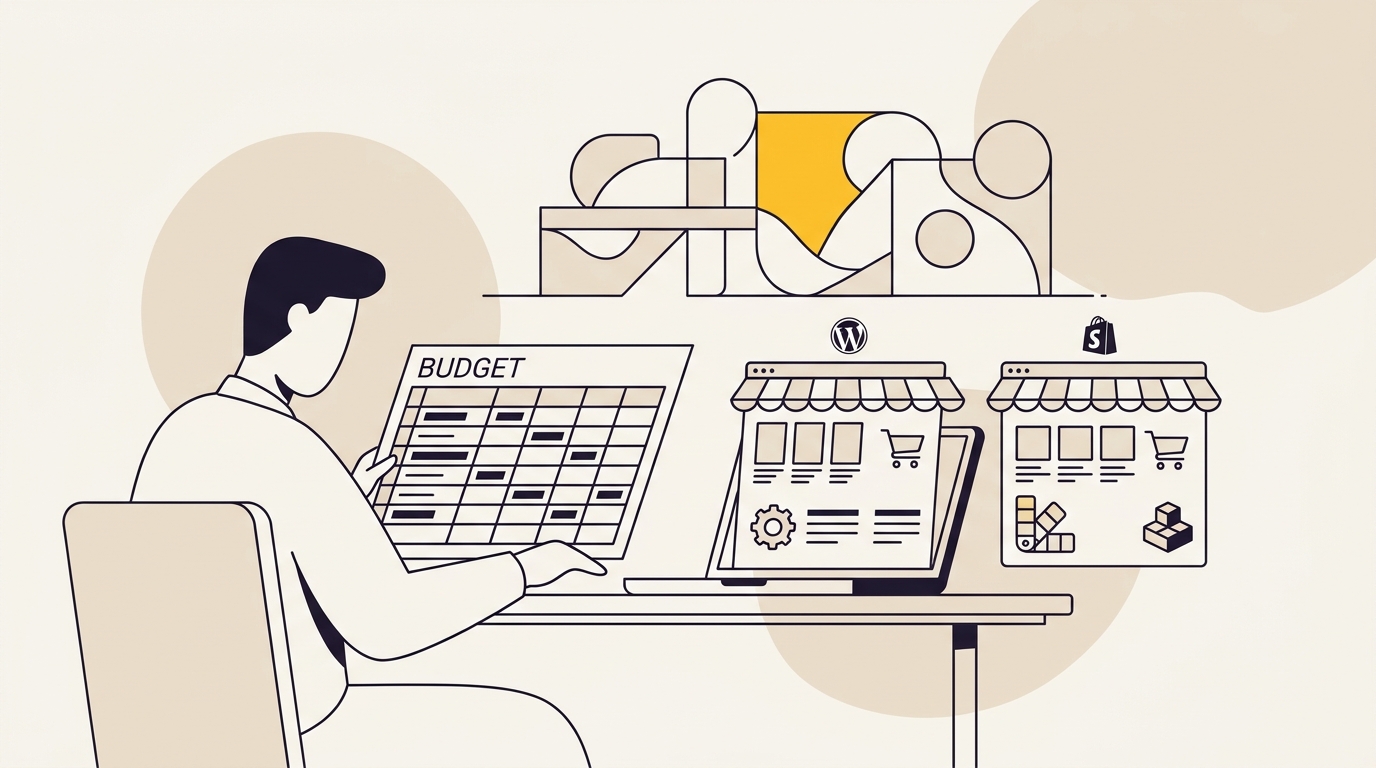
WordPress is free software, not a free website. The sensible comparison is the total cost of keeping the site reliable over the period you expect to use it. Add up hosting, paid software, maintenance time, support and likely development work. Compare that with the subscription, add-ons and staff time on a hosted alternative.
| Cost area | Self-hosted WordPress | Hosted platform such as Webflow, Squarespace or Shopify |
|---|---|---|
| Hosting | Separate hosting plan. Performance and support depend on the provider and plan. | Hosting is generally part of the platform subscription. Limits and included features vary. |
| Software | Core software is free; paid plugins, themes or licences may add recurring costs. | Subscription includes the platform; apps or higher tiers can add fees. |
| Updates | Business or supplier needs to manage WordPress, theme and plugin updates. | The vendor manages platform infrastructure and core software. You still manage content, settings and third-party apps. |
| Backups and recovery | Depends on host, configuration and any backup service. Confirm what is backed up and how restores work. | Availability and restore options depend on the vendor and plan. Check the terms before relying on them. |
| Design changes | Can require a staff member, developer or agency, depending on the build. | Editors may handle routine changes, but custom design and complex changes can still need specialist help. |
| Incident response | Usually requires a host, developer or security provider to investigate and fix the issue. | The vendor manages its platform, but your account, content, integrations and configuration still need care. |
Australian maintenance prices vary with the scope, the age of the site, its functionality and the response time you expect. A published Australian WordPress maintenance service and pricing guide can help you understand what providers may include, but treat any advertised package as a point of comparison, not a universal price. Ask for a quote based on your own plugins, traffic, integrations and support needs.
How to build a realistic three-year budget
Make the comparison concrete. Use the same requirements for each platform and write down costs over three years. Include:
- Build and migration: design, development, content entry, redirects, testing and training.
- Platform and hosting: the plan you actually need, not the cheapest tier if it lacks a required feature.
- Extensions: premium plugins, platform apps, payment services, form tools and any software licences.
- Support: maintenance agreements, developer hours and internal staff time.
- Risk and recovery: the work involved if an update breaks a page, a form stops sending or a backup needs restoring.
- Future changes: new services, staff members, integrations, content types or sales requirements.
Do not count every hour of routine editing as a platform cost. Instead, ask whether your team can make changes confidently and how much time they spend doing it. If a marketing manager can update a service page without risking the layout, that is valuable. If every edit requires a ticket, there is a workflow cost whether or not it appears on a software invoice.
A hosted service does not automatically mean zero maintenance cost. You may pay for an app, an expert to configure it, or help with a design change. You still need to manage passwords, content quality, analytics, forms and integrations. The useful comparison is not free versus paid. It is which work the platform removes, which work it leaves to you and how well that arrangement suits your team.
Is WordPress secure enough for a small business?
WordPress can be secure enough for a small business when it is kept current and configured responsibly. Its security depends on more than the core software: the host, theme, plugins, user accounts, passwords, backups and the way the site is maintained all matter.
A common mistake is to treat WordPress itself as either inherently unsafe or automatically secure. Neither view helps you make a decision. The practical question is whether your organisation can maintain the site and respond when a component needs attention.
The Patchstack 2024 State of WordPress Security report and Wordfence's 2023 WordPress security report, published in 2024 discuss vulnerabilities in the WordPress ecosystem. These are dated reports, not a live security score for your website. Their useful lesson for a business owner is to take third-party software and update practices seriously, rather than assuming the core platform is the only thing that needs protection.
Where a small business site can be exposed
Potential weaknesses include outdated plugins or themes, a plugin that is no longer maintained, administrator accounts no longer used, weak passwords, poor access control and hosting that does not provide suitable isolation or recovery support. A site can also be exposed by an insecure third-party service connected to it.
More plugins do not automatically mean a site is insecure. Every additional component does create another dependency to review, however. Before installing a plugin, ask whether it provides a business-critical function, whether the provider maintains it, and whether a simpler option already exists in your theme or platform.
A practical security routine
Use this checklist as a starting point:
- Keep a current list of themes, plugins and external services.
- Remove software that is unused, duplicated or no longer supported.
- Apply updates through a managed process, and check important site functions afterwards.
- Make sure backups are frequent enough for your business and that restoration has been tested.
- Give staff only the access they need and remove accounts when roles change.
- Use unique passwords and multi-factor authentication where available.
- Know who to contact if the site is unavailable or appears compromised.
- Confirm what the host or maintenance provider does, and what remains your responsibility.
Security is not a one-off plugin purchase. A security plugin may help with specific protections or monitoring, but it cannot replace good account management, timely updates and recovery planning. Nor does a hosted platform eliminate security responsibilities. It changes which parts the vendor operates and which parts remain yours.
What if an update breaks the website?
Updates can occasionally cause a conflict, particularly on a site with custom code or many interdependent plugins. The right response is not to leave the site outdated indefinitely. It is to make changes in a controlled way: keep a usable backup, test higher-risk updates in a staging environment where appropriate, and check the functions that matter before treating the work as complete.
For a clinic, test appointment enquiries and important service pages. For a law firm, test contact forms, phone links and key landing pages. For an online shop, test product discovery, cart and checkout. A homepage that looks fine does not prove the site is working.
How fast can a WordPress website be?
A WordPress website can be fast, but the platform does not make it fast automatically. Speed depends on the hosting, theme, page builder, images, scripts, fonts, plugins, caching and the way each page is designed. A lightweight site built with care can perform well; an overloaded build can feel slow on a phone even if it looks impressive on a desktop.
Google's Core Web Vitals are a set of measures that help assess how a page loads, responds and behaves visually. The HTTP Archive technology report on Core Web Vitals by CMS provides a way to compare real-world technology categories. Such aggregated comparisons can identify patterns, but they do not predict how your own website will perform. A well-built site on a platform with average aggregate results may outperform a poorly built site on a platform with better averages.
What usually slows WordPress down?
Common causes include a slow or poorly configured server, large uncompressed images, too many scripts, a heavy theme, duplicated features and pages built with unnecessary layout elements. Third-party marketing tools can also add work before a page becomes interactive. A page builder is not automatically the culprit, but adding layers, animations and widgets without a clear purpose can make performance harder to manage.
The first large image on a page deserves particular attention. If it is oversized, poorly cropped or loaded in the wrong way, visitors may wait longer to see the main message. Designers can help by choosing image dimensions and formats for the actual layout, not simply uploading the largest file available. Good visual design and good performance support each other: clear hierarchy often needs fewer competing elements and less decorative clutter.
How should you check your site speed?
Do not judge speed by loading the homepage once on your office Wi-Fi. Check important pages on mobile, test more than one page type and consider real visitor data where it is available. Start with the pages that support a business outcome: a service page, a booking page, a contact form, a product page or an ad landing page.
Then identify the actual bottleneck. If the main issue is oversized imagery, changing platforms may be unnecessary. If the site is slow because the hosting, theme and plugin setup are difficult to improve, a rebuild may make more sense. Measure before and after any major change, and keep the design and content consistent so that the comparison is useful.
Performance is not just a technical score. A slow mobile page can make a business feel less dependable, particularly when a visitor is trying to find opening hours, compare a service or contact you. The aim is not to chase a perfect score at the expense of useful content. It is to remove avoidable delay and make the next action clear.
Design control and visual debt
Visual debt is the collection of small design inconsistencies that build up when a website changes without a clear design system. Buttons begin to look different, headings lose a consistent scale, spacing varies from page to page and old components remain alongside new ones. This can happen on any platform, but the editing experience affects how easy it is to prevent.
WordPress can support a strong design system. A custom theme or carefully configured block theme can give editors reusable layouts and controls. A page builder can also let a non-technical team make routine changes. The risk is not that a particular tool is always bad. The risk is building a site where every page is assembled differently and nobody knows which elements are safe to edit.
What should editors be able to change?
A good editing setup distinguishes content decisions from design decisions. Staff should be able to update a service description, swap an approved image or add a team member without accidentally changing the whole site's typography and spacing. At the same time, they should not need to ask a developer to correct a simple sentence or update a seasonal notice.
Before choosing a theme or builder, ask for a demonstration using your real content. Can an editor create a new service page from a template? Can they add an image without breaking its crop on mobile? Can they update a call to action without changing every other button? The answers tell you more than a long feature list.
Does Webflow or Framer guarantee better design?
No. A visual design tool can give designers precise control, but it cannot decide what your customers need to see or make unclear content persuasive. A polished interface can still have a confusing navigation, weak trust signals or a form that asks for too much. The platform is a tool for implementing design decisions, not a replacement for them.
The same is true of WordPress. A flexible platform can support a beautifully considered site or a cluttered one. What matters is whether the design system supports consistent, accessible and conversion-focused pages as the business grows.
WordPress versus modern no-code alternatives
A no-code or hosted platform lets a team build and manage a site with less direct control over the underlying server and software. The label covers different products, so compare the platform to your actual use case rather than treating them as interchangeable. Shopify is built around commerce, Webflow gives teams visual design and content tools, while Squarespace and Wix suit many simpler site needs.
| Platform | Often a good fit for | Main trade-off to check |
|---|---|---|
| WordPress | Businesses needing flexible content structures, a broad plugin ecosystem, custom functionality or control over hosting and data. | The business or its supplier must manage hosting, updates, software compatibility and performance. |
| Webflow | Design-led marketing sites where a team values visual control and a managed platform. | Check CMS needs, editor workflow, integrations, ownership requirements and the plan features you need. |
| Squarespace | Smaller service or portfolio sites where a built-in editor and hosted setup suit the team's needs. | Check how well the available templates, integrations and content structure support future requirements. |
| Wix | Businesses that want an accessible hosted site builder with a broad set of built-in tools. | Test the editing experience, design flexibility, integrations and migration path before committing. |
| Shopify | Retail and direct-to-consumer businesses where product management and checkout are central. | Check transaction-related costs, theme flexibility, apps and whether the platform suits your catalogue and operations. |
DesignFIT has a more detailed comparison of Webflow and WordPress for a design-led marketing site. If you already know which direction you are considering, review our pages on WordPress, Webflow, Wix and Squarespace or Shopify.
WordPress versus Webflow
Consider Webflow when visual control and a managed environment matter more than access to the full WordPress plugin ecosystem. It may suit a marketing team that wants to maintain pages within a designed system and reduce its responsibility for server-level maintenance.
Consider WordPress when you need specific plugins or content structures, want a wider range of hosting choices, or already have a well-maintained site that meets your needs. Do not migrate just because one platform is fashionable. Test the editing workflow and confirm that essential integrations, content and redirects can be handled properly.
WordPress versus Squarespace or Wix
A hosted builder can be a sensible fit for a smaller site with fairly standard needs and a team that wants to make basic changes itself. A template can be enough if it gives your brand a clear visual identity and supports your pages, forms and integrations.
WordPress may suit a site that has outgrown the builder's content model or requires functions that are hard to implement there. But a more complex platform is not automatically more professional. If your website needs a handful of well-designed pages, simplicity can be an advantage.
WordPress versus Shopify
For a business whose main activity is selling products online, compare WordPress with WooCommerce against Shopify as commerce platforms, not just as website editors. Consider checkout, product management, shipping, payments, inventory, tax settings, apps and the skills available to your team.
WordPress with WooCommerce can offer flexibility, but your business needs to own the maintenance of the underlying site and its extensions. Shopify includes a managed commerce environment, but you still need to choose the right plan, design the store, configure apps and maintain the product experience. The DesignFIT guide to Shopify website design can help you assess that route.
When should you keep WordPress?
Keep WordPress if it is meeting your business needs, the site is maintainable and you have a reliable person or supplier responsible for it. There is no business benefit in migrating a functioning website purely to follow a trend. A rebuild carries cost, risk and work, so it should solve a real problem.
WordPress is especially worth keeping when:
- Your site has custom features or content structures that would be costly to recreate elsewhere.
- Your team publishes a large volume of content and already understands the editorial workflow.
- Your important integrations depend on WordPress or WooCommerce.
- You have a dependable maintenance arrangement and the cost is acceptable.
- The site performs well enough for users and supports the business goals you set for it.
- Your design can be improved without replacing the platform.
Before deciding to stay, check whether the problem is actually the platform. A weak homepage, unclear service pages or confusing navigation may need better design and content, not a migration. A slow site may need image, hosting or script improvements. A site that nobody updates may need a clearer content process and training.
When should you move away from WordPress?
Consider moving if the ongoing work is disproportionate to what the website does, important updates are repeatedly neglected, or the site is too fragile for staff to make ordinary changes. A migration may also make sense if your business has a new requirement that WordPress cannot meet efficiently with the skills and budget available to you.
Look more closely at alternatives if:
- Nobody can confidently say who is responsible for maintenance and recovery.
- Your site depends on many plugins that duplicate features or create regular conflicts.
- Routine content changes require a developer, even though the team could reasonably manage them.
- The current design is difficult to improve without rebuilding large sections.
- You have measured performance issues and the current setup is expensive or impractical to fix.
- Your current online store needs a more suitable commerce workflow.
- The actual cost of support, staff time and recurring software is no longer justified.
Do not migrate because you have heard that one platform ranks better in search. Search visibility depends on many factors, including useful content, page structure, technical accessibility, links, performance and reputation. Moving platform can create SEO problems if URLs change without careful redirects or if important content is lost. A platform switch is not an SEO shortcut.
A practical platform decision checklist
Score each item as a clear strength, a concern or something you need to investigate. If several concerns relate to day-to-day maintenance, a hosted platform may be a better fit. If your needs depend on flexibility and you have support in place, WordPress may still be the practical choice.
Business needs
- What must the site help customers do: call, enquire, book, compare, subscribe or buy?
- Which pages and functions directly support that action?
- What do you expect the website to need in the next three years?
- Does the business need unusual content structures, access controls or integrations?
Team and maintenance
- Who owns updates, backups, testing and urgent fixes?
- Can that person explain how the site is restored if something goes wrong?
- Can staff make common content changes without breaking page layouts?
- How much time does the team spend waiting for, requesting or repairing website changes?
Design and customer experience
- Is the main message clear on a mobile screen?
- Do service or product pages answer the questions customers need answered?
- Are buttons, headings, forms and navigation consistent across the site?
- Does the visual design match the level of trust your business needs to earn?
Cost and risk
- Have you included support, software, staff time and rebuild or migration work?
- Are you comparing the same features and expected service level on each platform?
- What happens if a key plugin, app or integration stops working?
- Can you export or transfer the content and customer data you may need later?
If the answers are unclear, do not start by choosing a platform. Start with an audit of the current site, its functions and the team's workflow. A short assessment can uncover whether you need a redesign, a maintenance plan, a performance fix or a full migration.
If you decide to stay, make WordPress easier to manage
A WordPress site does not need to be complicated just because the platform is flexible. The goal is to reduce the number of components and decisions your team must manage.
1. Inventory the site
List the theme, plugins, hosting provider, important integrations and people with administrator access. Identify what each plugin does and whether the function is still needed. If nobody can explain why a component is installed, investigate before removing it. It may be supporting a form, checkout step or custom feature.
2. Reduce duplication
Look for two tools doing the same job, old plugins left behind after a redesign, and features that could be handled more simply. Fewer components can mean fewer updates and fewer potential conflicts. Do not remove plugins blindly, especially on a live site.
3. Simplify the editing experience
Create reusable page patterns for common content. Give staff clear options for headings, images, calls to action and page sections. Use a small set of templates that make the site's visual system easy to maintain. The best editing setup is not the one with the most controls; it is the one that lets staff make approved changes safely.
4. Set a maintenance routine
Agree who checks updates, when backups are reviewed and which site functions are tested afterwards. Keep a brief record of significant updates and issues. If an agency provides maintenance, ask for a plain-language scope and an escalation contact.
5. Measure the pages that matter
Check the experience on mobile and review the pages that drive enquiries or sales. Look at whether people can find the information they came for and complete the intended action. If you change the design, compare results over a meaningful period and consider other changes that may affect those results.
If you decide to migrate, plan for more than the design
A successful migration is not just a new look and a content copy. It is a carefully managed transfer of content, URLs, forms, tracking, integrations and customer expectations. The migration needs a clear reason and an owner.
Before the rebuild
Document every existing page, URL, form, integration and feature. Identify pages that attract search traffic or receive links from other websites. Decide which content should be kept, rewritten, combined or removed. This is a good time to improve the information architecture, but it is not a reason to discard useful content without a plan.
Ask the new platform provider or designer how they will handle:
- URL mapping and redirects for pages whose addresses change.
- Page titles, descriptions, headings and other important page information.
- Forms, email notifications, booking tools, payment flows and analytics.
- Image handling, accessibility and mobile layouts.
- Staff training and access to the site after launch.
- Backups, account ownership and options for exporting content later.
Test before launch
Check the new site on mobile and desktop. Test every important form and conversion path with real submissions. Review links, page titles, images, redirects and tracking. Ask someone who was not involved in the build to complete the key visitor tasks. Familiarity can make a confusing path look obvious to the people who built it.
Do not cancel the old hosting or close the old account before you have confirmed the new site is working and the content is safely transferred. Keep a record of who controls the domain, platform account and analytics. Those assets should remain accessible to the business.
After launch
Monitor the site and fix issues promptly. Check that redirects work, forms arrive at the right inbox and important pages are discoverable. Tell staff where to make content updates and who to contact if something goes wrong. A launch is the beginning of operating the new site, not the end of the project.
For a broader view of what a rebuild involves, read our guide to website redesign timelines and realistic project sizes. If you are comparing suppliers or scopes, you can also review DesignFIT's website services and project pricing.
What we would recommend for common small business situations
A clinic or professional services firm with a simple marketing site
If the site mainly explains services, builds trust and generates enquiries, choose the platform your team can keep current. WordPress is reasonable when support is in place and the content model is useful. A hosted builder may suit a team that wants less infrastructure management and does not need unusual functionality.
Whichever you choose, focus first on service-page clarity, useful trust information, mobile contact options and a short, well-designed enquiry flow. Those decisions affect the customer's experience more directly than the platform name.
A marketing team that publishes regularly
If staff publish articles, case studies or resources, evaluate the editorial experience. Can a team member create a well-formatted page without help? Are templates consistent? Can editors manage metadata and images confidently? WordPress can be effective for this work, as can other content platforms. A demonstration with real content is more useful than assumptions about which editor is easiest.
A retailer with an online store
Choose based on the operational demands of selling: products, payments, inventory, shipping, returns and checkout. Consider who will maintain extensions and how the site behaves during busy periods. A platform that keeps product operations manageable may be more valuable than one that offers maximum design freedom but needs constant technical attention.
A business with an old, fragile WordPress site
First establish what is actually wrong. If the site has useful content and a stable structure, a careful repair or redesign may be enough. If key functions rely on unsupported software and the site is difficult to recover or update, plan a rebuild rather than continuing to add patches. Get an independent assessment before committing to a migration.
A business starting from scratch
Do not begin with the question, Which platform is best? Begin with what customers need to understand and do, what your team needs to update and what the business may need later. Select the simplest platform that supports those requirements without locking you into a workflow your team cannot maintain.
The bottom line
Is WordPress still good? Yes, when its flexibility solves a real business problem and you have a clear plan for maintenance. It is not automatically the cheapest option, the fastest option or the easiest option for every team. Hosted alternatives reduce some operational work, but they do not remove the need for good design, useful content and ongoing ownership.
Make the decision around the whole experience: what customers see, what staff can manage and what your business will pay to keep the site working. If your current website needs a clearer design, a more reliable editing system or a platform decision, talk to DesignFIT about your website project.
Key takeaway
WordPress is still a good choice when its flexibility earns its keep and someone is accountable for maintenance, performance and the customer experience.
Questions people ask
Is WordPress still good for small businesses in 2026?
Yes, if the business needs its flexibility and has a person or supplier responsible for updates, backups and testing. For a simpler marketing site with limited technical support, a managed platform may be easier to operate.
Why are some businesses switching away from WordPress?
Common reasons include maintenance fatigue, plugin conflicts, difficulty making safe content changes and a desire for more predictable hosting. Those issues do not mean every WordPress site should move; first check whether a simpler setup or better support would solve the problem.
Is Webflow better than WordPress for SEO?
Neither platform guarantees better search rankings. Results depend on the quality and usefulness of the content, the site structure, performance, accessibility to search engines and other factors. Choose the platform your team can maintain well, and plan carefully for redirects if you migrate.
How much does it cost to maintain a WordPress site in Australia?
There is no single price because the cost depends on the site's complexity, hosting, software and support requirements. Ask providers for a scope covering updates, backups, testing, troubleshooting and response times, then compare it with your internal time and any plugin or hosting costs.
Is WordPress secure enough for a small company?
It can be, provided the site is maintained and access, backups, hosting, themes and plugins are managed responsibly. A security plugin alone cannot replace updates, account controls and a recovery plan.